Create your free account

OR Register This site is protected by reCAPTCHA and the Google Privacy Policy and Terms of Service apply.

Create your free account

By clicking “Register”, you agree to our
terms of service and privacy policy

This site is protected by reCAPTCHA and the Google Privacy Policy and Terms of Service apply.

Log in

OR

Reset password

Hello, friends! I'm International Master David Shahinyan.

I lost against many grandmasters and beat some, but most of the times that I was lucky to beat grandmasters, I used the Philidor Defense. Most of my victories are attributed to one of my favorite players, Richard Rapport.

Before him, I knew the Philidor as a passive, boring opening. Something defensive. You played it safe, traded pieces, and hoped for a draw. Then I saw Rapport win a game with a stunning queen sacrifice. The opening? The Philidor. I couldn't believe it. (I'll show you that game later, in the model games.)

So I tried it. And I fell in love. I started winning more games, even against grandmasters. I got so hooked that I now play the same structure with White too: the reversed Philidor, just with an extra tempo. The results have been even better.

In this guide I'll show you the main lines and how to handle each one, the pawn structures and plans that come up game after game, the tips that took me years to figure out, one trap almost nobody knows, and the best Philidor games, mine and others.

Let's go.

History of the Philidor

The opening is named after François-André Danican Philidor, an 18th-century Frenchman who was the strongest chess player of his time. He was also a composer, and a successful one, but chess is what we remember him for.

In 1749 he wrote a book, L'analyse du jeu des Échecs. In it he made a claim that sounded strange to players back then: pawns are the soul of chess. Everyone else treated pawns as small change, things you pushed out of the way so the real pieces could fight. Philidor said the pawns decide the game. He was right, and the idea shaped how chess was understood for the next century.

He also recommended 2...d6 as a serious answer to 1.e4 e5 2.Nf3, and the move took his name. The opening's ECO code is C41.

For a long time the Philidor had a quiet reputation. After 3.d4 was shown to give White a comfortable edge, strong players mostly left it alone, and it picked up its label as a passive, drawish opening. But it never disappeared. Lately it's been making a comeback, and players have shown the old "boring" opening can produce some of the sharpest, most beautiful games around.

Philidor Players

A few of the strong players who have used the Philidor:

  • Magnus Carlsen
  • Richard Rapport
  • Baadur Jobava
  • Sergei Movsesian
  • Victor Bologan
  • Denis Kadric

The Main Position: 1.e4 e5 2.Nf3 d6
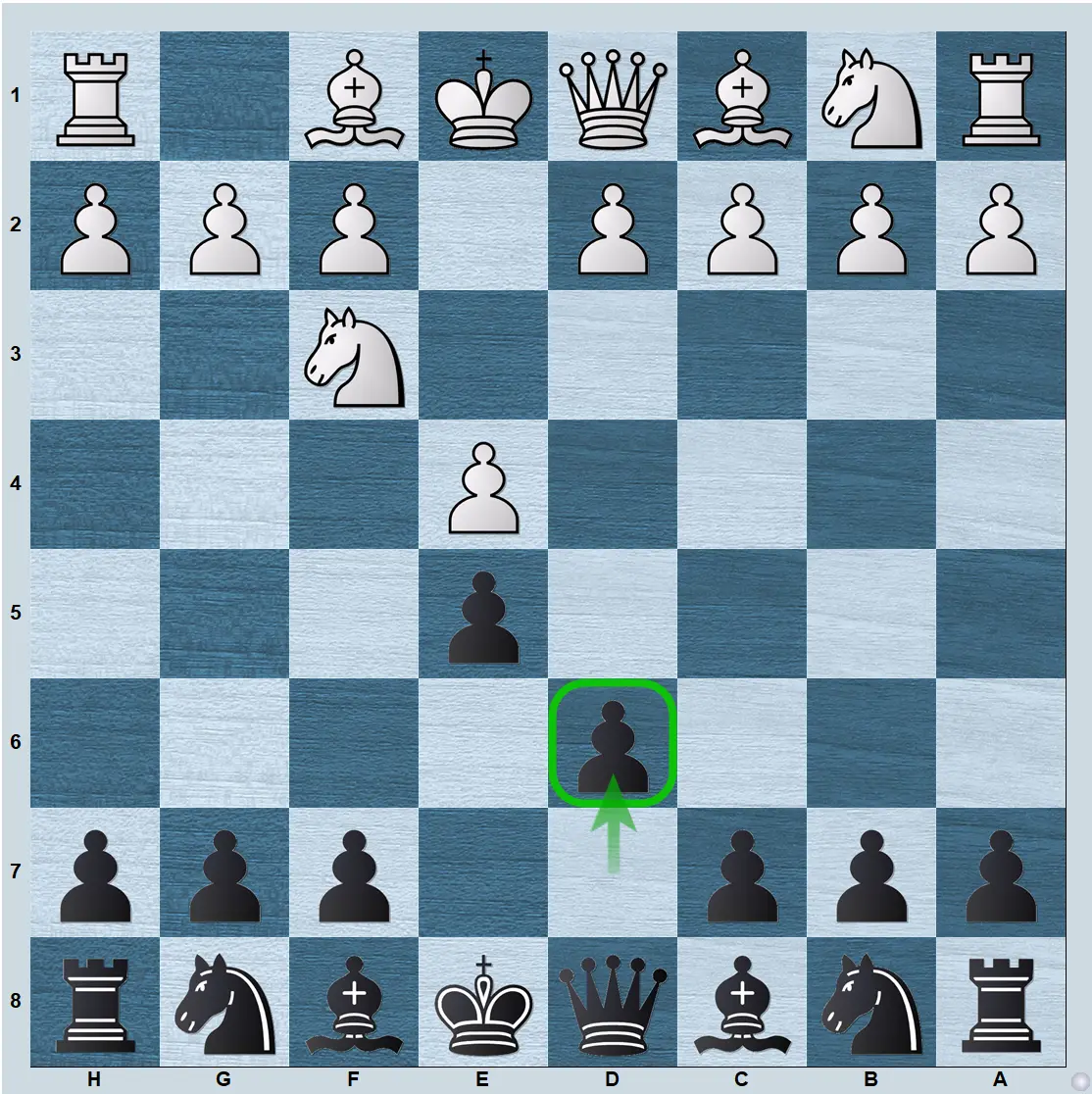
Philidor Defense starting position
Position after 2...d6

After 1.e4 e5 2.Nf3, the move 2...d6 is one of the most common replies Black has. Instead of defending the e5 pawn with a knight, the way you do in the Ruy Lopez we defend it with a pawn.

So what do we get for that, and what do we give up? Let me be honest with you about both sides before we go into the lines.

The upsides:

  • No long, complicated theory. You don't need to memorize the deep variation trees of the Petroff or the Ruy Lopez. You learn a setup and a few ideas, and you're ready to play.
  • A clear plan from the start. In most games we're aiming for the same setup, the same piece arrangement. While your opponent is still deciding what kind of game this is, you already know what you're doing.

The downsides:

  • The dark-square bishop on f8 has a hard life. With pawns on e5 and d6, its natural diagonal is closed. It usually goes to e7, a quiet square, and waits patiently for its moment.
  • White's center is better. Let's be honest, the engine prefers White out of the opening. That's part of why you don't see the Philidor often at the very top. But the plans are easy, the structure is solid, and the practical chances are very real.

White's main reply is 3.d4, hitting our center and forcing Black's first real decision. From here, Black has three serious answers, and the rest of this guide is built around them.

Exchange Variation (Antoshin): 3...exd4
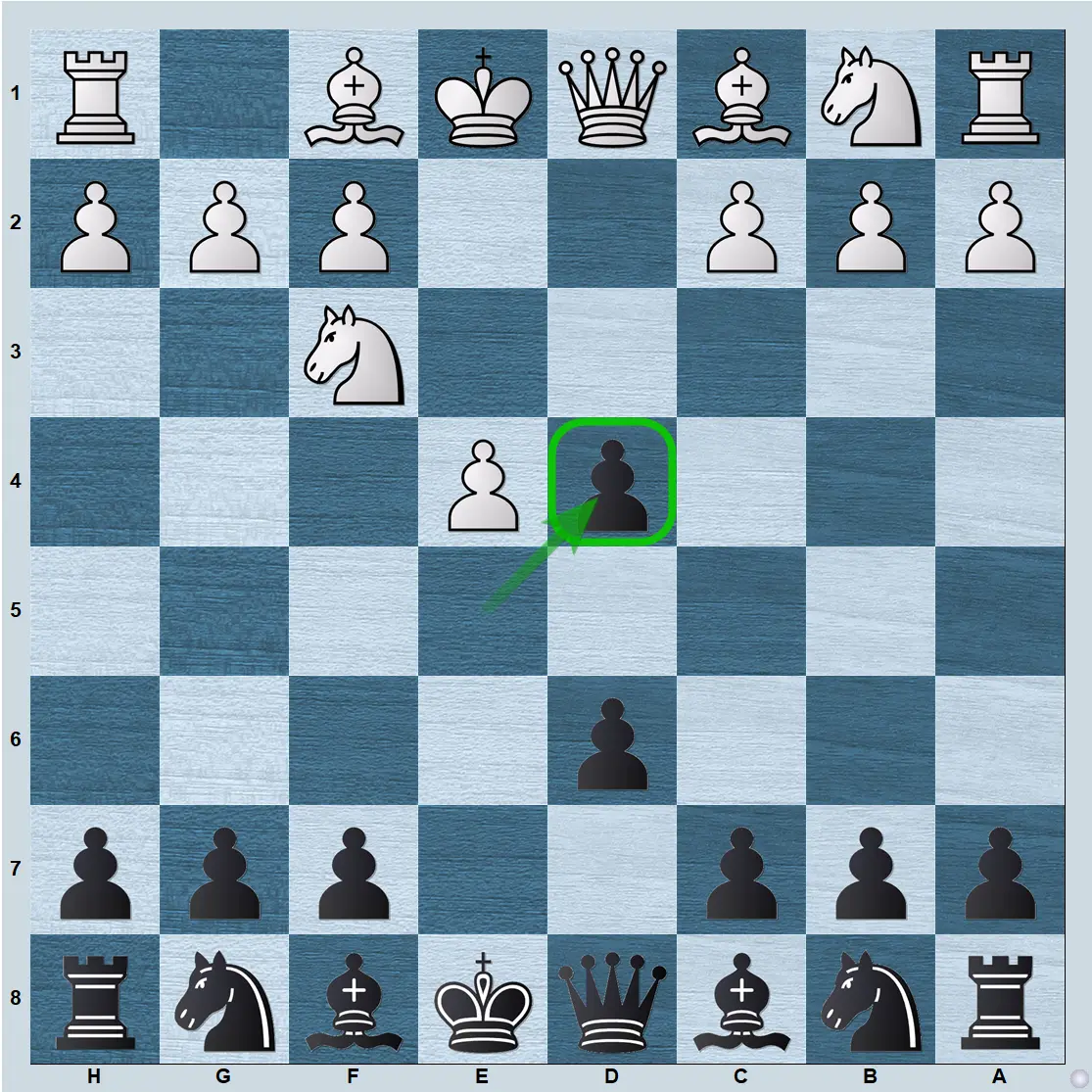
Philidor Defense Exchange Variation, position after 3...exd4
Position after 3...exd4

This is the Exchange Variation. The modern main-line setup is known as the Antoshin.

White recaptures 4.Nxd4, and we get a quieter, more positional game. There's no immediate tension, no sharp tactics to calculate. Both sides develop and maneuver.

The main position of the Exchange line comes after:

1.e4 e5 2.Nf3 d6 3.d4 exd4 4.Nxd4 Nf6 5.Nc3 Be7

Exchange Variation main line vs ?
Event
?
Site
?
Date
2026.06.17
Round
?
White
Exchange Variation main line
Black
?
Result
*
ECO
C41
  1. 1. e4
  2. 1... e5
  3. 2. Nf3
  4. 2... d6
  5. 3. d4
  6. 3... exd4
  7. 4. Nxd4
  8. 4... Nf6
  9. 5. Nc3
  10. 5... Be7

    [%cal Gf1c4,Gg2g3,Yf1e2]

From here White has several continuations, such as 6.Bc4, 6.Be2, and 6.g3.

Whatever White chooses, Black has two main ideas:

  • Break the center with ...d5. This is the main goal. If you can free your position with ...d5, you equalize and your pieces come to life.
  • If ...d5 isn't possible, trade pieces. When you can't get the break, the next best plan is to trade as many pieces as you can. The fewer pieces on the board, the easier Black's position becomes.

I've played this line myself, and I remember one game where my opponent went for a sharp setup: 6.Bf4, 7.Qd2, then long castling with 0-0-0, and threw everything at my kingside. I couldn't hold the attack and lost, without really understanding what had happened. 😁 That's part of why I don't play this line anymore. It can turn sharp fast, and I'd rather steer the game into the setup I trust, which I'll show you soon.

Philidor Countergambit: 3...f5

1.e4 e5 2.Nf3 d6 3.d4 f5
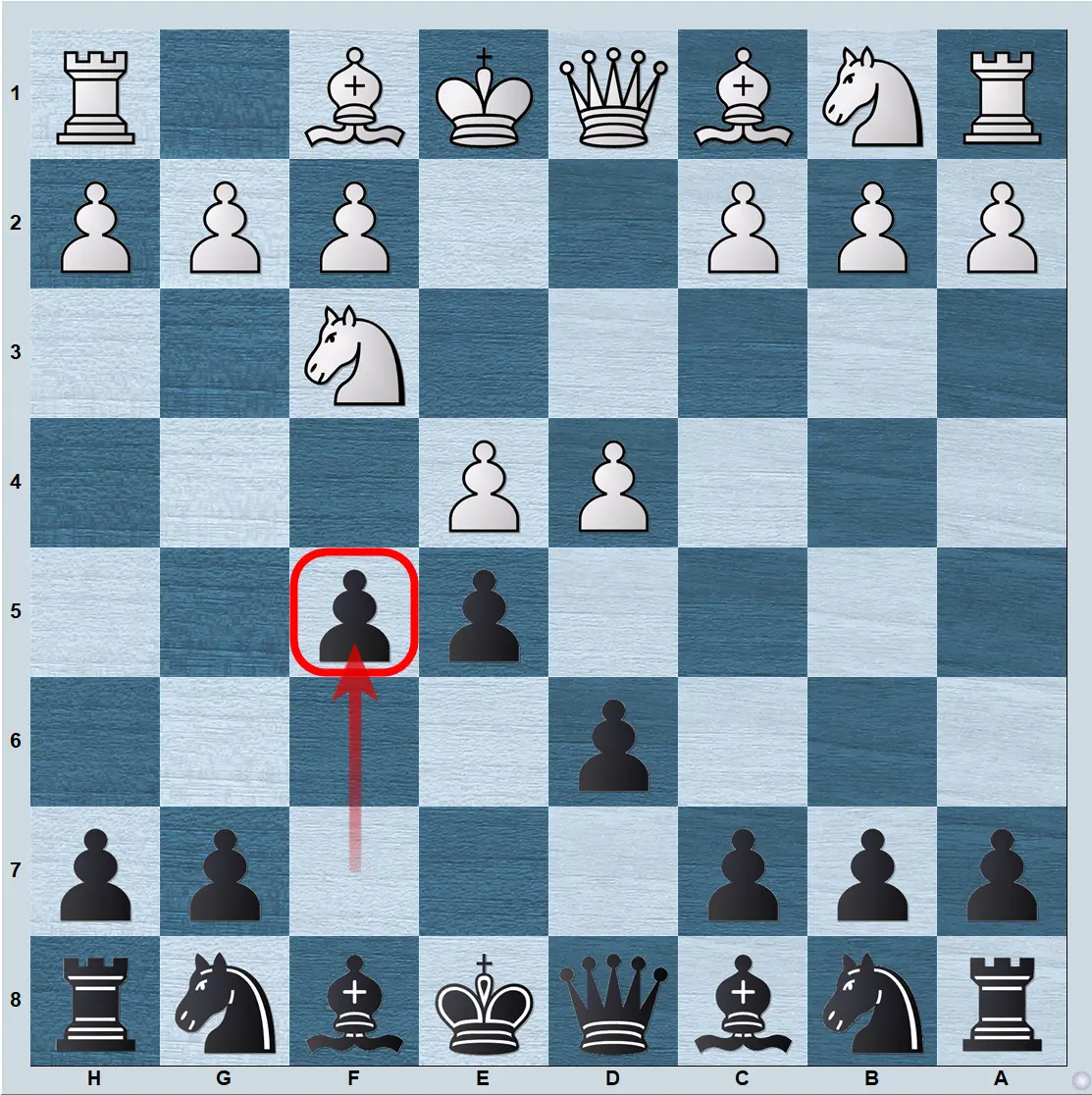
Countergambit, position after 3...f5
Position after 3...f5

This is Philidor's own idea, the aggressive soul of the opening. Instead of defending, Black hits back in the center immediately and tries to fight for the initiative. It can surprise club players and it's a lot of fun to play, but it's dangerous.

There are few ways to refute this, 4.Bc4 is the strongest! White gets a clearly better position.

Philidor Countergambit vs ?
Event
?
Site
?
Date
2026.06.17
Round
?
White
Philidor Countergambit
Black
?
Result
*
ECO
C41
  1. 1. e4
  2. 1... e5
  3. 2. Nf3
  4. 2... d6
  5. 3. d4
  6. 3... f5
  7. 4. Bc4!

    [%cal Gc4g8]

Hanham Variation: 3...Nd7

Philidor Defense Hanham Variation, position after 3...Nd7
Position after 3...Nd7

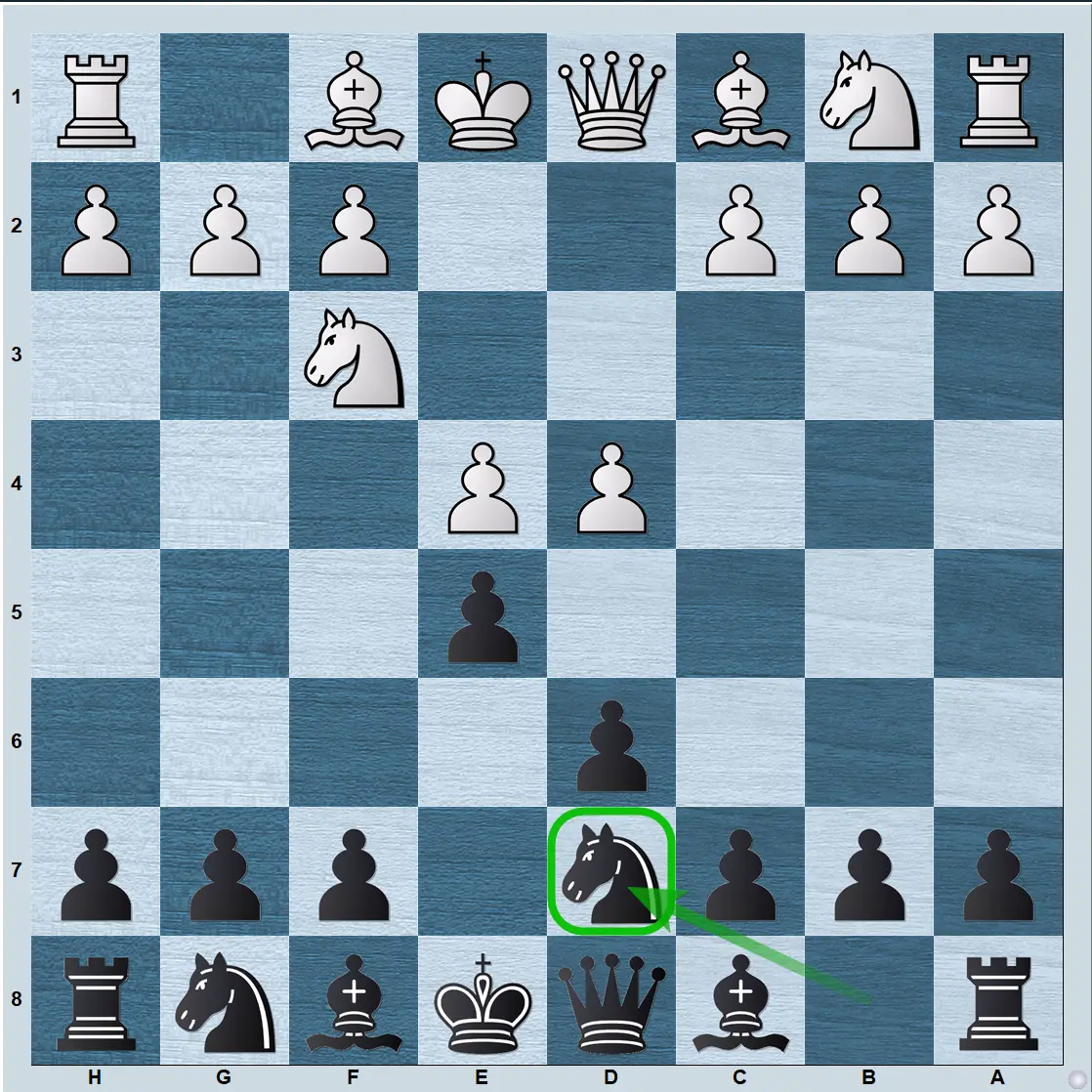
The Hanham is the classical Philidor setup, and it's where most Philidor players begin. I started out playing it this way too, and I ran straight into trouble. The idea behind 3...Nd7 is patient. Before doing anything else, Black supports the e5 pawn with the knight. Then comes the rest of the structure: Be7, c6, Qc7, Ngf6, and 0-0. A solid, harmonious little fortress.

Hanham setup vs ?
Event
?
Site
?
Date
2026.06.17
Round
?
White
Hanham setup
Black
?
Result
*
ECO
C41
  1. 1. e4
  2. 1... e5
  3. 2. Nf3
  4. 2... d6
  5. 3. d4
  6. 3... Nd7
  7. 4.
  8. 4... Be7
  9. 5.
  10. 5... c6
  11. 6.
  12. 6... Ngf6
  13. 7.
  14. 7... Qc7
  15. 8.
  16. 8... O-O

It looks solid. And in spirit, it is. The problem is getting there. There's a concrete reason the standard move order runs into trouble, and it's why I don't play the Hanham this way myself.

After 3...Nd7, White plays 4.Bc4, pointing the bishop straight at f7. Now completing our setup is harder than it looks.

The natural move is 4...Be7. But after 5.dxe5, both recaptures run into trouble.

If Black takes with the pawn:

1.e4 e5 2.Nf3 d6 3.d4 Nd7 4.Bc4 Be7 5.dxe5 dxe5

6.Qd5! hits f7 and e5 at the same time. Black is already in serious trouble.

Hanham Qd5 trap vs ?
Event
?
Site
?
Date
2026.06.17
Round
?
White
Hanham Qd5 trap
Black
?
Result
*
ECO
C41
  1. 1. e4
  2. 1... e5
  3. 2. Nf3
  4. 2... d6
  5. 3. d4
  6. 3... Nd7
  7. 4. Bc4!
  8. 4... Be7
  9. 5. dxe5
  10. 5... dxe5
  11. 6. Qd5

    [%cal Gd5f7]

If Black takes with the knight:

1.e4 e5 2.Nf3 d6 3.d4 Nd7 4.Bc4 Be7 5.dxe5 Nxe5 6.Nxe5 dxe5

7.Qh5! forks f7 and e5. Black loses a pawn for nothing.

Hanham Qh5 trap vs ?
Event
?
Site
?
Date
2026.06.17
Round
?
White
Hanham Qh5 trap
Black
?
Result
*
ECO
C41
  1. 1. e4
  2. 1... e5
  3. 2. Nf3
  4. 2... d6
  5. 3. d4
  6. 3... Nd7
  7. 4. Bc4!
  8. 4... Be7
  9. 5. dxe5
  10. 5... Nxe5
  11. 6. Nxe5
  12. 6... dxe5
  13. 7. Qh5

    [%csl Re5,Rf7][%cal Gh5e5,Gh5f7]

So you might try 4...c6 instead, taking control of d5 to rule out Qd5. Reasonable idea. But it creates a new problem. By spending the tempo on c6, Black still hasn't covered the g5 square, and White uses it right away.

1.e4 e5 2.Nf3 d6 3.d4 Nd7 4.Bc4 c6 5.dxe5 dxe5 6.Ng5

The g5 square is free, so the knight uses it to attack f7 again.

Hanham c6 Ng5 vs ?
Event
?
Site
?
Date
2026.06.17
Round
?
White
Hanham c6 Ng5
Black
?
Result
*
ECO
C41
  1. 1. e4
  2. 1... e5
  3. 2. Nf3
  4. 2... d6
  5. 3. d4
  6. 3... Nd7
  7. 4. Bc4
  8. 4... c6
  9. 5. dxe5
  10. 5... dxe5
  11. 6. Ng5

    [%cal Gg5f7,Gc4f7]

This isn't a sideline curiosity, it's a real, worked-out attacking plan for White. ChessMood has a full course covering exactly how to play against the Hanham from the White side, with every detail explained.
Philidor defense course

My Choice: The Improved Hanham Setup

For a long time I kept running into these same problems, and I almost gave up on the Hanham. Then it hit me. In chess, move order matters. 😊 Sometimes the same pieces on the same squares are great in one move order and a disaster in another. I found a way to reach the exact setup I wanted while sidestepping all the trouble you just saw, and honestly, it felt like a small revelation.

Here is the right move order:

1.e4 d6 2.d4 Nf6 3.Nc3 e5 4.Nf3 Nbd7

Notice we start with 1...d6 and bring the knight to f6 early, hitting the e4 pawn. That's the whole point.
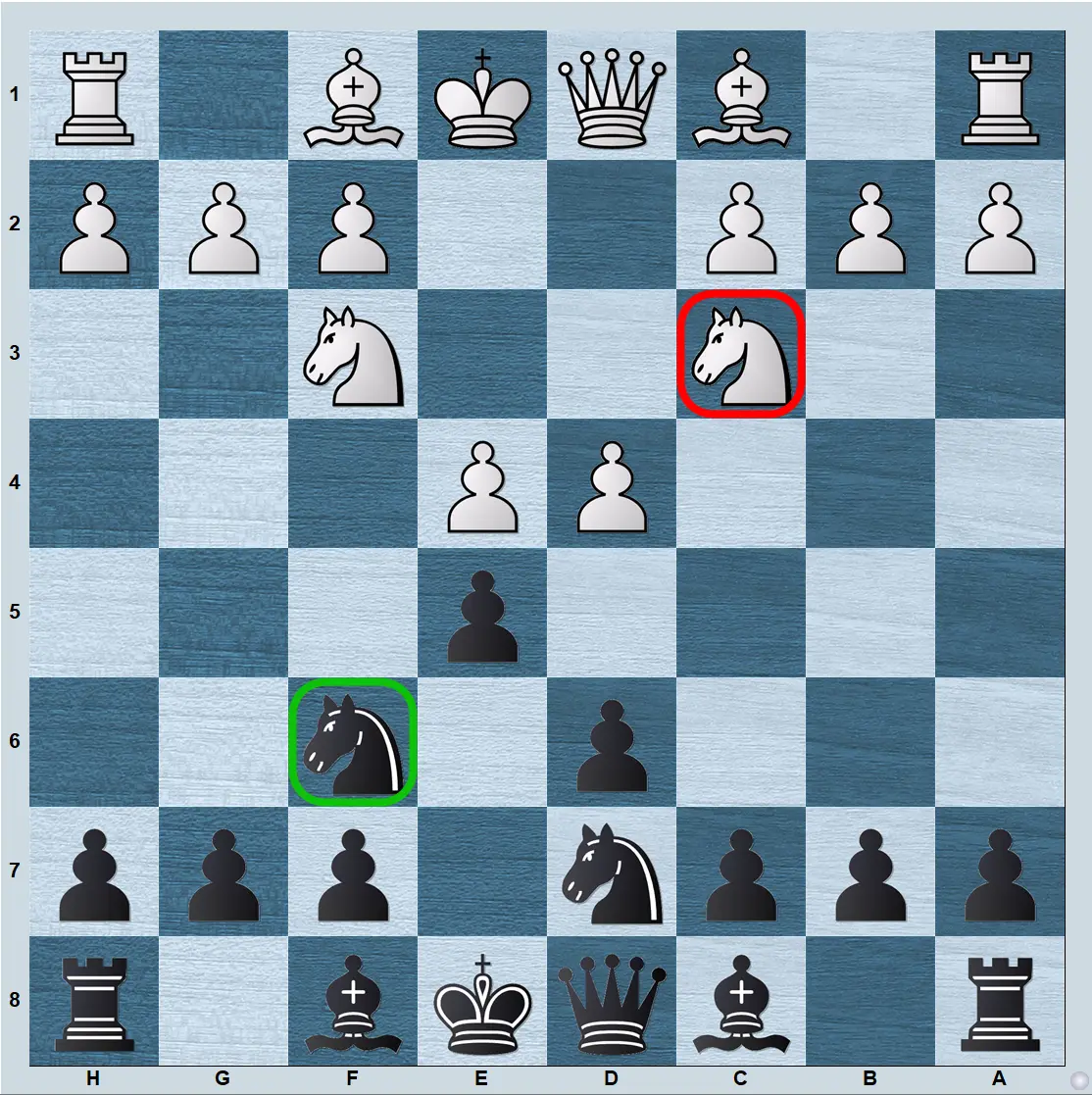
Philidor Improved Hanham, position after 4...Nbd7
Position after 4...Nbd7

Compare this with the standard Hanham. Now Nc3 and ...Nf6 are already part of the position, and that's entirely in Black's favor. The knight on f6 covers the d5 square, so the Qd5 idea that wrecked us before simply doesn't exist. And the Ng5 attack on f7 is neutralized too.

Watch how comfortable life becomes. If White tries the same aggressive Bc4:

...Be7, and even after 6.Ng5, Black just plays ...0-0 and everything is fine.

Improved Hanham Bc4 Ng5 vs ?
Event
?
Site
?
Date
2026.06.17
Round
?
White
Improved Hanham Bc4 Ng5
Black
?
Result
*
ECO
C41
  1. 1. e4
  2. 1... d6
  3. 2. d4
  4. 2... Nf6
  5. 3. Nc3
  6. 3... e5
  7. 4. Nf3
  8. 4... Nbd7

    [%csl Rc3,Gf6]

  9. 5. Bc4
  10. 5... Be7
  11. 6. Ng5
  12. 6... O-O

    [%csl Gg8]

Our Setup and Plans

And if White develops normally with 6.0-0, we reach our setup with no trouble:

6...0-0 7.Re1 c6

The move ...c6 takes control of d5 and prepares ...b5, gaining space on the queenside. White's most common answer is 8.a4, stopping the expansion.

Improved Hanham main position vs ?
Event
?
Site
?
Date
2026.06.17
Round
?
White
Improved Hanham main position
Black
?
Result
*
ECO
C41
  1. 1. e4
  2. 1... d6
  3. 2. d4
  4. 2... Nf6
  5. 3. Nc3
  6. 3... e5
  7. 4. Nf3
  8. 4... Nbd7
  9. 5. Bc4
  10. 5... Be7
  11. 6. O-O
  12. 6... O-O
  13. 7. Re1
  14. 7... c6
  15. 8. a4

This is the main position of the Improved Hanham. There are many ways to play it, but here is my preference.

8...exd4, freeing the e5 square for the knight.
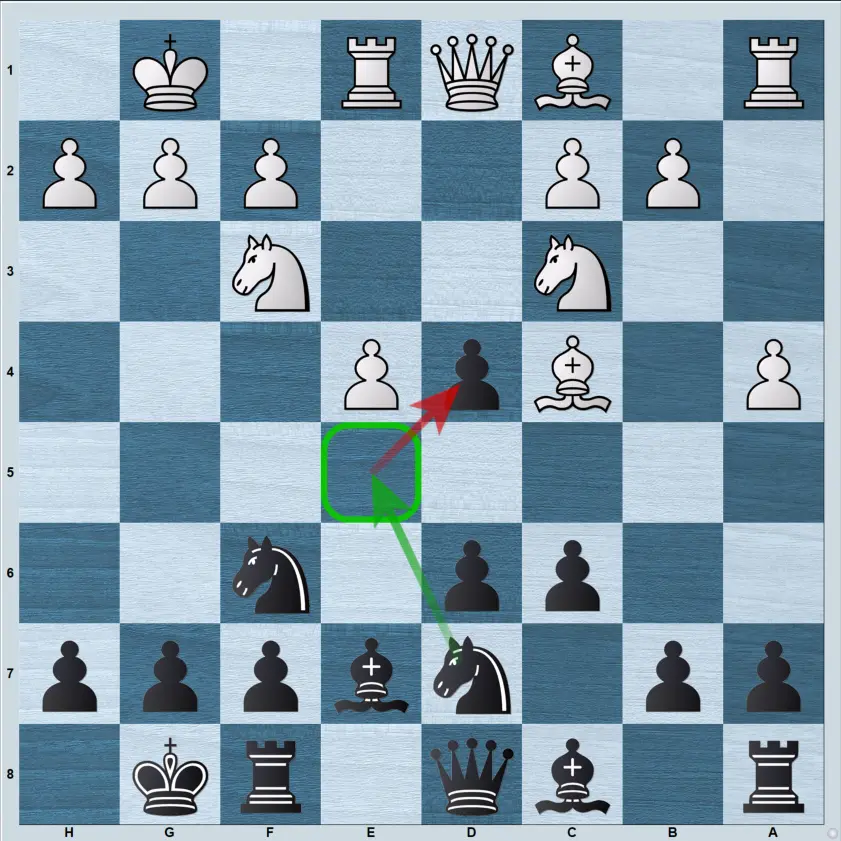
Philidor Improved Hanham, position after 8...exd4
Position after 8...exd4

Now White has two ways to recapture.

If White takes with the queen, 9.Qxd4:

We play 9...Ne5, and here is a trap that many strong players, even IMs and GMs, fall into. It looks like a free pawn. White grabs it: 10.Nxe5 dxe5 11.Qxe5. And suddenly the queen becomes a target.

11...Ng4!

The queen has no good square:

  • 12.Qh5 g6 and White loses material.
  • 12.Qg3 Bh4!, winning the f2 pawn and then the rook on e1.
  • 12.Qf4 Bd6 13.e5 Nxe5 14.Rxe5 Qc7!, winning the exchange.
Improved Hanham Ng4 trap vs ?
Event
?
Site
?
Date
2026.06.17
Round
?
White
Improved Hanham Ng4 trap
Black
?
Result
*
ECO
C41
  1. 1. e4
  2. 1... d6
  3. 2. d4
  4. 2... Nf6
  5. 3. Nc3
  6. 3... e5
  7. 4. Nf3
  8. 4... Nbd7
  9. 5. Bc4
  10. 5... Be7
  11. 6. O-O
  12. 6... O-O
  13. 7. Re1
  14. 7... c6

    [%cal Gb7b5]

  15. 8. a4
  16. 8... exd4

    [%csl Ge5][%cal Gd7e5,Re5d4]

  17. 9. Qxd4
  18. 9... Ne5
  19. 10. Nxe5
  20. 10... dxe5
  21. 11. Qxe5

    [%csl Re5]

  22. 11... Ng4

    [%csl Re5]

  23. 12. Qf4
    1. 12. Qh5
    2. 12... g6−+
    1. 12. Qg3
    2. 12... Bh4−+
  24. 12... Bd6
  25. 13. e5
  26. 13... Nxe5!
  27. 14. Rxe5
  28. 14... Qc7−+

    [%csl Re5]

If White takes with the knight, 9.Nxd4:

We play 9...Ne5 with tempo, attacking the bishop on c4. Then the plan is smooth: ...Re8, the dark-square bishop comes to f8, and from there it depends on White's setup. We can play ...Be6 to trade off White's strong light-square bishop, or route the knight to g6 to pressure the e4 pawn.

Improved Hanham Nxd4 setup vs ?
Event
?
Site
?
Date
2026.06.17
Round
?
White
Improved Hanham Nxd4 setup
Black
?
Result
*
ECO
C41
  1. 1. e4
  2. 1... d6
  3. 2. d4
  4. 2... Nf6
  5. 3. Nc3
  6. 3... e5
  7. 4. Nf3
  8. 4... Nbd7
  9. 5. Bc4
  10. 5... Be7
  11. 6. O-O
  12. 6... O-O
  13. 7. Re1
  14. 7... c6
  15. 8. a4
  16. 8... exd4
  17. 9. Nxd4
  18. 9... Ne5
  19. 10. Ba2
  20. 10... Re8

    [%cal Ge8e4,Ge7f8]

One Note: The Endgame Line

There's one line worth knowing about. White can choose to exchange queens early and steer the game into an endgame.
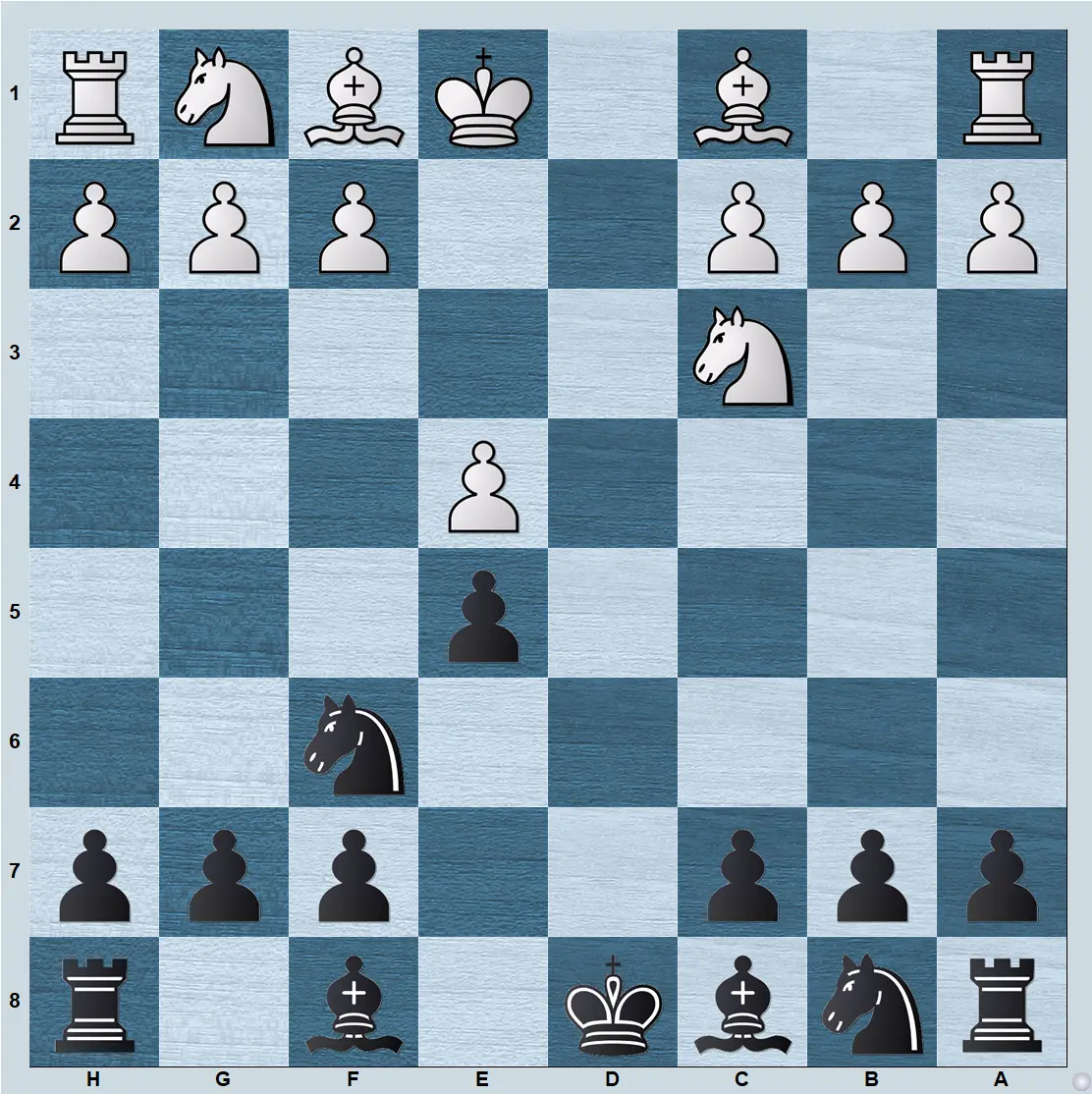
Philidor Improved Hanham endgame, position after the queen trade
 Position after the queen trade

Now, if you're worried this means a quick, boring draw, don't be. It's not like that at all. All the other pieces are still on the board, and there's plenty of play left. You get a real fight, with real chances to win.

The recapture is simple and the moves are clear. The light-square bishop goes to e6, the knight comes to d7, we play ...c6, the king goes to c7, and the dark-square bishop goes to c5 or d6. A safe, comfortable position with everything to play for.

Improved Hanham endgame line vs ?
Event
?
Site
?
Date
2026.06.17
Round
?
White
Improved Hanham endgame line
Black
?
Result
*
ECO
B07
  1. 1. e4
  2. 1... d6
  3. 2. d4
  4. 2... Nf6
  5. 3. Nc3
  6. 3... e5
  7. 4. dxe5
  8. 4... dxe5
  9. 5. Qxd8+
  10. 5... Kxd8
  11. 6. Nf3
  12. 6... Bd6
  13. 7. Bg5
  14. 7... Be6
  15. 8. O-O-O
  16. 8... Nbd7

Strategic Tips and Patterns

Beyond the main lines, a few patterns come up again and again in the Improved Hanham. Once you know them, you'll spot the right plan on your own. Here are the ones I use most.

When White skips a4: the ...b5 break

Remember that ...c6 prepares ...b5, and White usually answers 8.a4 to stop it. But when White doesn't play a4, the door is open. We push ...b5, grab space on the queenside, and sometimes we even win the e4 pawn for free.

b5 break vs ?
Event
?
Site
?
Date
2026.06.17
Round
?
White
b5 break
Black
?
Result
*
ECO
C41
  1. 1. e4
  2. 1... d6
  3. 2. d4
  4. 2... Nf6
  5. 3. Nc3
  6. 3... e5
  7. 4. Nf3
  8. 4... Nbd7
  9. 5. Bc4
  10. 5... Be7
  11. 6. O-O
  12. 6... O-O
  13. 7. h3
  14. 7... c6
  15. 8. Be3
  16. 8... b5
  17. 9. Bb3
  18. 9... b4
  19. 10. Ne2
  20. 10... Nxe4

When White plays f4: the weakened king

Sometimes White tries to play aggressively with f4. It looks active, but it comes at a cost. The f4 push weakens White's own king, and we can use that. Often the long diagonal opens up for us, and the attack turns the other way.

g1-a7 diagonal weakness vs ?
Event
?
Site
?
Date
2026.06.17
Round
?
White
g1-a7 diagonal weakness
Black
?
Result
*
ECO
C41
  1. 1. e4
  2. 1... d6
  3. 2. d4
  4. 2... Nf6
  5. 3. Nc3
  6. 3... e5
  7. 4. Nf3
  8. 4... Nbd7
  9. 5. Bc4
  10. 5... Be7
  11. 6. O-O
  12. 6... O-O
  13. 7. Re1
  14. 7... c6
  15. 8. a4
  16. 8... exd4
  17. 9. Nxd4
  18. 9... Ne5
  19. 10. Bf1
  20. 10... Re8
  21. 11. f4
  22. 11... Ng6
  23. 12. e5
  24. 12... dxe5
  25. 13. fxe5
  26. 13... Bc5

    [%csl Rd4, Re5][%cal Gc5g1]

Best Games in the Philidor

The best way to understand any opening is to watch it in action. Here are some of the finest Philidor games ever played, with notes on what makes each one work.

Bok, Benjamin vs Rapport, Richard
Event
Riga Tech op 4th
Site
Riga
Date
2014.08.23
Round
8
White
Bok, Benjamin
Black
Rapport, Richard
Result
0-1
ECO
C41

[%evp 0,52,24,11,60,59,60,55,87,51,56,42,42,37,64,58,77,33,45,19,9,12,13,-32, -22,-60,-27,-29,-59,-25,-27,-34,-25,-89,-99,-99,-142,-157,-172,-153,-111,-222, -242,-203,-212,-266,-614,-643,-527,-29995,-29996,-29997,-29998,-29999,-30000]

  1. 1. e4
  2. 1... d6
  3. 2. d4
  4. 2... Nf6
  5. 3. Nc3
  6. 3... e5
  7. 4. Nf3
  8. 4... Nbd7
  9. 5. Bc4
  10. 5... Be7
  11. 6. a4
  12. 6... c6
  13. 7. O-O
  14. 7... Qc7
  15. 8. Ba2
  16. 8... h6
  17. 9. dxe5
  18. 9... dxe5
  19. 10. Nh4
  20. 10... Nc5
  21. 11. Nf5
  22. 11... Bxf5
  23. 12. exf5
  24. 12... O-O
  25. 13. Be3
  26. 13... e4
  27. 14. Qe2
  28. 14... Qe5
  29. 15. Rae1
  30. 15... Rae8
  31. 16. Qc4
  32. 16... Bd6
  33. 17. g3
  34. 17... Qxf5
  35. 18. Bd4
  36. 18... Ncd7
  37. 19. Re2
  38. 19... Be5
  39. 20. Bxa7
  40. 20... Bxc3
  41. 21. Qxc3
  42. 21... Ne5
  43. 22. Bc5
  44. 22... Nf3+
  45. 23. Kg2
  46. 23... Re5
  47. 24. Bxf8
  48. 24... Qh3+
  49. 25. Kxh3
  50. 25... Rh5+
  51. 26. Kg2
  52. 26... Rxh2#

0-1

Dragnev, Valentin vs Carlsen, M..
Event
45th Olympiad 2024
Site
Budapest HUN
Date
2024.09.18
Round
7.9
White
Dragnev, Valentin
Black
Carlsen, M..
Result
0-1
ECO
C41

[%evp 0,80,24,33,74,75,60,66,85,59,58,56,49,42,34,52,40,37,60,36,65,60,65,63, 47,48,58,63,70,67,53,50,72,42,56,29,74,38,61,60,33,6,-11,-11,0,-38,-49,-37,-41, -41,-81,-83,-71,-86,-94,-117,-80,-102,-74,-81,-89,-94,-45,-113,-45,-45,-223, -197,-165,-184,-184,-232,-234,-361,-323,-868,-869,-1135,-1220,-1221,-1076, -1703,-2222]

  1. 1. e4
  2. 1... d6
  3. 2. d4
  4. 2... Nf6
  5. 3. Nc3
  6. 3... e5
  7. 4. Nf3
  8. 4... Nbd7
  9. 5. Bc4
  10. 5... Be7
  11. 6. O-O
  12. 6... O-O
  13. 7. a4
  14. 7... c6
  15. 8. h3
  16. 8... h6
  17. 9. Be3
  18. 9... Re8
  19. 10. a5
  20. 10... exd4
  21. 11. Qxd4
  22. 11... Bf8
  23. 12. Rfe1
  24. 12... Qc7
  25. 13. Bf4
  26. 13... Ne5
  27. 14. Be2
  28. 14... Bd7
  29. 15. Bg3
  30. 15... a6
  31. 16. Bh4
  32. 16... Re6
  33. 17. Nxe5
  34. 17... Rxe5
  35. 18. b4
  36. 18... Rae8
  37. 19. Bg3
  38. 19... c5
  39. 20. Qd1
  40. 20... cxb4
  41. 21. Bxe5
  42. 21... dxe5
  43. 22. Nd5
  44. 22... Nxd5
  45. 23. exd5
  46. 23... e4
  47. 24. Bg4
  48. 24... f5
  49. 25. Bh5
  50. 25... Rc8
  51. 26. d6
  52. 26... Qc5
  53. 27. c3
  54. 27... bxc3
  55. 28. Qb3+
  56. 28... Qc4
  57. 29. Qxb7
  58. 29... Qe6
  59. 30. Qxa6
  60. 30... Bxd6
  61. 31. Qa7
  62. 31... c2
  63. 32. a6
  64. 32... Bf4
  65. 33. Qb7
  66. 33... Rb8
  67. 34. Qa7
  68. 34... Qd6
  69. 35. Be2
  70. 35... Be6
  71. 36. Bf1
  72. 36... Kh7
  73. 37. Rec1
  74. 37... Bxc1
  75. 38. Rxc1
  76. 38... Rb1
  77. 39. Qe3
  78. 39... Qd1
  79. 40. a7
  80. 40... Qxc1

0-1

Rosen, E.. vs Jobava, Ba
Event
28th Abu Dhabi Masters
Site
Abu Dhabi UAE
Date
2022.08.18
Round
3.25
White
Rosen, E..
Black
Jobava, Ba
Result
0-1
ECO
C41

[%evp 0,54,17,16,47,47,47,47,93,51,45,46,46,46,45,40,40,18,49,54,47,48,73,40, 56,65,34,9,9,0,8,10,6,-3,-7,-7,0,0,4,-79,-105,-111,-114,-111,-103,-113,-120, -120,-141,-115,258,-29973,-29984,-29985,-29986,-29991,-29992]

  1. 1. e4
  2. 1... d6
  3. 2. d4
  4. 2... Nf6
  5. 3. Nc3
  6. 3... e5
  7. 4. Nf3
  8. 4... Nbd7
  9. 5. Bc4
  10. 5... Be7
  11. 6. O-O
  12. 6... O-O
  13. 7. Re1
  14. 7... h6
  15. 8. a4
  16. 8... a5
  17. 9. h3
  18. 9... Re8
  19. 10. Be3
  20. 10... Bf8
  21. 11. Qb1
  22. 11... exd4
  23. 12. Bxd4
  24. 12... Ne5
  25. 13. Bxe5
  26. 13... dxe5
  27. 14. Qa2
  28. 14... Qe7
  29. 15. Rad1
  30. 15... c6
  31. 16. Nh4
  32. 16... Qc7
  33. 17. Re3
  34. 17... Be6
  35. 18. Red3
  36. 18... Kh7
  37. 19. Nf5
  38. 19... Bxf5
  39. 20. exf5
  40. 20... e4
  41. 21. R3d2
  42. 21... e3
  43. 22. fxe3
  44. 22... Bc5
  45. 23. Kh1
  46. 23... Rxe3
  47. 24. Bxf7
  48. 24... Ng4
  49. 25. hxg4
  50. 25... Re1+
  51. 26. Rxe1
  52. 26... Qg3
  53. 27. Rd3
  54. 27... Qh4+

0-1

My Best Philidor Games

Now let me show you the Philidor in my own games. I've played this opening for years, against strong opposition, and won plenty of games against grandmasters with it. These are some of my favorites, and they show the ideas from this guide working against real, well-prepared opponents.

Puranik, Abhimanyu vs Shahinyan, David
Event
Tsaghkadzor ChessMood op
Site
Tsaghkadzor
Date
2021.10.06
Round
3
White
Puranik, Abhimanyu
Black
Shahinyan, David
Result
0-1
ECO
C41

[%evp 0,45,28,13,67,59,59,59,82,48,59,53,47,37,43,34,56,40,28,43,47,38,58,49, 41,46,37,33,46,28,13,29,27,12,6,21,18,-9,-18,-11,-8,-35,-35,-28,-41,-140,-160, -148]

  1. 1. e4
  2. 1... d6
  3. 2. d4
  4. 2... Nf6
  5. 3. Nc3
  6. 3... e5
  7. 4. Nf3
  8. 4... Nbd7
  9. 5. Bc4
  10. 5... Be7
  11. 6. O-O
  12. 6... O-O
  13. 7. a4
  14. 7... c6
  15. 8. Re1
  16. 8... h6
  17. 9. h3
  18. 9... Re8
  19. 10. Ba2
  20. 10... Bf8
  21. 11. Be3
  22. 11... exd4
  23. 12. Bxd4
  24. 12... Qa5
  25. 13. Rb1
  26. 13... Qh5
  27. 14. e5
  28. 14... dxe5
  29. 15. Nxe5
  30. 15... Nxe5
  31. 16. Qxh5
  32. 16... Nxh5
  33. 17. Rxe5
  34. 17... Rd8
  35. 18. Bxa7
  36. 18... Rxa7
  37. 19. Rxh5
  38. 19... g5
  39. 20. f4
  40. 20... Bf5
  41. 21. fxg5
  42. 21... Bxc2
  43. 22. gxh6
  44. 22... Bxb1
  45. 23. Bxb1
  46. 23... Bb4
  47. 24. Bc2
  48. 24... Ra5
  49. 25. Rh4
  50. 25... Bc5+
  51. 26. Kh1
  52. 26... Rd4
  53. 27. Ne4
  54. 27... f5
  55. 28. Nf6+
  56. 28... Kh8
  57. 29. Rh5
  58. 29... Be7
  59. 30. Ne4
  60. 30... Re5
  61. 31. g4
  62. 31... Rexe4
  63. 32. Bxe4
  64. 32... fxe4
  65. 33. Re5
  66. 33... Bf6
  67. 34. Re6
  68. 34... Bg5
  69. 35. Kg2
  70. 35... Kh7
  71. 36. Kg3
  72. 36... Rb4
  73. 37. Re5
  74. 37... Bxh6
  75. 38. g5
  76. 38... Bg7
  77. 39. Re6
  78. 39... Kg8
  79. 40. g6
  80. 40... Bh6
  81. 41. Kg4
  82. 41... Rxa4
  83. 42. h4
  84. 42... Kg7
  85. 43. h5
  86. 43... e3+
  87. 44. Kf3
  88. 44... Rf4+
  89. 45. Kg3
  90. 45... Rf6
  91. 46. Re7+
  92. 46... Kf8
  93. 47. Re4
  94. 47... Rf5

0-1

Pashikian, A.. vs Shahinyan, David
Event
82nd ch-ARM HL 2022
Site
Yerevan ARM
Date
2022.01.17
Round
6.2
White
Pashikian, A..
Black
Shahinyan, David
Result
0-1
ECO
C41

[%evp 0,71,16,25,65,60,60,66,68,52,49,41,41,41,44,38,44,40,36,36,39,27,45,41, 37,39,46,22,28,17,29,12,24,-5,28,14,14,-1,4,-69,14,4,-43,-75,-21,-96,-81,-76, -72,-60,-65,-64,-66,-114,-104,-136,-136,-129,-118,-148,-135,-175,-109,-131, -144,-146,-61,-70,-107,-94,-124,-143,-188,-258]

  1. 1. d4
  2. 1... d6
  3. 2. e4
  4. 2... Nf6
  5. 3. Nc3
  6. 3... e5
  7. 4. Nf3
  8. 4... Nbd7
  9. 5. Bc4
  10. 5... Be7
  11. 6. O-O
  12. 6... O-O
  13. 7. a4
  14. 7... c6
  15. 8. Re1
  16. 8... exd4
  17. 9. Nxd4
  18. 9... Ne5
  19. 10. Bf1
  20. 10... Re8
  21. 11. a5
  22. 11... Bd7
  23. 12. h3
  24. 12... Qc7
  25. 13. Bf4
  26. 13... b5
  27. 14. axb6
  28. 14... axb6
  29. 15. Rxa8
  30. 15... Rxa8
  31. 16. Bg3
  32. 16... Re8
  33. 17. f4
  34. 17... Ng6
  35. 18. Qf3
  36. 18... b5
  37. 19. Nb1
  38. 19... Qb6
  39. 20. c3
  40. 20... c5
  41. 21. Nc2
  42. 21... Bf8
  43. 22. Ne3
  44. 22... c4
  45. 23. Nd2
  46. 23... Bc6
  47. 24. Bf2
  48. 24... Nxe4
  49. 25. Nxe4
  50. 25... Bxe4
  51. 26. Qg3
  52. 26... Qc6
  53. 27. f5
  54. 27... Ne5
  55. 28. f6
  56. 28... Re6
  57. 29. fxg7
  58. 29... Bxg7
  59. 30. Ng4
  60. 30... Nxg4
  61. 31. Qxg4
  62. 31... f5
  63. 32. Qh4
  64. 32... Rg6
  65. 33. Qd8+
  66. 33... Bf8
  67. 34. g3
  68. 34... d5
  69. 35. Ra1
  70. 35... d4
  71. 36. cxd4
  72. 36... f4
  73. 37. g4
  74. 37... h5
  75. 38. g5
  76. 38... Qd6
  77. 39. Qxd6
  78. 39... Rxg5+
  79. 40. Kh2
  80. 40... Bxd6
  81. 41. h4
  82. 41... Rg6
  83. 42. Ra6
  84. 42... Bd3
  85. 43. Bh3
  86. 43... b4
  87. 44. d5
  88. 44... c3
  89. 45. Ra8+
  90. 45... Kh7
  91. 46. Bd4
  92. 46... Rg7
  93. 47. Bxg7
  94. 47... f3+
  95. 48. Kg1
  96. 48... Kxg7
  97. 49. bxc3
  98. 49... Bc5+
  99. 50. Kh1
  100. 50... b3
  101. 51. Rb8
  102. 51... f2
  103. 52. Rb7+
  104. 52... Kf6
  105. 53. Bg2
  106. 53... Be4

0-1

beatles_22 vs Shahinyan_ChessMood
Event
Live Chess
Site
Chess.com
Date
2026.05.03
Round
-
White
beatles_22
Black
Shahinyan_ChessMood
Result
0-1
ECO
C41
  1. 1. e4
  2. 1... d6
  3. 2. d4
  4. 2... Nf6
  5. 3. Nc3
  6. 3... e5
  7. 4. Nf3
  8. 4... Nbd7
  9. 5. Bc4
  10. 5... Be7
  11. 6. O-O
  12. 6... O-O
  13. 7. Re1
  14. 7... c6
  15. 8. a4
  16. 8... exd4
  17. 9. Qxd4
  18. 9... Ne5
  19. 10. Nxe5
  20. 10... dxe5
  21. 11. Qxe5
  22. 11... Ng4
  23. 12. Qf4
  24. 12... Bd6
  25. 13. e5
  26. 13... Nxe5
  27. 14. Rxe5
  28. 14... Qc7
  29. 15. Qh4
  30. 15... Bxe5
  31. 16. Ne4
  32. 16... Bf5
  33. 17. Ng3
  34. 17... Bxc2
  35. 18. Be3
  36. 18... Rad8
  37. 19. Re1
  38. 19... Bf6
  39. 20. Qg4
  40. 20... Qd7
  41. 21. Qf3
  42. 21... Bg6
  43. 22. Ne4
  44. 22... Bxe4
  45. 23. Qxe4
  46. 23... Rfe8
  47. 24. Qf3
  48. 24... a6
  49. 25. Bb6
  50. 25... Rxe1+

0-1

Philidor with White: The Reversed Setup

Here's the bonus I promised you at the start. I fell so hard for the Philidor structure that I started playing it with the White pieces too, and with an extra tempo, it's even more dangerous.

The move order is 1.e4 e5 2.Nf3 Nc6 3.Be2, planning d3, Nbd2, c3

Reversed Philidor setup vs ?
Event
?
Site
?
Date
2026.06.17
Round
?
White
Reversed Philidor setup
Black
?
Result
*
ECO
C44
  1. 1. e4
  2. 1... e5
  3. 2. Nf3
  4. 2... Nc6
  5. 3. Be2
  6. 3...
  7. 4. d3
  8. 4...
  9. 5. c3
  10. 5...
  11. 6. Nbd2
  12. 6...
  13. 7. O-O

Thank You

Friends, thank you for reading all the way through. I know your time is valuable, and you spent some of it here with me.

I hope I've shown you that the Philidor is not the passive, boring opening people think it is. It's solid, it's full of ideas, and it gives you real chances to play for a win, even against strong opponents. That's what made me fall in love with it, and I hope you'll feel the same.

Good luck out there, and enjoy the Philidor.

IM David Shahinyan

Frequently Asked Questions

What is the Philidor Defense?

The Philidor Defense is a chess opening for Black against 1.e4. It begins 1.e4 e5 2.Nf3 d6, where Black defends the e5 pawn with a pawn instead of a knight. It's a solid, flexible setup with clear plans, and its ECO code is C41.

Why is it called the Philidor Defense?

It's named after François-André Danican Philidor, the 18th-century French composer and the strongest chess player of his time. In his 1749 book L'analyse du jeu des Échecs, he championed 2...d6 and famously argued that pawns are "the soul of chess." The opening has carried his name ever since.

Is the Philidor Defense good?

Yes, especially for club and amateur players. The plans are clear, the structure is solid, and most opponents aren't prepared for it. The engine prefers White slightly out of the opening, which is why it's rare at the very top level, but the practical chances for Black are very real.

Is the Philidor Defense good for beginners?

Yes. It's one of the friendlier openings to learn because it rewards understanding a setup and a few plans rather than memorizing long forcing lines. Beginners get a solid position and clear ideas to follow.

How does White play against the Philidor?

White's main move is 3.d4, challenging Black's center right away. Black then has three serious replies: 3...exd4 (the Exchange Variation, also called the Antoshin), 3...Nd7 (the Hanham), and 3...f5 (the Philidor Countergambit).

What is the Hanham Variation in the Philidor?

The Hanham is the classical Philidor setup, where Black supports the e5 pawn with the knight and builds a solid structure: Nd7, Be7, c6, Qc7, Ngf6, and 0-0. It's the most common way players start, though the move order needs care to avoid some sharp White tries.

What is the Philidor Countergambit?

The Philidor Countergambit is Black's aggressive try 3...f5, hitting back in the center immediately. It's Philidor's own original idea and can surprise club players, but against accurate play White gets a clearly better position.

Why does the Philidor have a bad reputation?

Mostly because of two things: the dark-square bishop on f8 has a passive life, and White gets a freer center out of the opening. But that reputation undersells it. With the right move order and clear plans, Black gets a solid, fully playable position with real winning chances.


Table of Contents

This website uses cookies. To learn more, visit our Cookie Policy.