Create your free account

OR Register This site is protected by reCAPTCHA and the Google Privacy Policy and Terms of Service apply.

Create your free account

By clicking “Register”, you agree to our
terms of service and privacy policy

This site is protected by reCAPTCHA and the Google Privacy Policy and Terms of Service apply.

Log in

OR

Reset password

Hello Champions! GM Avetik here (or Avo, as my friends call me.)

I'm in love with the French Defense, and if you're interested in learning this opening, we're potential future friends, hehe.

I've been playing the French Defense since I was a kid. It became my main weapon against 1.e4, I became a grandmaster playing the French. Before I stepped away from professional chess, I was known as one of the top French specialists in the world.

How did that happen? Well, I was lucky. I learned the French from the best.

In Armenia, we have a special tradition with this opening. It traces back to GM Rafael Vaganian, one of the strongest players of his generation, and one of the world's leading French experts. (One of the most brilliant French games ever played was by him, I'll show it to you soon.) He passed his knowledge to the next generation of Armenian grandmasters, who passed it down to me. Now I continue the flow, and transfer my knowledge to not only Armenian future champions, but to you and all French lovers in the world.

Now, some people believe the French is a passive opening. And honestly, that's true, if you don't know how to play it, and if you play it passively. But once you understand it, the French is one of the most aggressive openings in chess. Even at the very top level, it's one of the best choices if you want to win with Black.

That's why at ChessMood, we don't call it the French Defense. We call it the French Attack.

In this guide, I'll share with you the philosophy and ideas of French Defense, history, evolutions and variations of it, give you enough knowledge so you get started using in your games (often there will be tricky moves to surprise your opponents and take them out of the book), and at the end, will also share resources, if you want to dive in deeper.

Let's go!

We start with why 1…e6.

The main idea behind French Defense

After 1.e4, Black plays e6. What is the idea of this move?

They prepare the next move to play d5 and recapture it with the pawn.
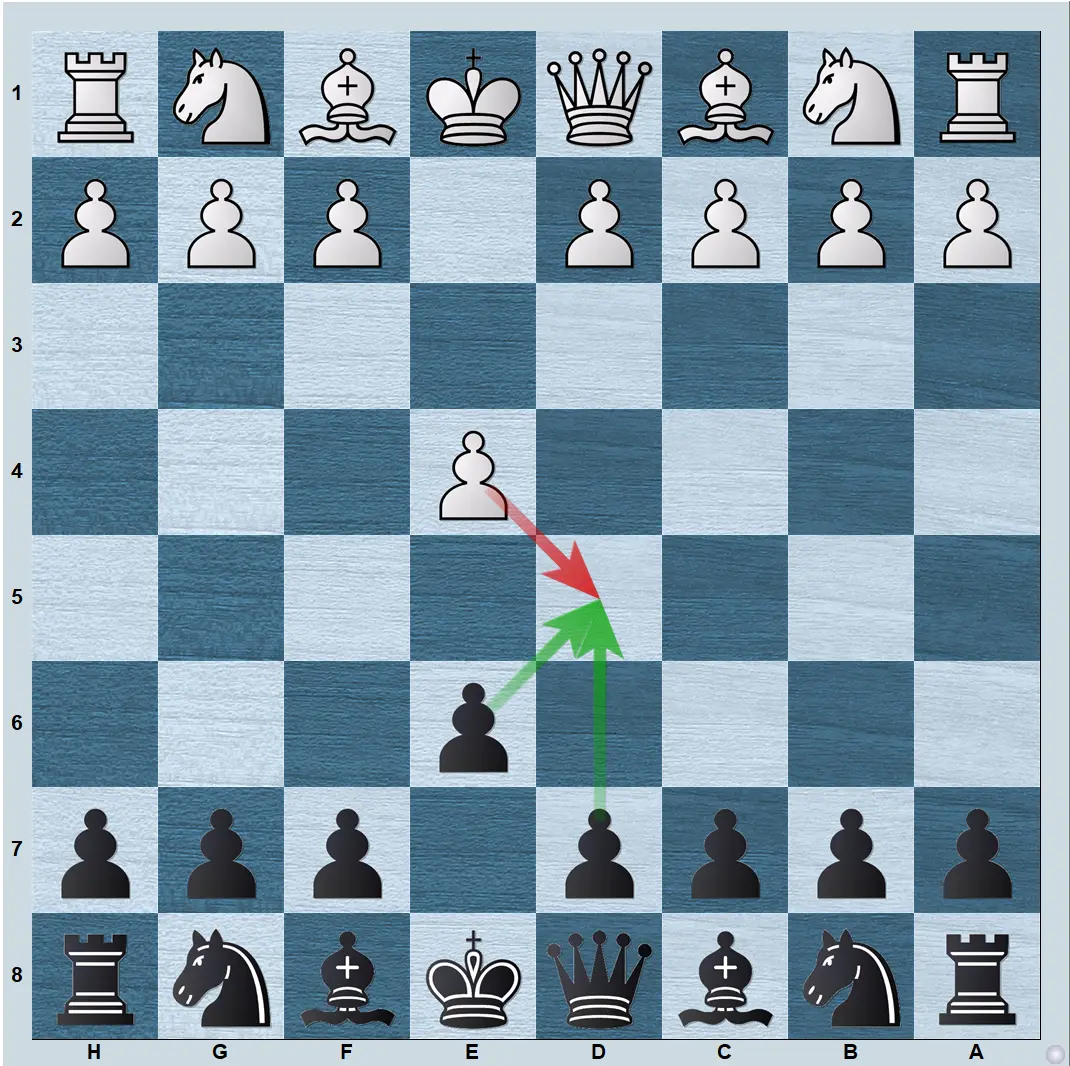
Starting position of the French Defense after 1.e4 e6
Position after 1.e4 e6

Then why not 1…d5 immediately and recapture with the Queen you might have asked? That's a good question.
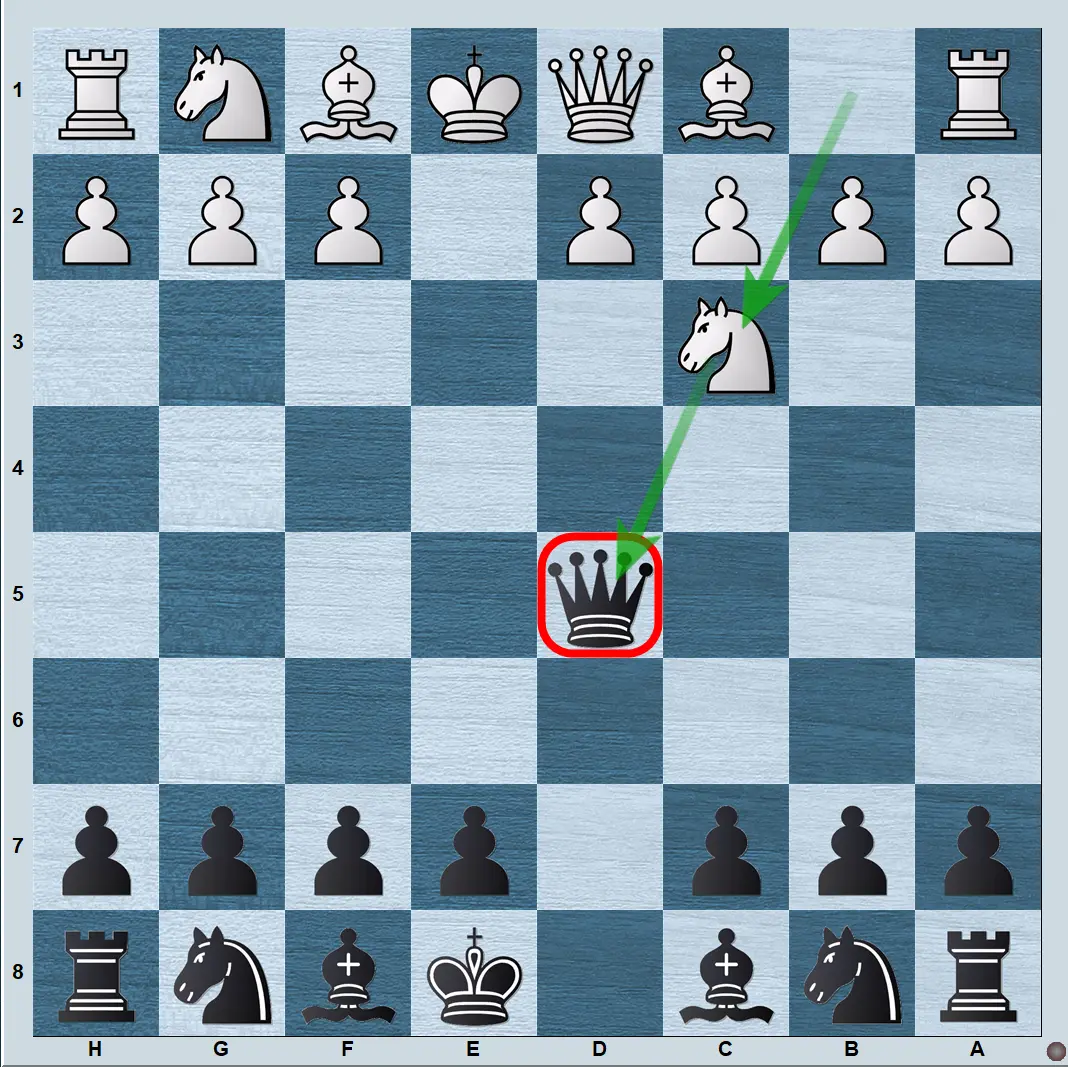
Why 1...d5 is not recommended against 1.e4
Position after 1.e4 d5 2.exd5 Qxd5 3.Nc3

The problem is that after 2.ed5 Qd5, Black develops the Queen early in the game, which goes against the opening principles. One of them says don't activate your Queen early in the game because it will be attacked by the opponent's pieces and you will lose tempos. Here is the case.

White plays 3.Nc3, developing the Knight with a tempo, attacking Black's Queen.

This is the idea of French Defense, with starting the first move e6 and preparing after d5, in case of capture, to recapture it with the "e" pawn, not with the Queen.

Few words about its history, and we dive into variations.

History, Origin and Evolution

The French Defense gets its name from a correspondence match played between the London and Paris Chess Clubs from 1834 to 1836. A Paris team member named Jacques Chamouillet convinced his teammates to answer 1.e4 with 1…e6, the Parisians won the match, and the move has been associated with them ever since.
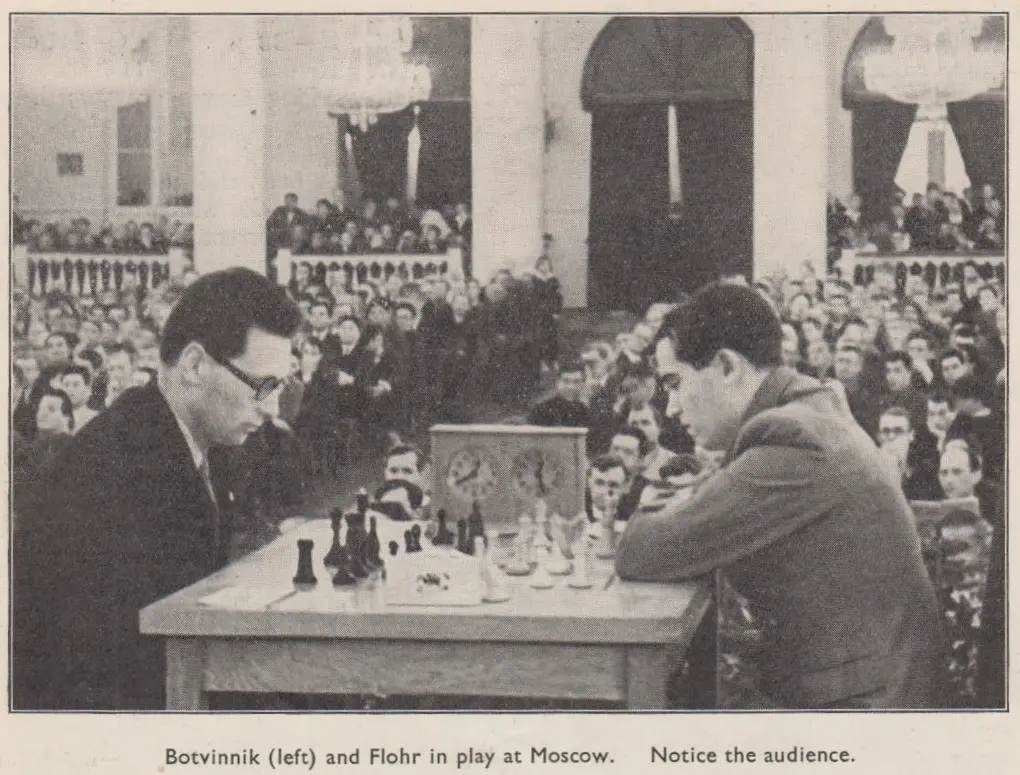
Botvinnik and Flohr playing at the 1933 Moscow match
Source: 1935 Tournament Book

The French really arrived at the top level in 1927, when Alexander Alekhine used this opening to win game 1 of his World Championship match against Capablanca. After that, the Soviet school (Nimzowitsch, Botvinnik, Petrosian, Korchnoi, Vaganian) reshaped its theory.

For decades now, the French has been the third most popular reply to 1.e4, and it briefly passed 1…e5 around 2006.

It's still a respected weapon even on the top-top levels. In 2023 World Championship Match, Ding Liren vs. Ian Nepomniachtchi, that later Ding won and became the World Champion, guess what was his main weapon with Black pieces against 1.e4? Yes - French Defense!

Main Variations

After the main move 2.d4 d5, White has 4 main options. I'll quickly introduce you to them, explain the ideas, downsides, and how you should react against each of them.
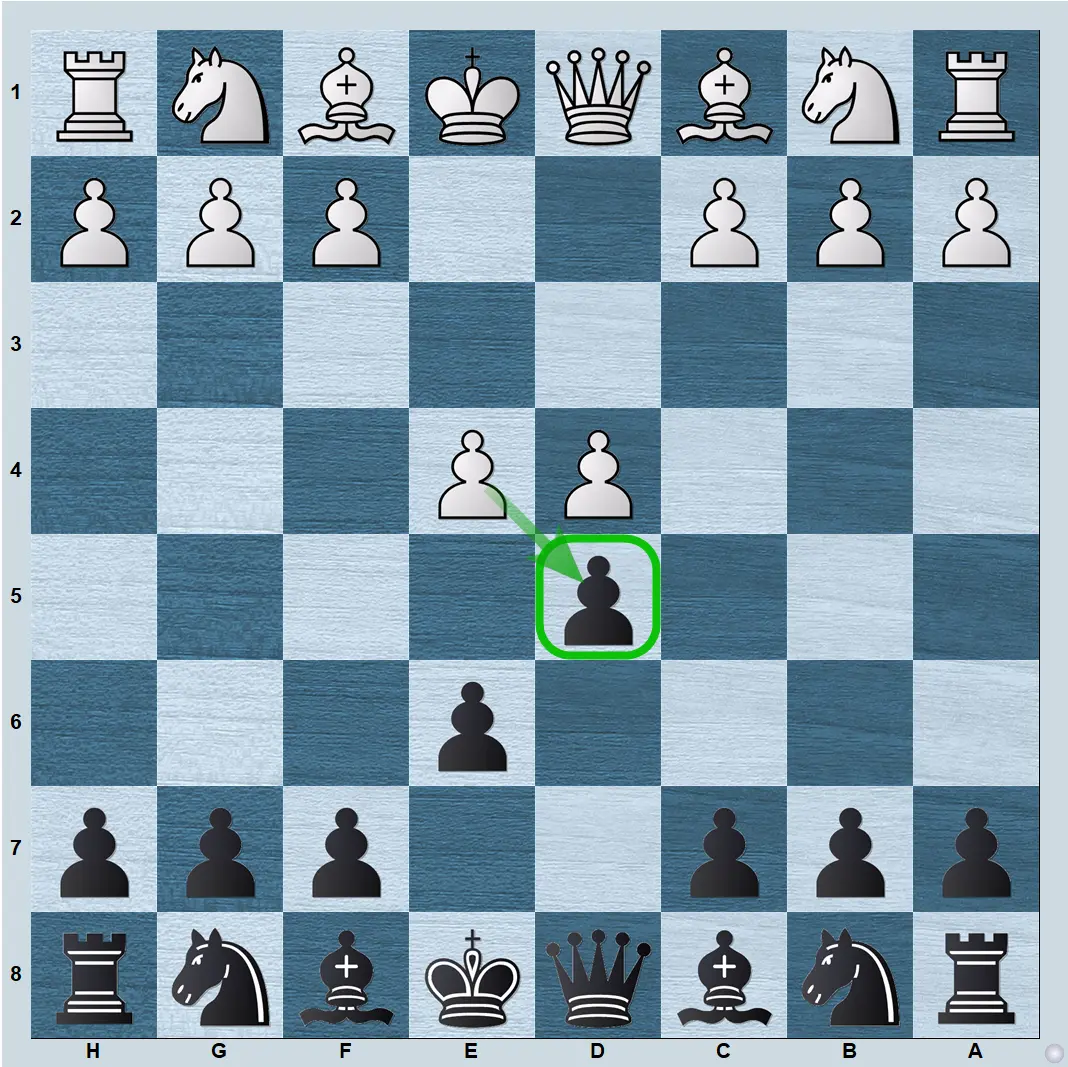
French Defense Exchange Variation after 3.exd5 exd5
Position after 2...d5

3. exd5 - Exchange Variation

This is the least popular move at the top level. It's harmless, and Black has zero problems in the opening.

However, it's the most popular move you'll face at lower levels, especially below 1,500.

The reason - People don't know much theory, and trading pieces, simplifying the game is instinct of many chess players. And when they see an option - they exchange. Here is the case.

It seems they trade the e4 pawn with d5, but no. In reality, they trade the e4 pawn with passive e6 pawn! This is something most don't even realize.
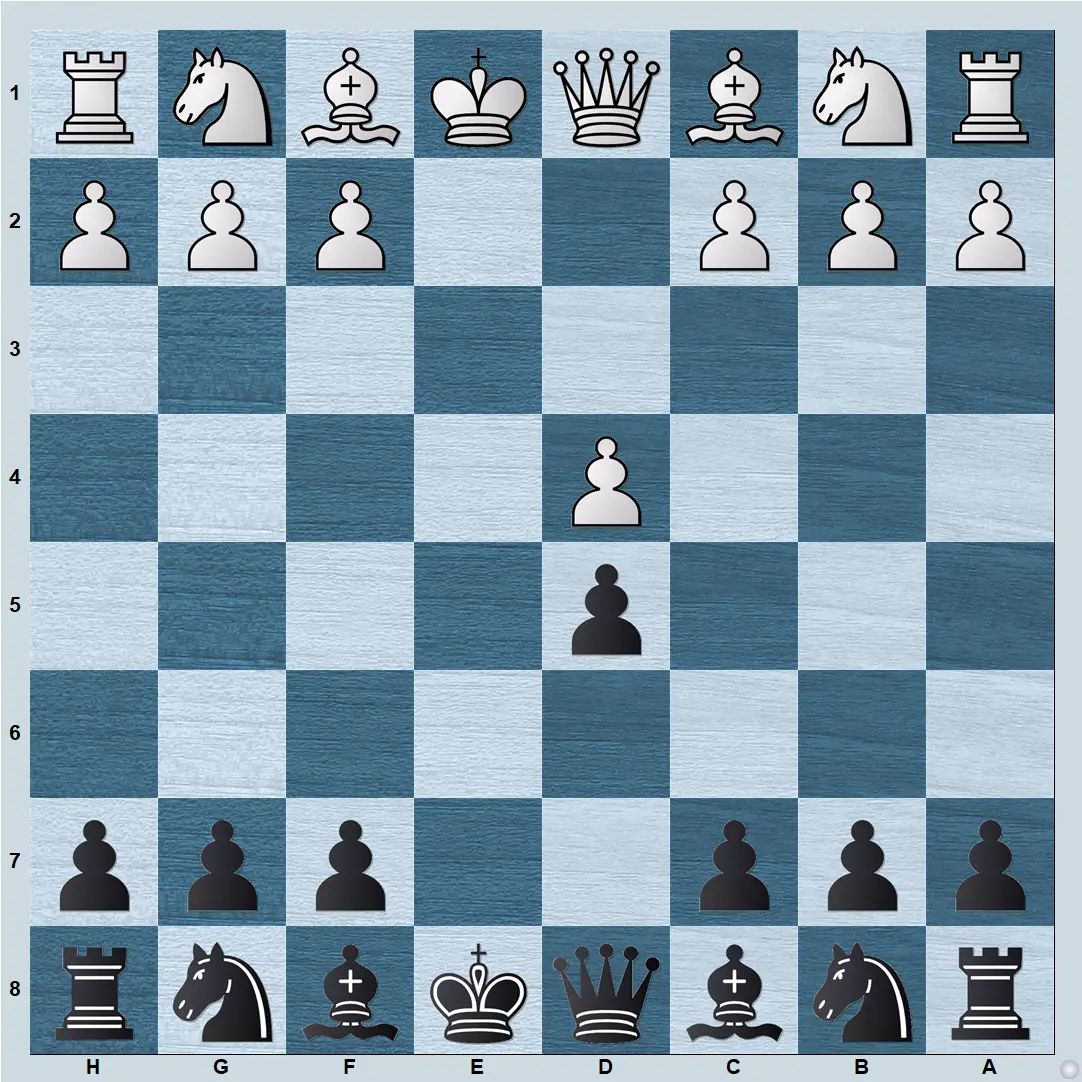
French Defense Exchange Variation main position
Position after 3...exd5

You just recapture with 3…exd5, and unlock your light-squared Bishop.

From here you have 2 plans to develop your pieces.

Option A - normal way.

Nf6, Bd6, 0-0, Nc6, Bg4, Re8 and so on…

Option A - normal way vs ?
Event
?
Site
?
Date
2026.06.06
Round
?
White
Option A - normal way
Black
?
Result
*
ECO
C01
  1. 1. e4
  2. 1... e6
  3. 2. d4
  4. 2... d5
  5. 3. exd5
  6. 3... exd5
  7. 4. Nf3
  8. 4... Nf6
  9. 5.
  10. 5... Bd6
  11. 6.
  12. 6... O-O
  13. 7.
  14. 7... Nc6
  15. 8.
  16. 8... Bg4

Option B - Aggressive way, preparing a long castle!

Nc6, Bd6, Nge7, Bf5, Qd7, 0-0-0, and then f6-g5-h5, and attack White's King. (White mostly caste kingside)

Option B - Aggressive way vs ?
Event
?
Site
?
Date
2026.06.06
Round
?
White
Option B - Aggressive way
Black
?
Result
*
ECO
C01
  1. 1. e4
  2. 1... e6
  3. 2. d4
  4. 2... d5
  5. 3. exd5
  6. 3... exd5
  7. 4. Nf3
  8. 4... Nc6
  9. 5.
  10. 5... Bd6
  11. 6.
  12. 6... Nge7
  13. 7.
  14. 7... Bf5
  15. 8.
  16. 8... Qd7
  17. 9.
  18. 9... O-O-O

    [%cal Gf7f6,Gg7g5,Gh7h5]

This is my favorite way! This is the favorite way of ChessMood students. And this is how I recommend playing in our French Attack course. (More about it later)

3. e5 - Advance Variation

This is the second most popular move you will face when playing French at the low level.

White advances their pawn (from where comes the name of the variation - advance variation.)
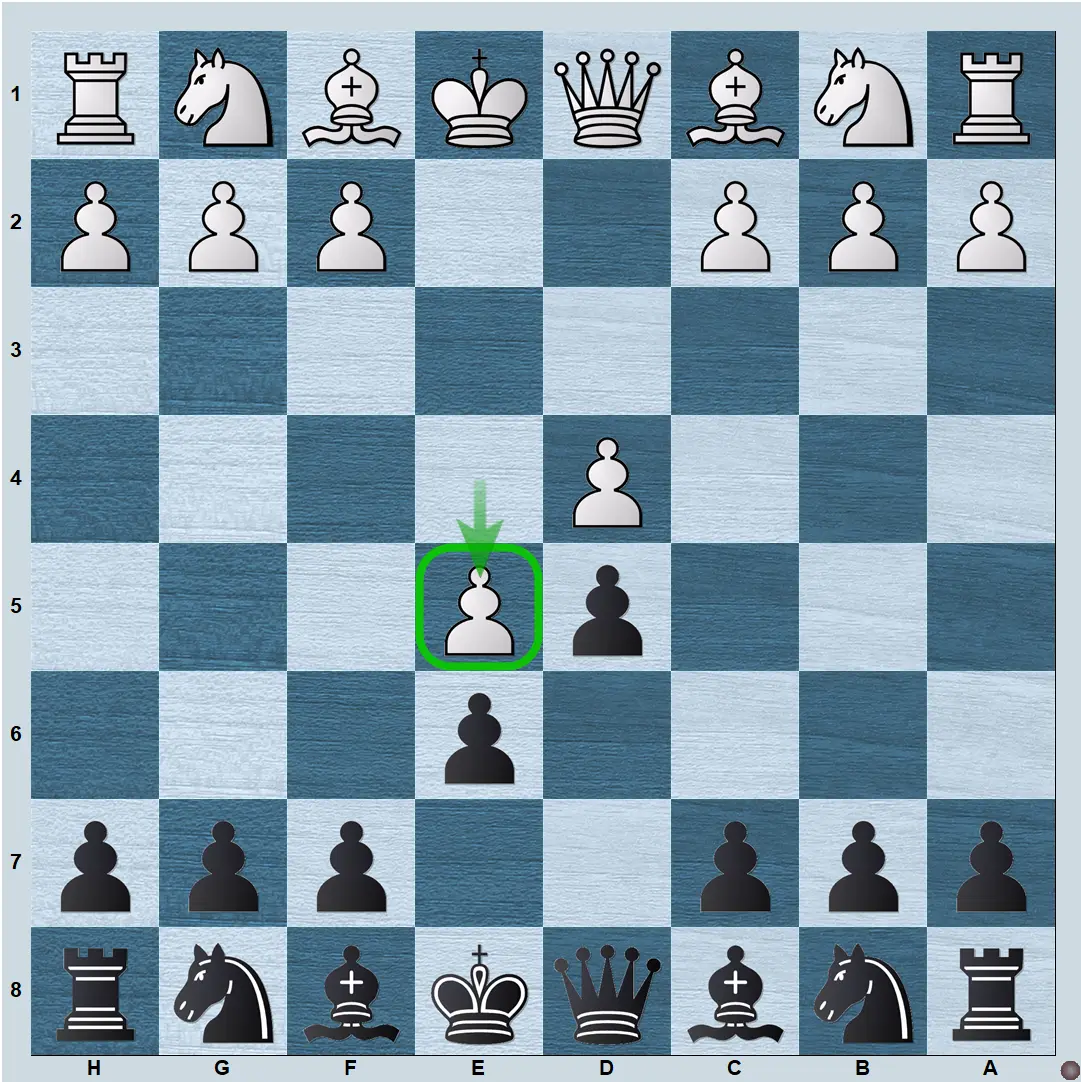
French Defense Advance Variation after 3.e5
Position after 3.e5

They get space in the kingside. Make Black's development of Ng8 and Bf8 not easy, and most importantly, lock the light squared Bishop.

The downsides - they're making the 2nd move with the same pawn (going against opening principles.) The other issue, is the pawn is getting advanced, a little bit far from the army, which might become a challenge.

The d4 pawn is what protects it, and that's why Black's next move and the plan is so logical.

They play 3…c5! Attacking the d4-e5 pawn chain. If d4 pawn falls, the e5 pawn will be very sad. So White plays 4.c3, keeping the pawn chain.
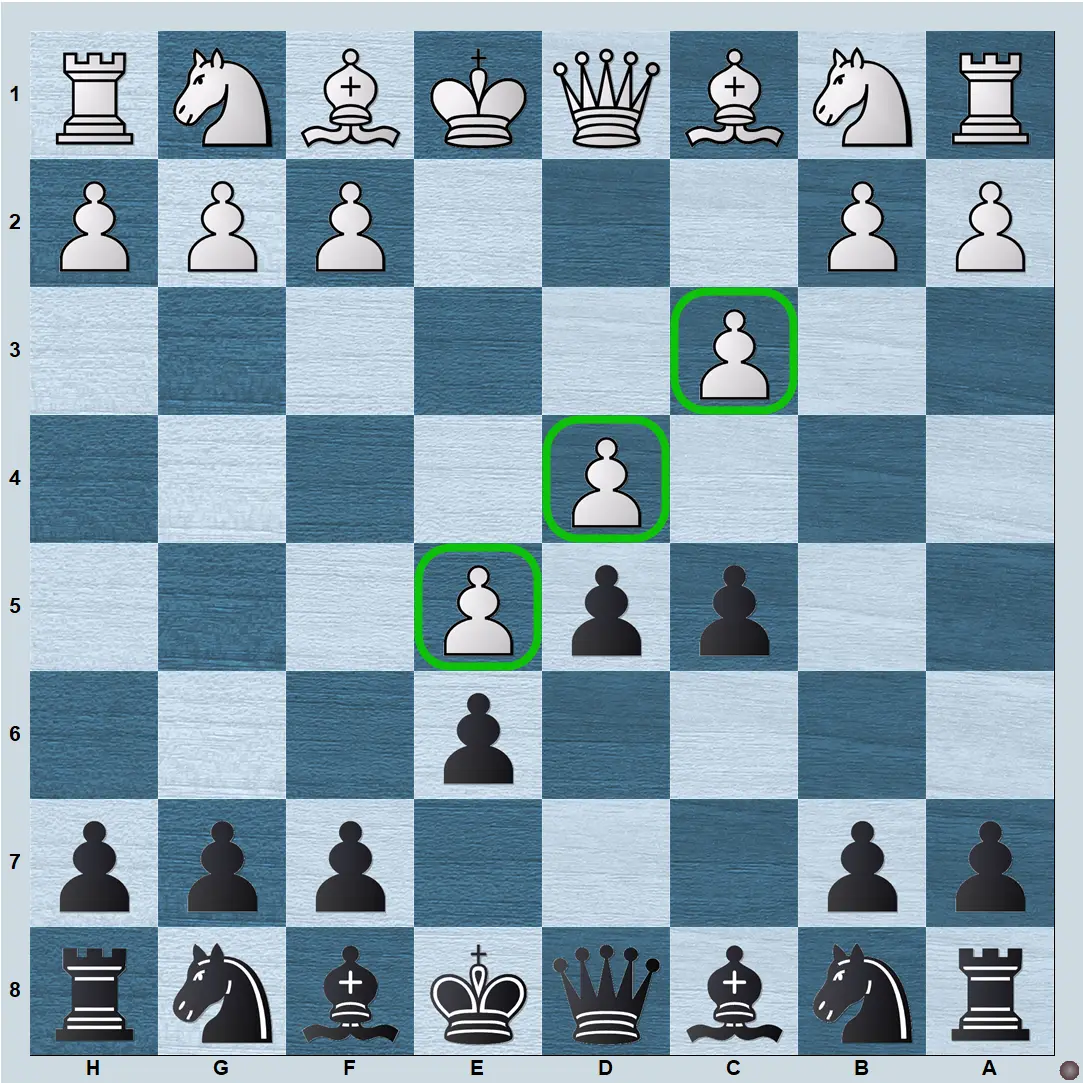
French Defense Advanced Variation with a strong pawn center
Position after 4.c3

Here the d4 becomes the key pawn, and the main battlefield.

There are 2 main ideas Black have, and the 3rd - tricky one, which I recommend. Let's start with the main ones.

Option A) The main option

Black's main option is to play 4…Nc6, then Qb6, then bring the g8 Knight to f5, pressuring that pawn.

Option A) The main option vs ?
Event
?
Site
?
Date
2026.06.06
Round
?
White
Option A) The main option
Black
?
Result
*
ECO
C02
  1. 1. e4
  2. 1... e6
  3. 2. d4
  4. 2... d5
  5. 3. e5

    [%csl Ge5][%cal Ge4e5]

  6. 3... c5
  7. 4. c3
  8. 4... Nc6
  9. 5. Nf3
  10. 5... Qb6
  11. 6.
  12. 6... Nge7
  13. 7.
  14. 7... Nf5

    [%csl Gb6,Gc6,Rd4,Gf5]

Option B) Solving the light-squared Bishop problem first.

They play 4…Qb6 first, then 5…Bd7, with the idea to play Bb5, trade the problematic Bishop, and then continue the plan of attacking the d4.

And the option c which I recommend in our French course.

Option B vs ?
Event
?
Site
?
Date
2026.06.06
Round
?
White
Option B
Black
?
Result
*
ECO
C02
  1. 1. e4
  2. 1... e6
  3. 2. d4
  4. 2... d5
  5. 3. e5
  6. 3... c5
  7. 4. c3
  8. 4... Qb6
  9. 5.
  10. 5... Bd7
  11. 6.
  12. 6... Bb5

    [%csl Gb5][%cal Gc8d7,Gd7b5]

It's very surprising, and even on top levels, people who play advance variation, they've never seen it.

Ready?

Option c) 3…Bd7

3…Bd7! 4.Nf3 a6!

Option c) 3…Bd7 vs ?
Event
?
Site
?
Date
2026.06.06
Round
?
White
Option c) 3…Bd7
Black
?
Result
*
ECO
C02
  1. 1. e4
  2. 1... e6
  3. 2. d4
  4. 2... d5
  5. 3. e5
  6. 3... Bd7!
  7. 4. Nf3
  8. 4... a6

    [%csl Ga6][%cal Gc8d7,Gd7b5,Ga7a6] Planning to trade the problematic light-squared Bishop this way. Now you might ask “But then we’ll have doubled pawns!” If that was your thought - great question! Here comes the most interesting part!

  9. 5. Be2
  10. 5... Bb5
  11. 6. Bxb5+
  12. 6... axb5

    [%csl Ga8][%cal Ga8a1] yes we have doubled pawns… but! We activated the *a8* Rook without maKing any move! The *a7* pawn which wasn’t fighting for the center at all, now is on *b5,* blocKing White’s *c4.* And we traded the biggest problem of French - the light squared Bishop. And on top of that, after White castles we have a very interesting plan. Instead of pressuring the *d4* as before, we switch the gears! We go

  13. 7.
  14. 7... Nd7
  15. 8.
  16. 8... c6

    strengthening the Queenside. Then

  17. 9.
  18. 9... Ne7
  19. 10.
  20. 10... Nf5
  21. 11.
  22. 11... Be7
  23. 12.
  24. 12... g5
  25. 13.
  26. 13... h5

    Wow! And what do we do with our own King!” - you might have asked. Another great question! We keep in the center! The Knight goes to

  27. 14.
  28. 14... Nb6

    the King stays on d7!

  29. 15.
  30. 15... Kd7

    The center is super closed. White can’t never open it, and out King is super happy there. Then we transfer our Queen and the other Rook to the Kingside, and push our pawns, backed by our pieces, until White resigns!

  31. 16.
  32. 16... Qg8

    [%cal Ga8g8,Gg8g6,Gg5g4,Gh5h4]

Cool, isn't it? More you'll learn in the course. Now let's move to the next White's opinion.

3. Nc3

White develops the Knight and protects the e4 pawn.
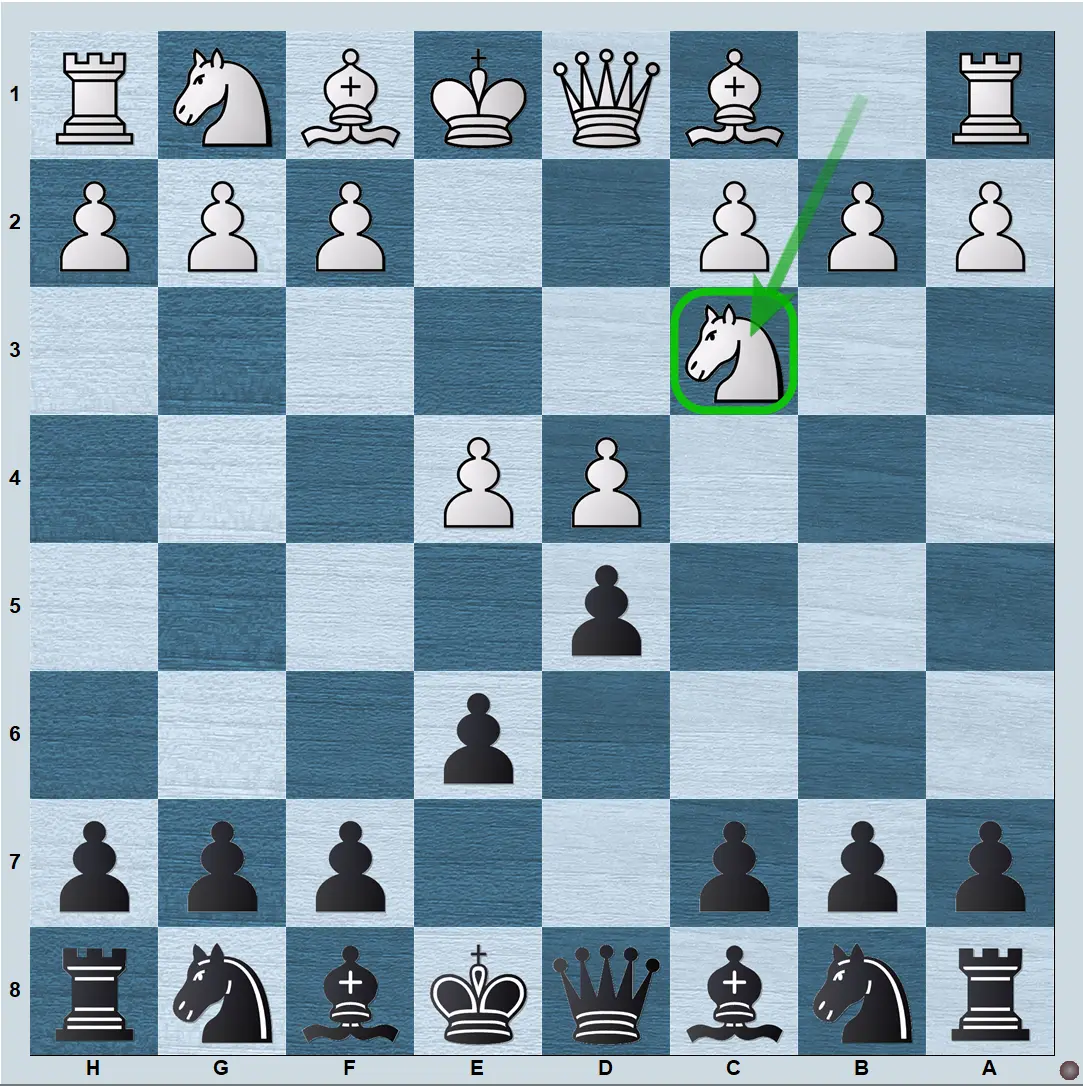
French Defense after 3.Nc3
Position after 3.Nc3

It has two downsides.

1. It allows Black to play 3…Bb4 and pin the Knight, re-attacking the e4 pawn.
2. It blocks the c2 pawn, which as we've seen was doing a great job supporting the central d4 pawn.
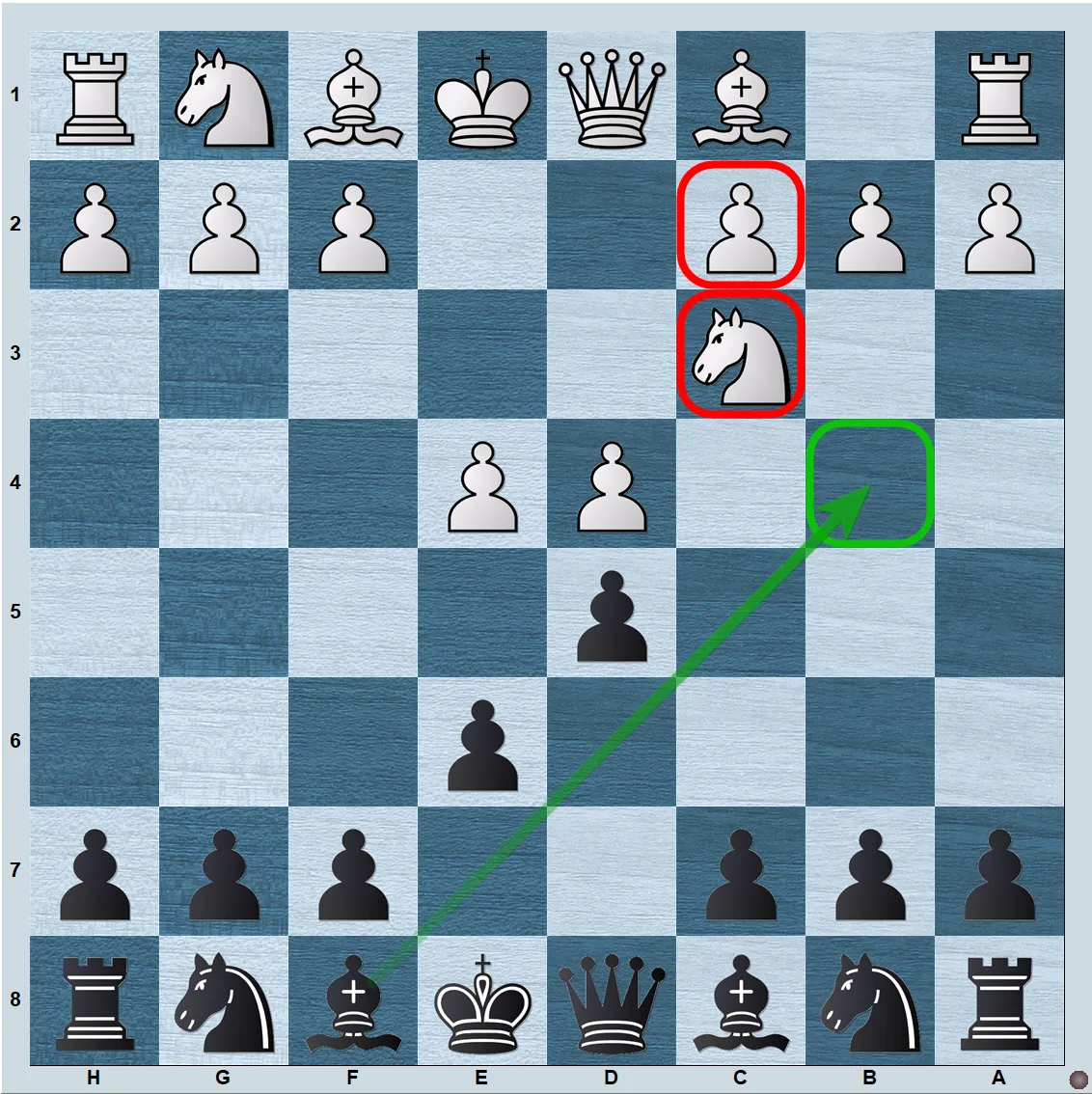
French Defense 3.Nc3
Position after 3.Nc3

3.Nc3 is the most challenging move on top-top Grandmaster level, but not popular on low levels. Mainly, because now Black has too many options, and it's not practical to remember how to face against all of them, if you're not a Pro.

Here are Black's main options, and what do we play in ChessMood.

Option A) 3…de4 - Rubinstein variation

This variation is named after Akiba Rubinstein, who was one of the strongest positional players of his times.

Option A) 3…de4 - Rubinstein, Variation vs ?
Event
?
Site
?
Date
2026.06.06
Round
?
White
Option A) 3…de4 - Rubinstein, Variation
Black
?
Result
*
ECO
C10
  1. 1. e4
  2. 1... e6
  3. 2. d4
  4. 2... d5
  5. 3. Nc3

    [%csl Ge4][%cal Gd5e4]

  6. 3... dxe4
  7. 4. Nxe4
  8. 4... Nd7

    [%csl Gc5, Gf6][%cal Gg8f6,Gc7c5] preparing Ngf6 and c5 - fighting against White’s space advantage, that the d4 pawn gives them.

Option B) 3…Bb4 - Winawer variation

Black develops the Bishop, pins the Nc3, and attack the e4 pawn.

The downside of this move - it leaves kingside weak.

The main line after 3…Bb4 goes 4.e5 c5 5.a3 Bc3 6.bc3

Option B) 3…Bb4 - Winawer, Variation vs ?
Event
?
Site
?
Date
2026.06.06
Round
?
White
Option B) 3…Bb4 - Winawer, Variation
Black
?
Result
*
ECO
C18
  1. 1. e4
  2. 1... e6
  3. 2. d4
  4. 2... d5
  5. 3. Nc3
  6. 3... Bb4

    [%csl Gb4][%cal Gf8b4]

  7. 4. e5
  8. 4... c5
  9. 5. a3
  10. 5... Bxc3+
  11. 6. bxc3

    [%csl Rg7][%cal Gd1g4,Gg4g7] White got doubled pawns. However, Black paid price for that, giving their dark-squared Bishop, which was protecting their dark squares and Kingside. And in many variation White tries to use this with playing Qg4!

Now the theory goes wild. Black has one million options. After each move, White has options too.

You already see, right, why 3.Nc3 isn't that popular on low levels? Too much to memorize!

And we've seen only two Black's option yet, not the 3rd main option - which we play in ChessMood Openings.

Option C - 3… Nf6 - Classical Variation

Black also develops their Knight and ask questions to "e4 pawn."
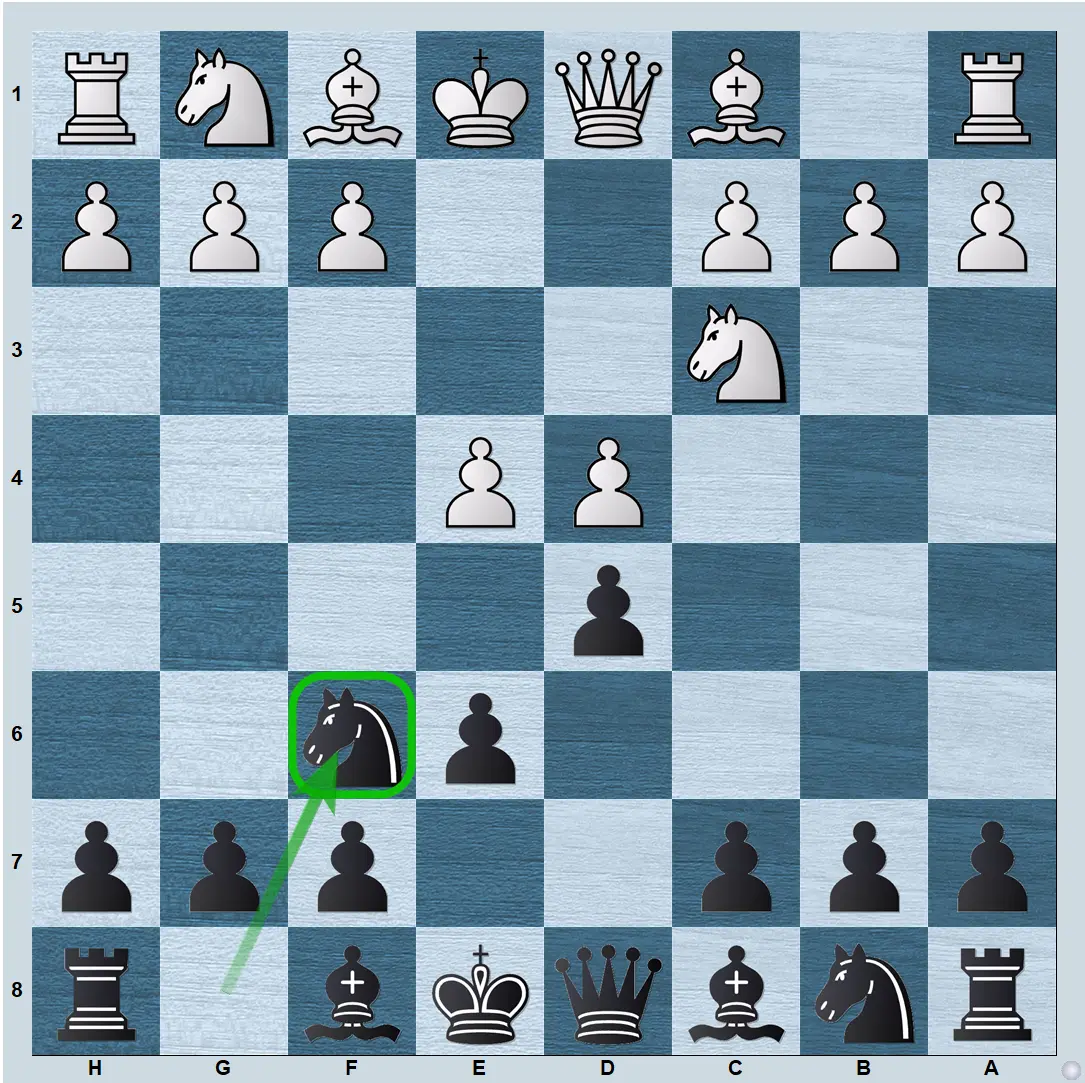
French Defense Classical Variation
Position after 3...Nf6

The theory continues go wild.

Now White has 2 options.

Option 1) 4.e5 - Steinitz Variation

Option 1) 4.e5 - Steinitz, Variation vs ?
Event
?
Site
?
Date
2026.06.06
Round
?
White
Option 1) 4.e5 - Steinitz, Variation
Black
?
Result
*
ECO
C11
  1. 1. e4
  2. 1... e6
  3. 2. d4
  4. 2... d5
  5. 3. Nc3
  6. 3... Nf6

    [%csl Gf6][%cal Gg8f6]

  7. 4. e5

    They advance the pawn with tempo, attacking the Knight. Black retreats on

  8. 4... Nfd7

    [%csl Yc3,Rf5] [%cal Rd7f5,Rc2c3] (At ChessMood, we don’t. Instead we have a big surprise for opponents in our repertoire, but you’ll be too shocked if I cover it here, hehe :) ) t’s the same advance pawn structure, we’ve seen, but with the difference. Now Black’s Knight is on d7. Far from its dream square on f5! (where it pressures the d4 pawn, remember?) And White’s Knight is on c3, which blocks their c2 pawn, the defender of the d4-e5 pawn chain. Theory continues:

  9. 5. f4
  10. 5... c5
  11. 6. Nf3
  12. 6... Nc6
  13. 7. Be3

    And this is just the beginning of the theory. Black has many options. Advance pawns on the Queenside with a6, b5, or aggressive move Qb6, pressuring on d4 and b2, or Be7, keeping things flexible and at some point planning to play f6, challenging White’s center. (I learned this move from another French Defense expert, Grandmaster Alexander Riazantsev, who taught me during a chess camp)

Option 2) 4.Bg5

White protects the e4 pawn, by developing their Bishop and pinning our Knight.
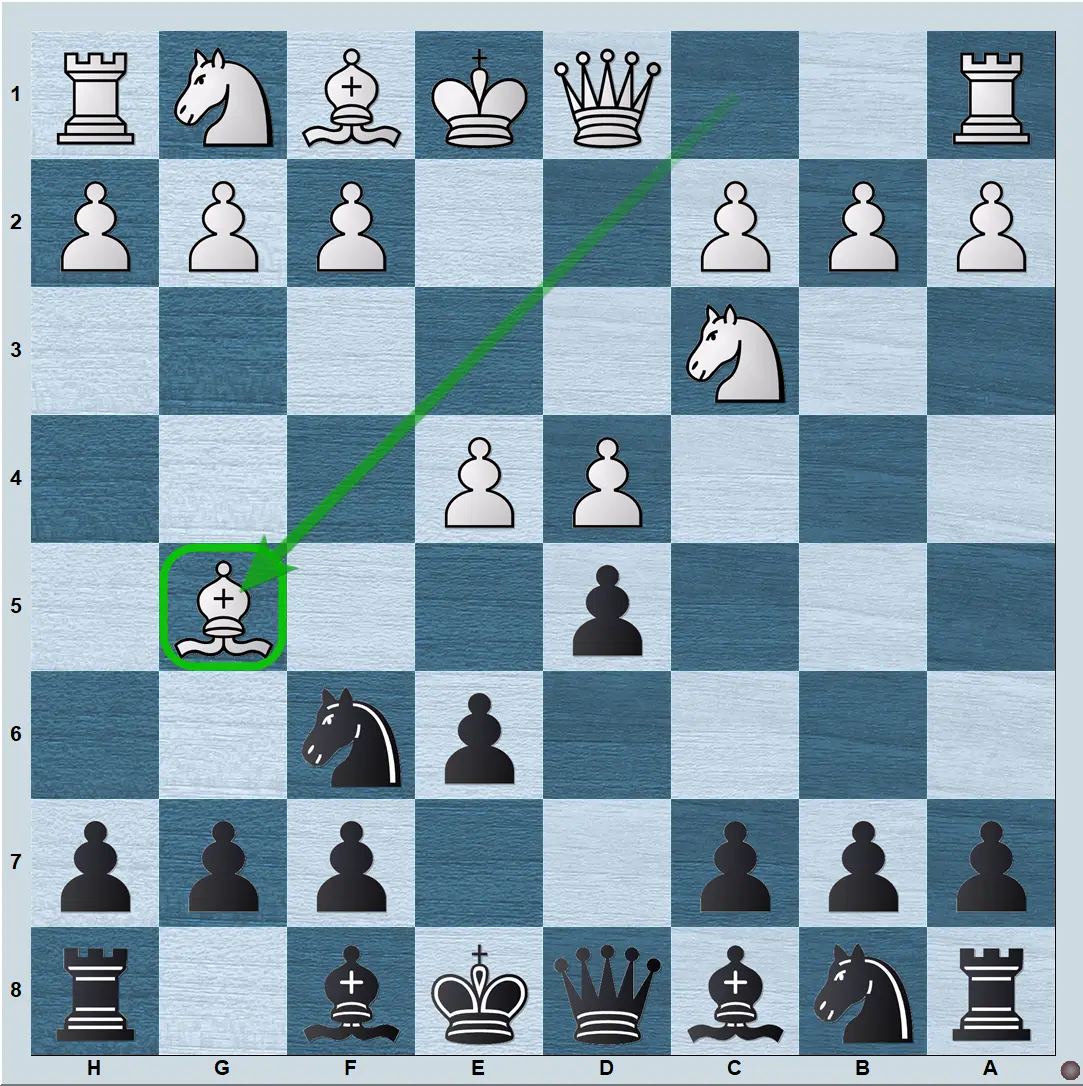
French Defense 3.Nc3 variation with Bg5
Position after 4.Bg5

The theory continues wild, as now Black has 3 options, and the 4th tricky one, which we play at ChessMood.

Option A) 4…Be7

Viktor Korchnoi won many games with this move, and if I had an authority, I would make this move after his name - Korchnoi variation.
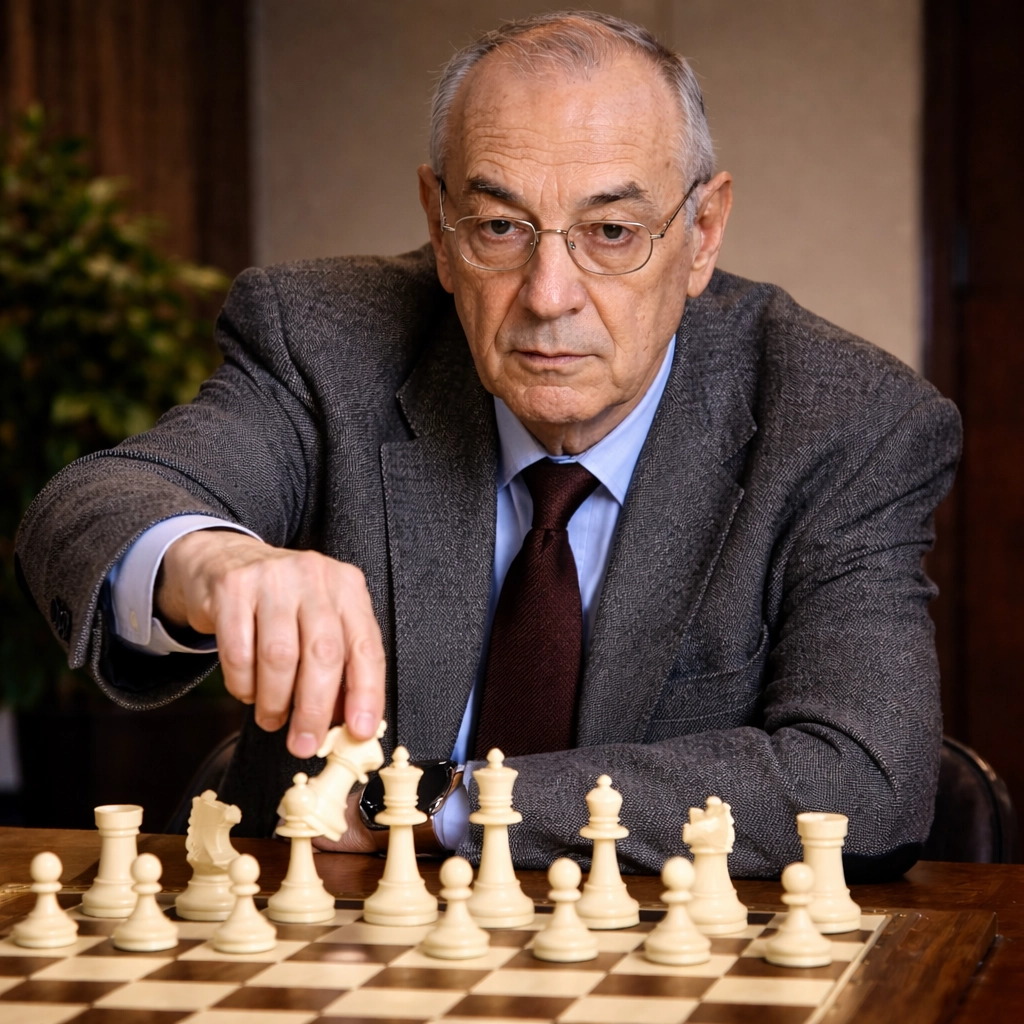

Source: chesscul.com

After 5.e5 Nfd7, it goes to a similar position as in Steinitz variation, just without dark squared Bishops. I tried it myself many times. I didn't like it. Too passive. Especially because of 6.h4!? so called Alekhine–Chatard Attack.

Option A) 4…Be7 vs ?
Event
?
Site
?
Date
2026.06.06
Round
?
White
Option A) 4…Be7
Black
?
Result
*
ECO
C14
  1. 1. e4
  2. 1... e6
  3. 2. d4
  4. 2... d5
  5. 3. Nc3
  6. 3... Nf6
  7. 4. Bg5

    [%csl Gg5][%cal Gc1g5]

  8. 4... Be7

    Viktor Korchnoi won many games with this move, and if I had an authority, I would make this move after his name - Korchnoi variation. After

  9. 5. e5
  10. 5... Nfd7

    it goes to a similar position as in Steinitz variation, just without dark squared Bishops. I tried it myself many times. I didn't like it. Too passive. Especially because of

  11. 6. h4!?

    so called Alekhine–Chatard Attack.

Option B) 4…Bb4 - McCutcheon Variation

This was the 2nd love of my childhood, after the girl I had fallen in kindergarten.

You pin my Knight? I pin yours!
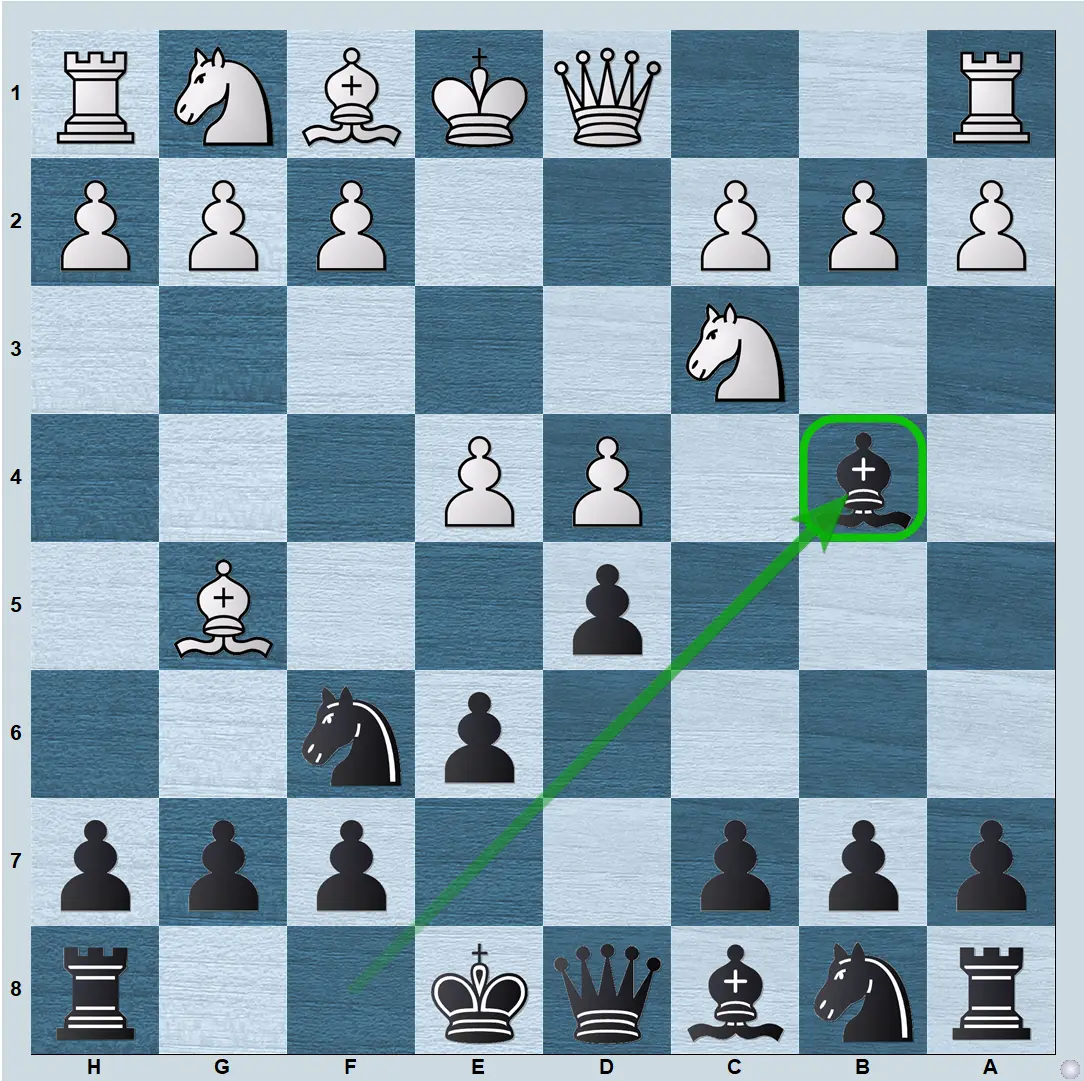
McCutcheon Variation of the French Defense
Position after 4...Bb4

It seems like a blunder, and after 5.e5 White can attack and win the pinned Knight. But…!

You attack my Knight? I attack your Bishop!

5…h6! 6.Bh4 g5! 7.Bg3 Ne4, pressuring the pinned Knight and planning c5, Qa5 with a very sharp game.

Option B) 4…Bb4 - McCutcheon vs ?
Event
?
Site
?
Date
2026.06.06
Round
?
White
Option B) 4…Bb4 - McCutcheon
Black
?
Result
*
ECO
C12
  1. 1. e4
  2. 1... e6
  3. 2. d4
  4. 2... d5
  5. 3. Nc3
  6. 3... Nf6
  7. 4. Bg5
  8. 4... Bb4

    [%csl Gb4][%cal Gf8b4]

  9. 5. e5

    [%csl Rf6] You attack my Knight? I attack your Bishop!

  10. 5... h6!
  11. 6. Bh4
  12. 6... g5!
  13. 7. Bg3
  14. 7... Ne4

    [%csl Rc3][%cal Gc7c5,Gd8a5] pressuring the pinned Knight and planning c5, Qa5 with a very sharp game.

Option C) 5…h6 - McCutcheon Gambit

As I said at the beginning, I played French all my life. And I played all of its variations. Yes, all! All you've seen already, all you'll see. But not this one!

You know why? I just didn't know about this move!

It didn't exist then.

One day, one of our students, with whom I was close, called me and asked about this move.
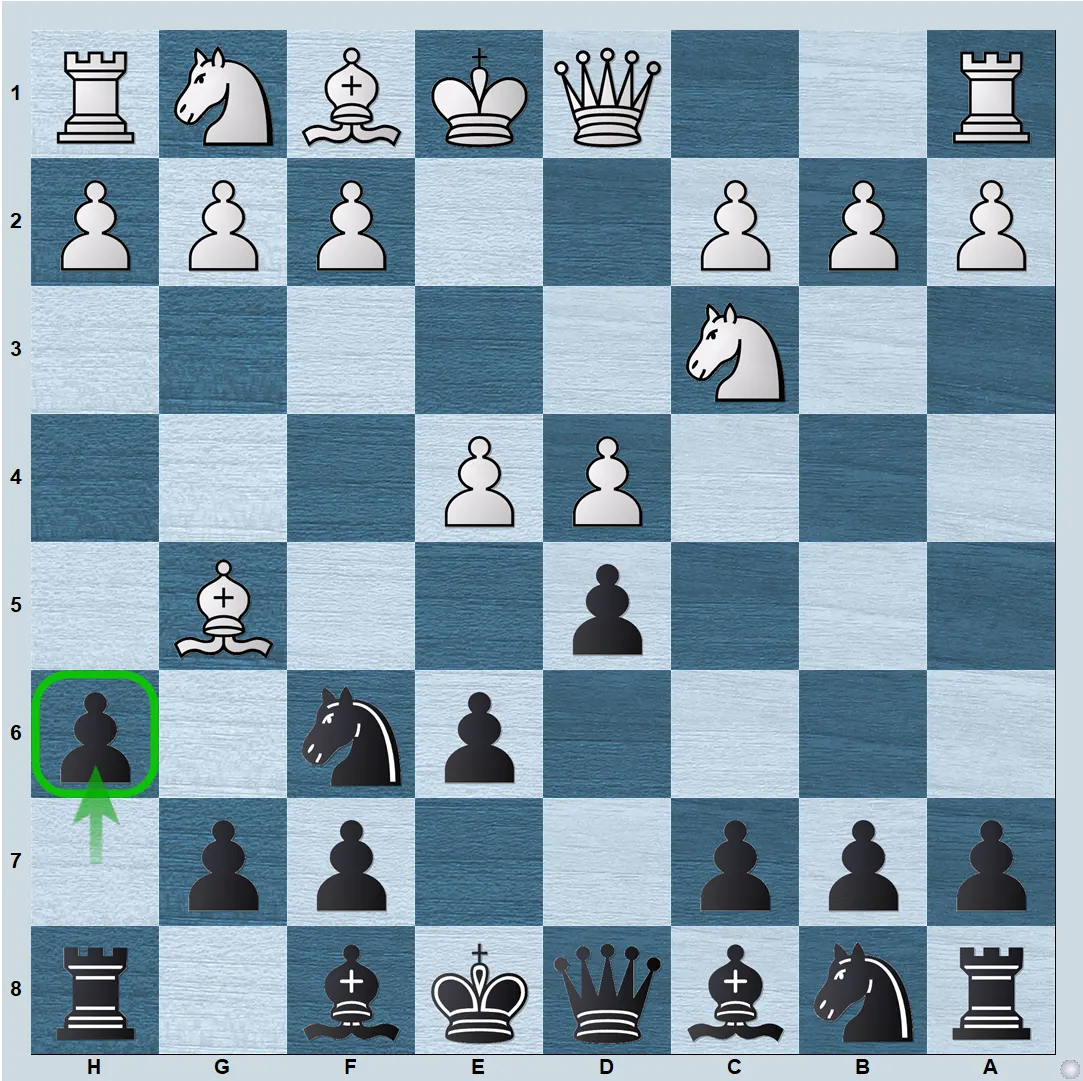
McCutcheon Gambit in the French Defense
Position after 5...h6

"What?" was my reaction. "You lose a pawn, no?"

5.Bf6 Qf6 6.ed5
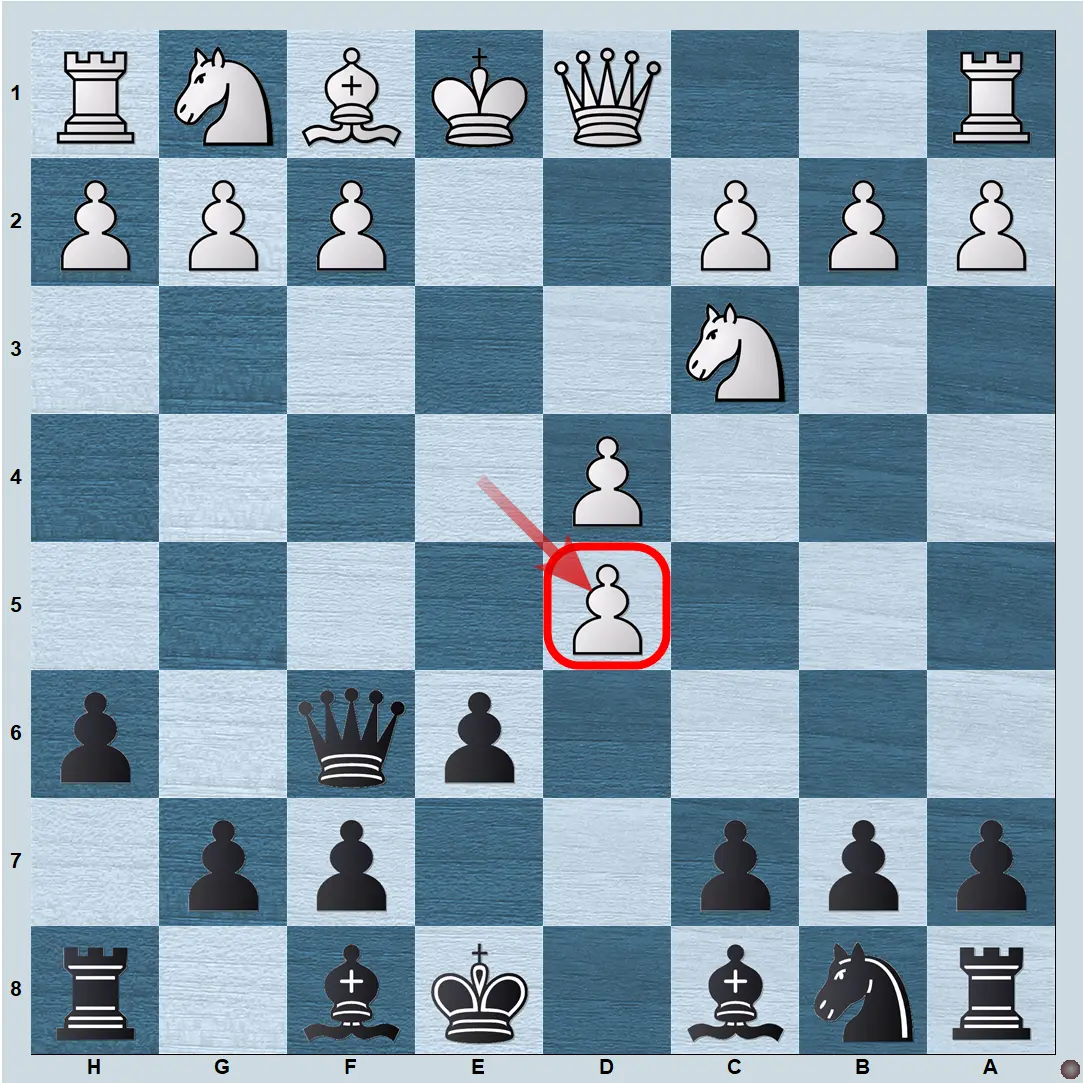
Refutation of the McCutcheon Gambit
Position after 6...exd5

"Yes, yes…But then you play 6…Bb4. Develop the Bishop, while pinning the Knight and attacking the d5 pawn."

I said give me time. I went to my computer to check. Did it for an hour, then another hour, and then got very sad… That I didn't knew this move when I was playing professional chess!
But okay, I recorded it in our French course for our students and future generation.

After 7.de6 Be6, Black gets super ahead in development, and plan to pressure the d4 pawn. If White sees this first time, and believe me 99% of your opponents will, it's super difficult during the game to understand what to do.

Our plan is to castle, and pressure the d4 pawn. With Rd8, c5, or Nc6.

Option C) 5…h6 - McCutcheon, Gambit vs ?
Event
?
Site
?
Date
2026.06.06
Round
?
White
Option C) 5…h6 - McCutcheon, Gambit
Black
?
Result
*
ECO
C12
  1. 1. e4
  2. 1... e6
  3. 2. d4
  4. 2... d5
  5. 3. Nc3
  6. 3... Nf6
  7. 4. Bg5
  8. 4... h6
  9. 5. Bxf6
  10. 5... Qxf6
  11. 6. exd5

    [%csl Rd5][%cal Re4d5]

  12. 6... Bb4

    [%csl Gb4][%cal Gf8b4,Rb4e1]

  13. 7. dxe6
  14. 7... Bxe6

    [%cal Ge8g8,Gc7c5, Gb8c6,Gf8d8] Our plan is to castle, and pressure the d4 pawn. With Rd8, c5, or Nc6.

Lovely, no? 🙂

3. Nd2 - Tarrasch Variation

This variation is named after Siebgbert Tarrasch and later it was popularized by World Champion Anatoly Karpov.
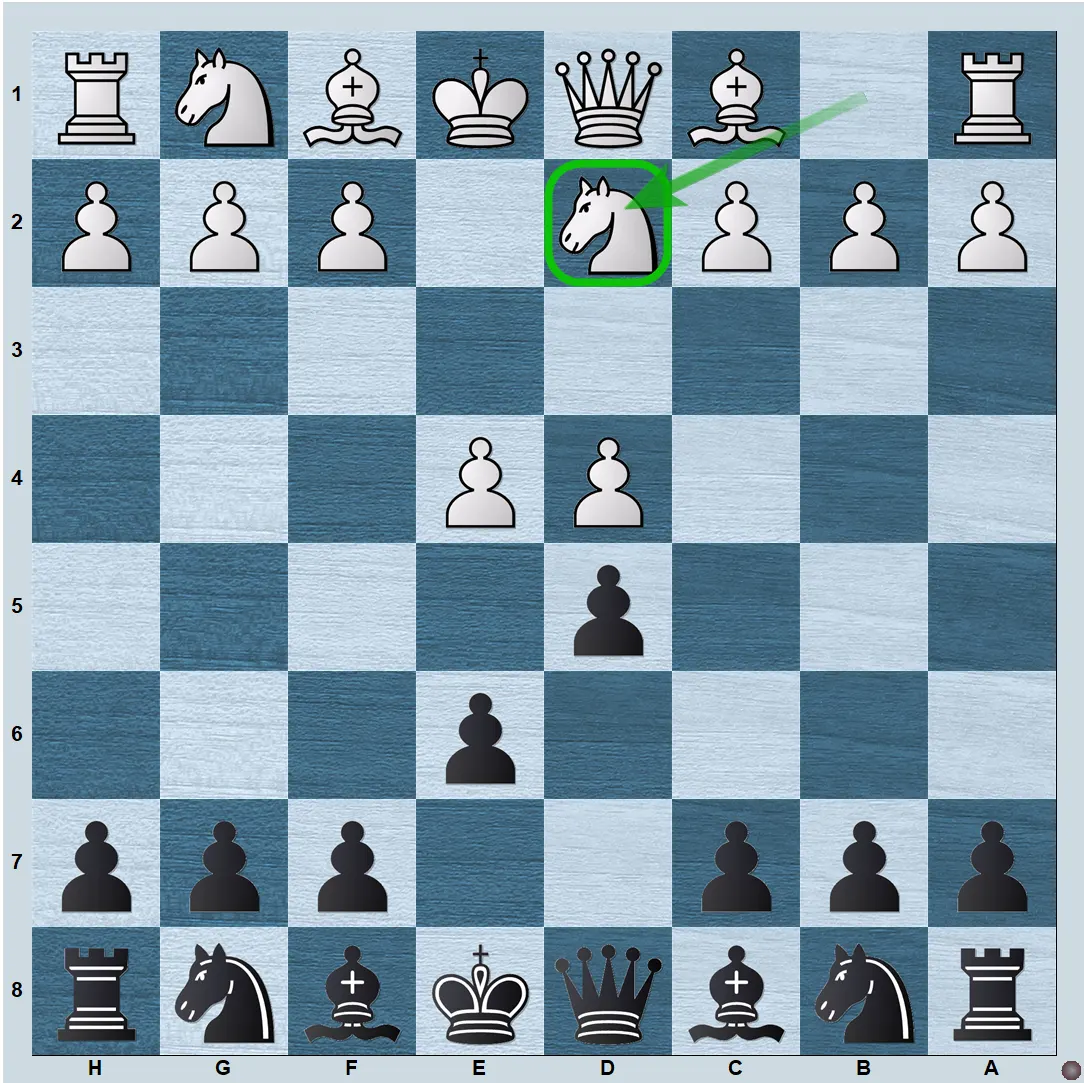
French Defense Tarrasch Variation with 3.Nd2
Position after 3.Nd2

The idea of this move - it still develops the Knight and protects the e4 pawn, but doesn't block the c2 pawn from helping the central d4 pawn, and at the same time Bb4 pin becomes useless, as White can play c2-c3.

The downside - it's less active development than 3.Nc3. And it also blocks the Queen and c1 Bishop.

Now Black has 4 main options, and one tricky one!

Option a) 3…Nf6

Black continues pressuring the e4 pawn. After 4.e5 Nfd7 planning to pressure the d4 with playing c5 and then Nc6.

Option a) 3…Nf6 vs ?
Event
?
Site
?
Date
2026.06.06
Round
?
White
Option a) 3…Nf6
Black
?
Result
*
ECO
C05
  1. 1. e4
  2. 1... e6
  3. 2. d4
  4. 2... d5
  5. 3. Nd2

    [%csl Gd2][%cal Gb1d2]

  6. 3... Nf6
  7. 4. e5
  8. 4... Nfd7

    [%cal Gc7c5, Gb8c6] Now White has three options. Either they play 5.Ngf3 or 5.Bd3 with an idea to develop the Knight to e2, or very aggressive 5.f4. All of them lead to large-large theoretical battles.

Option b) 3…c5

Immediately challenging White's Nd2 move, which left the d4 pawn unprotected. After 4.ed5 Black has two options: 4…ed5 or 4…Qd5.

Option b) 3…c5 vs ?
Event
?
Site
?
Date
2026.06.06
Round
?
White
Option b) 3…c5
Black
?
Result
*
ECO
C07
  1. 1. e4
  2. 1... e6
  3. 2. d4
  4. 2... d5
  5. 3. Nd2
  6. 3... c5

    After 4.ed5 Black has two options: 4…ed5 or 4…Qd5

  7. 4. exd5

    [%cal Gd8d5,Ge6d5]

On top levels 3.Nd2 happens much less than 3.Nc3, because of this 4…Qd5! It leads to equal positions.

During my professional career I played both of them, but stopped soon. Was too boring for me, haha.

Option c) 3…de4

It transposes to the Rubinstein variation, which could also happen after 3.Nc3 de4.

Option d) 3…Be7

Very interesting waiting move. Black disclose their cards, whether they play Nf6 then or c5, and waiting for White's response. It was popularized by super Grandmaster Alexander Morozevich.
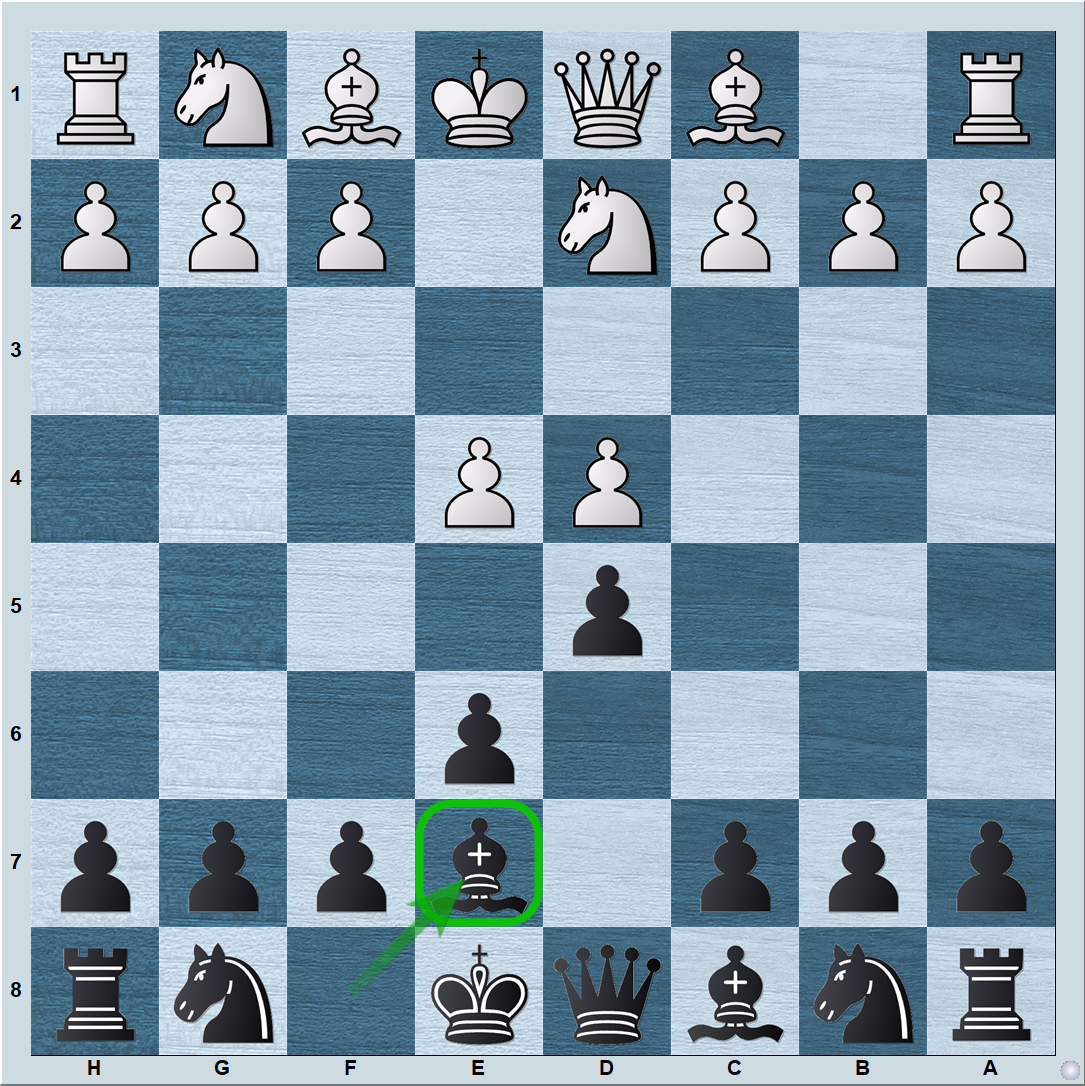
French Defense after 3...Be7
Position after 3...Be7

And now we go to the last option - the tricky one.

Option e) 3…Nc6!

Black develops the Knight with a tempo, attacking the d4 pawn, and immediately using the downside of White's 3.Nd2 move.
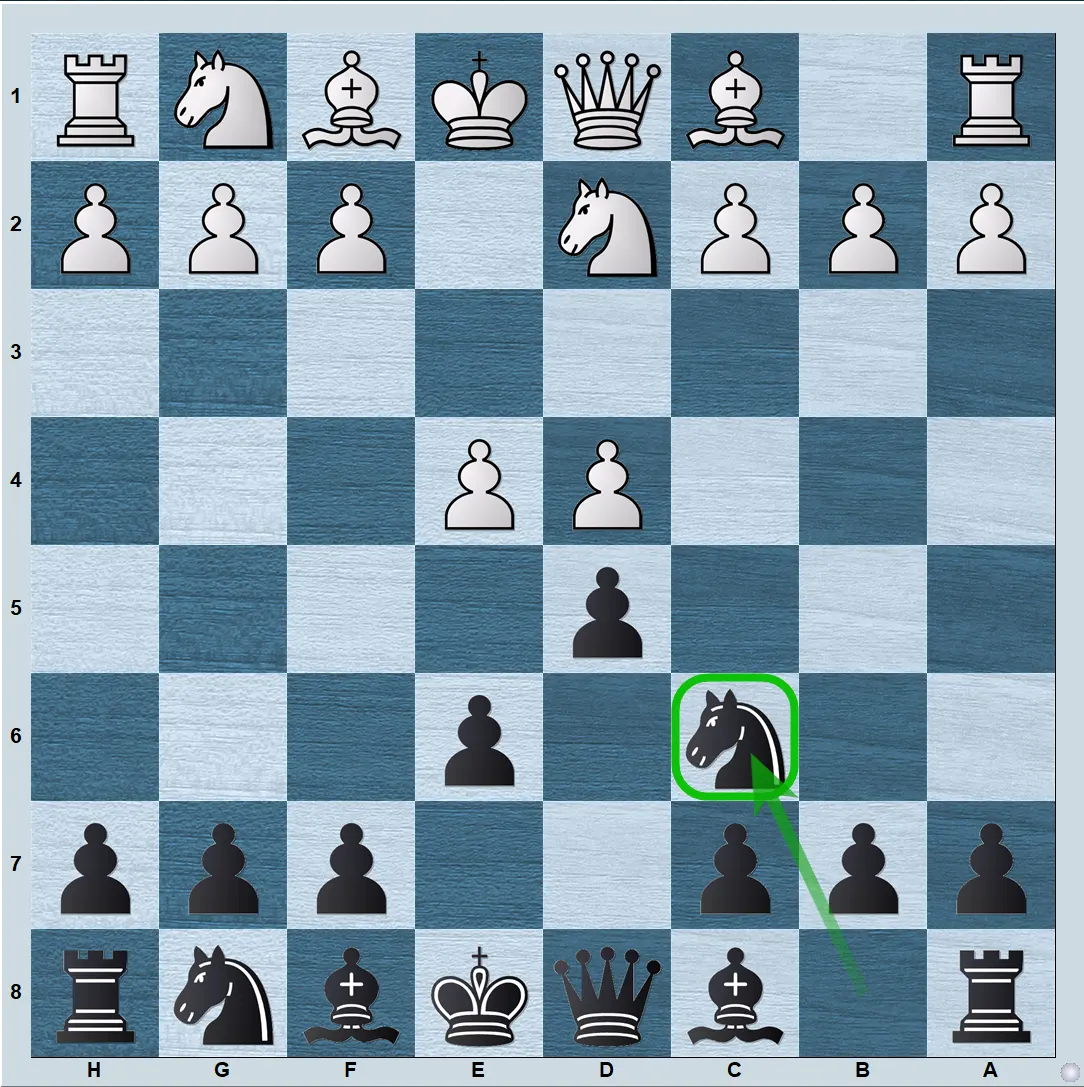
French Defense after 3...Nc6
Position after 3...Nc6

Why do I call it tricky? Seems a good move. Developing a piece with tempo.

Well, the reason is, when you play French, at some point, sooner or later you play c7-c5 and challenge White's center. Developing the Knight first - can be strategically very dangerous and might leave without counterplay.

But dynamically, in this specific case, in Tarrasch variation it's a super interesting move.

I was taught this move by my hero Grandmaster Karen Asrian, who unfortunately died of a heart attack at age 28…

I won so-so-so many games with it and played it against strong Grandmasters too, even when they could check the database and prepare against me. I didn't care. I believed in this move!

A few words about the ideas.

If White plays 4.c3 and protect the d4 pawn, we challenge the center with a blow in the center. e6-e5!

Nd2- Tarrasch Variation 3...Nc vs ?
Event
?
Site
?
Date
2026.06.06
Round
?
White
Nd2- Tarrasch Variation 3...Nc
Black
?
Result
*
ECO
C04
  1. 1. e4
  2. 1... e6
  3. 2. d4
  4. 2... d5
  5. 3. Nd2
  6. 3... Nc6
  7. 4. c3

    [%csl Gd4][%cal Gc3d4]

  8. 4... e5!

    [%csl Rd2] We usually don’t do two moves with the same piece, including a pawn, but here is an exception. Look at that Knight on d2, closing White’s pieces. They deserve this!

And if White goes 4.Ngf3 instead of c3, we go 4…Ngf6 5.e5 Nfd7 6.c3 f6!

This is another common way in French to fight against White's pawn chain.

Option e) 3…Nc6 vs ?
Event
?
Site
?
Date
2026.06.06
Round
?
White
Option e) 3…Nc6
Black
?
Result
*
ECO
C04
  1. 1. e4
  2. 1... e6
  3. 2. d4
  4. 2... d5
  5. 3. Nd2
  6. 3... Nc6
  7. 4. Ngf3
  8. 4... Nf6
  9. 5. e5
  10. 5... Nd7
  11. 6. c3
  12. 6... f6!

    [%csl Rc3,Rd4, Re5][%cal Gf6e5] This is another common way in French to fight against White’s pawn chain. After

  13. 7. exf6

    we take back with the Queen

  14. 7... Qxf6!
  15. 8. Be2
  16. 8... Bd6
  17. 9. O-O
  18. 9... O-O
  19. 10. Re1
  20. 10... e5!
  21. 11. dxe5
  22. 11... Ndxe5

    [%csl Ra1,Rc1,Rd1,Rd2,Re1] [%cal Gc8h3,Gf8f1,Gd6h2]

After 7.ef6 we take back with the Queen - Qf6!

Cooking something…

8.Be2 Bd6 9.0-0 0-0 10.Re1 e5! 11.de5 Nde5
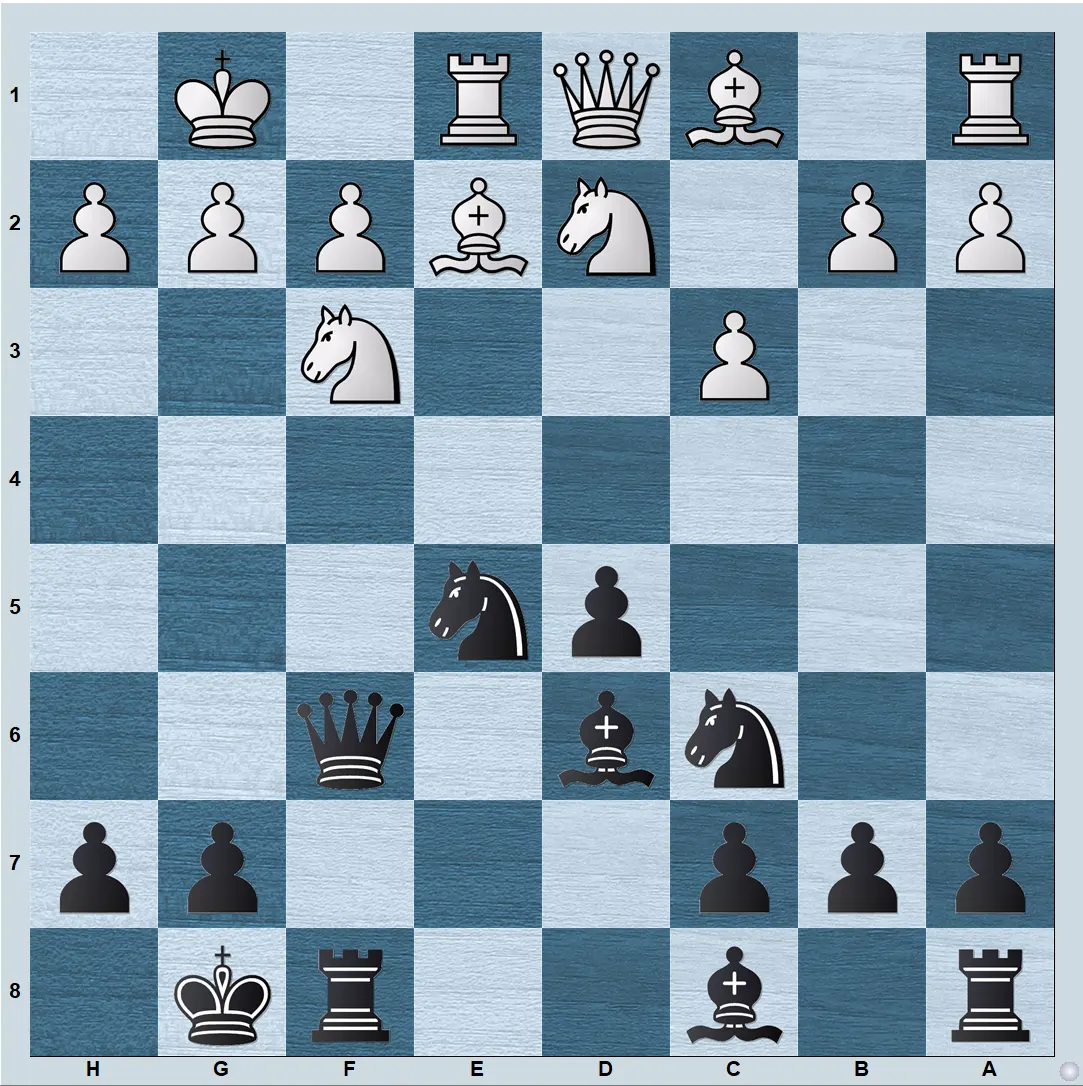
French Defense 3...Nc6 variation
Position after 11...Nexd5

Where is White's pawn chain? Gone!

We crushed it. And now it's us who has a central pawn.

Also look at our pieces. All of them are breathing fire, and staring at White's king.

3…Nc6 will surprise most of your opponents, especially below 2,000 level, and this is how they'll be crushed from the opening.

Here is one of my games, where I surprised an International Master with 3…Nc6.

Hayrapetyan, Arman vs Grigoryan, Avetik
Event
Jermuk Asrian Memorial 5th
Site
Jermuk
Date
2012.06.18
Round
3
White
Hayrapetyan, Arman
Black
Grigoryan, Avetik
Result
0-1
ECO
C04
  1. 1. e4
  2. 1... e6
  3. 2. d4
  4. 2... d5
  5. 3. Nd2
  6. 3... Nc6
  7. 4. Ngf3
  8. 4... Nf6
  9. 5. e5
  10. 5... Nd7
  11. 6. c3
  12. 6... f6
  13. 7. exf6
  14. 7... Qxf6
  15. 8. Bb5
  16. 8... Bd6
  17. 9. Nf1
  18. 9... a6
  19. 10. Ba4
  20. 10... e5
  21. 11. Ne3
  22. 11... exd4
  23. 12. cxd4
  24. 12... Nb6
  25. 13. Bxc6+
  26. 13... bxc6
  27. 14. Qc2
  28. 14... O-O
  29. 15. Bd2
  30. 15... Bh3
  31. 16. Rg1
  32. 16... Bxg2
  33. 17. Rxg2
  34. 17... Qxf3

0-1

Sidelines

Now, let's see what sidelines are there, which are healthy ones and which are very bad.

3. Bd3 - Schlechter Variation or ChessMood Variation

Both 3.Nc3 and 3.Nd2 had their downsides. One was blocking the c2 pawn, another was blocking the pieces.

So, why not 3.Bd3 instead. Develop a kingside piece, while protecting the e4 pawn.

Logical, no? But it's a sideline. I've never faced this move during all my professional career, not even once.
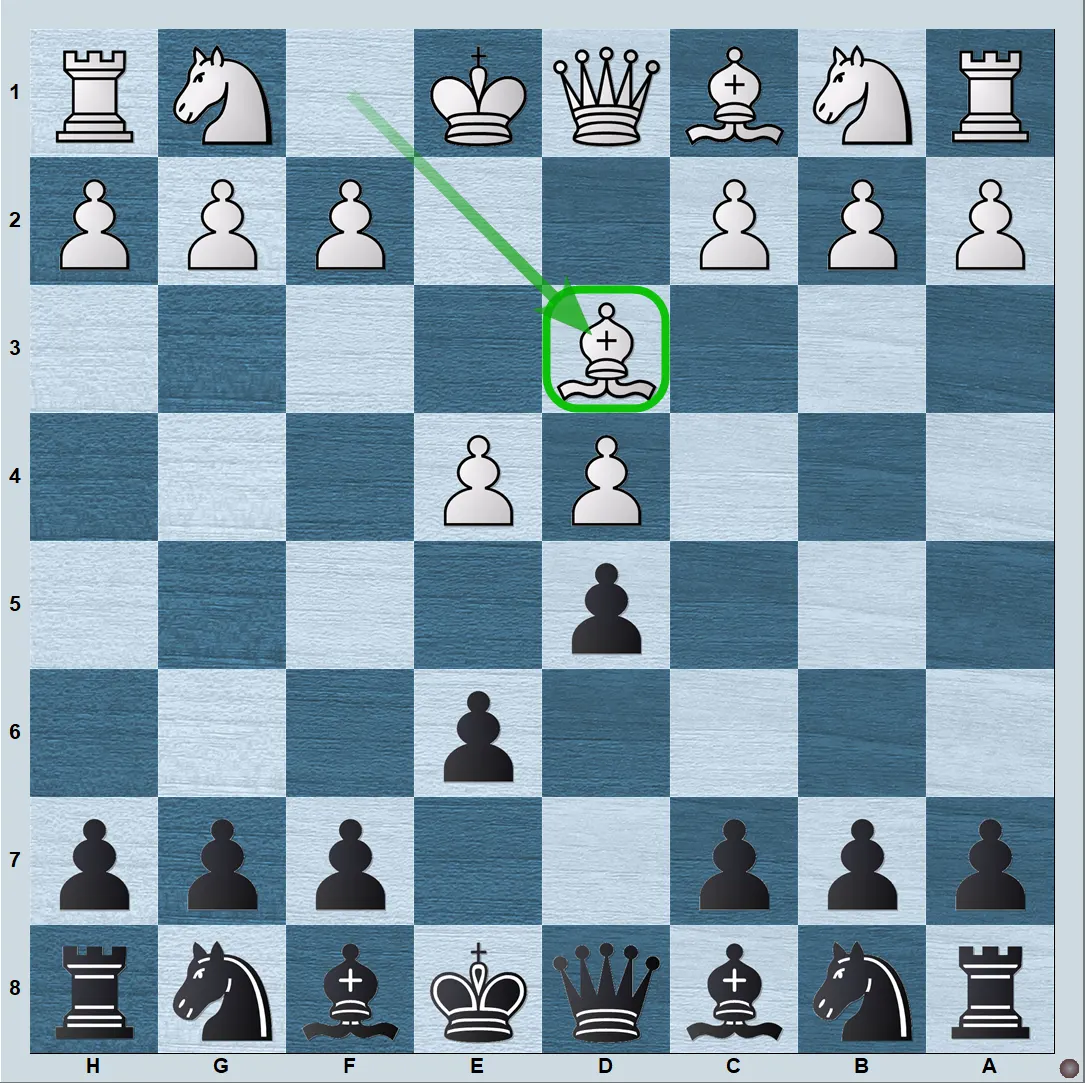
Schlechter Variation (also known as ChessMood Variation) in the French Defense
Position after 3.Bd3

The problem of this move is after 3…de4 4.Be4 Nf6, White should either lose a tempo retreating their Bishop, or give up Bishop pair advantage.
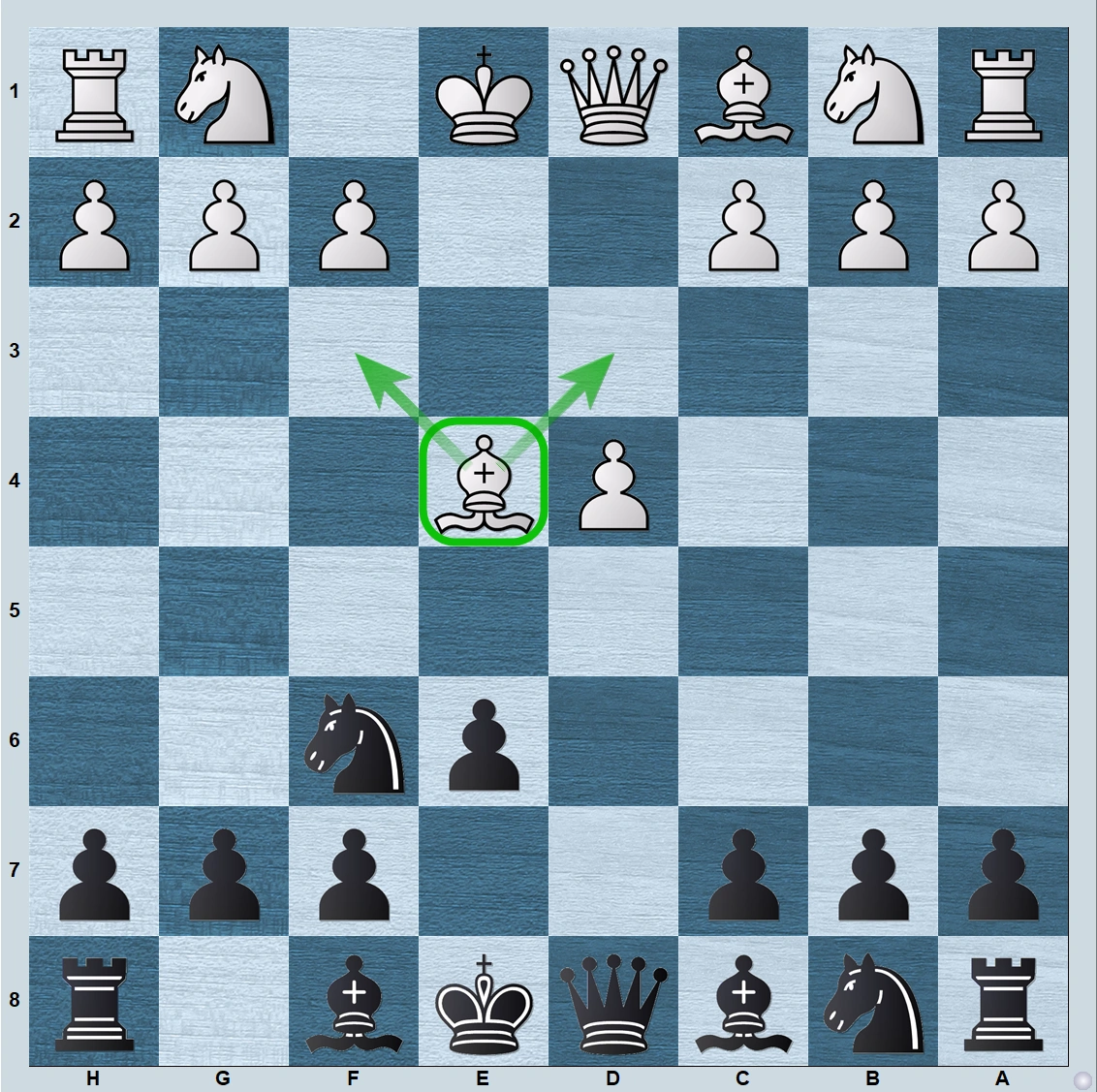
ChessMood Variation in the French Defense
Position after 4...Nf6

I had zero preparation against the 3.Bd3 move, and all my life I thought its a bad move.

And then one day, I play online blitz chess, and the opponent plays 3.Bd3.

I answered what I thought was the refutation, and the opponent retreated the Bishop to f3.

I don't know who he/she was but I'm super-super curious.

Because we played a long match, and he/she won EVERY game!

Didn't flag me at the end. Didn't outplay me in the endgame. He/she was crushing me in the opening. I couldn't survive 20 moves 🙂

After the session, I went to my computer, opened the databases, and engines to find out the correct way to play against this 3.Bd3 "stupid" move.

I didn't find anything sufficient after hours of working!

Then I realized it's the most underestimated move in French.

And when I was recording White Opening repertoire for ChessMood students with 1.e4, what did I recommend against French? Yes - 3.Bd3!
The Tricky Schlechter Variation against the French Defense

It's named after Carl Schlechter, but if the variation didn't have a name it would be called ChessMood variation.

Without fake humbleness, it was popularized by ChessMoodians after we released the course.

https://chessmood.com/course/french-defence

So, if ten years ago you would never face this move, now you might. I recommend you counter-surprise the opponents with 3…Nc6. Just as you do against 3.Nd2
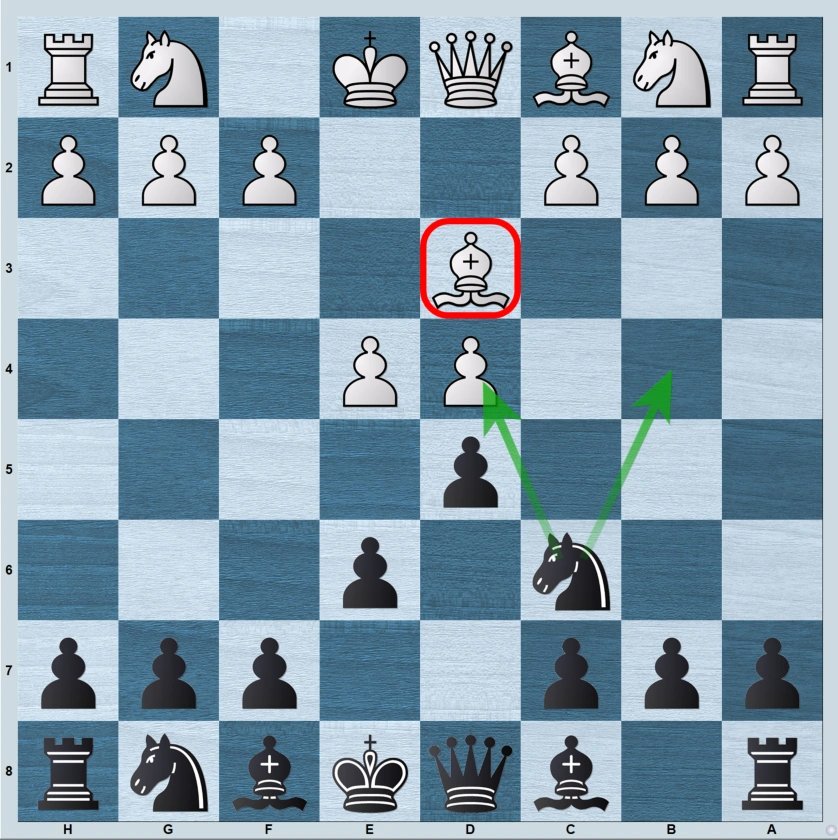
How to play against 3.Bd3 in the French Defense
Position after 3...Nc6

You attack the d4 pawn and threaten an unpleasant Nb4 move!

And if White plays 4.c3 stopping both, you go 4…e5!

Very similar to what you did before.

Two Knights Variation

Instead of the main 2.d4, white develops the Knights first.

2.Nf3 d5 3.Nc3, or 2.Nc3 d5 3.Nf3
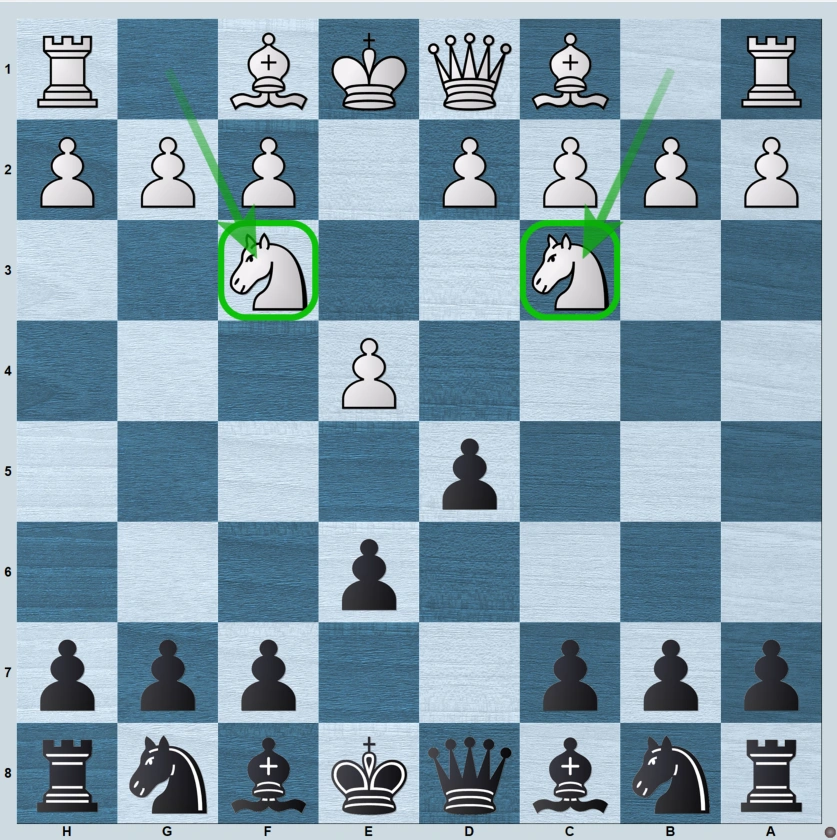
French Defense against the Knights Variation
Position after 3.Nc3

The easiest way to play here is 3…Nf6 4.e5 Nfd7 5.d4 c5, and then Nc6, and White has a challenge with their center. Knight on c3 blocks the c2 pawn, and they can't protect the d4 with c3, and the f3 Knight blocks the f2 pawn, stopping f4.
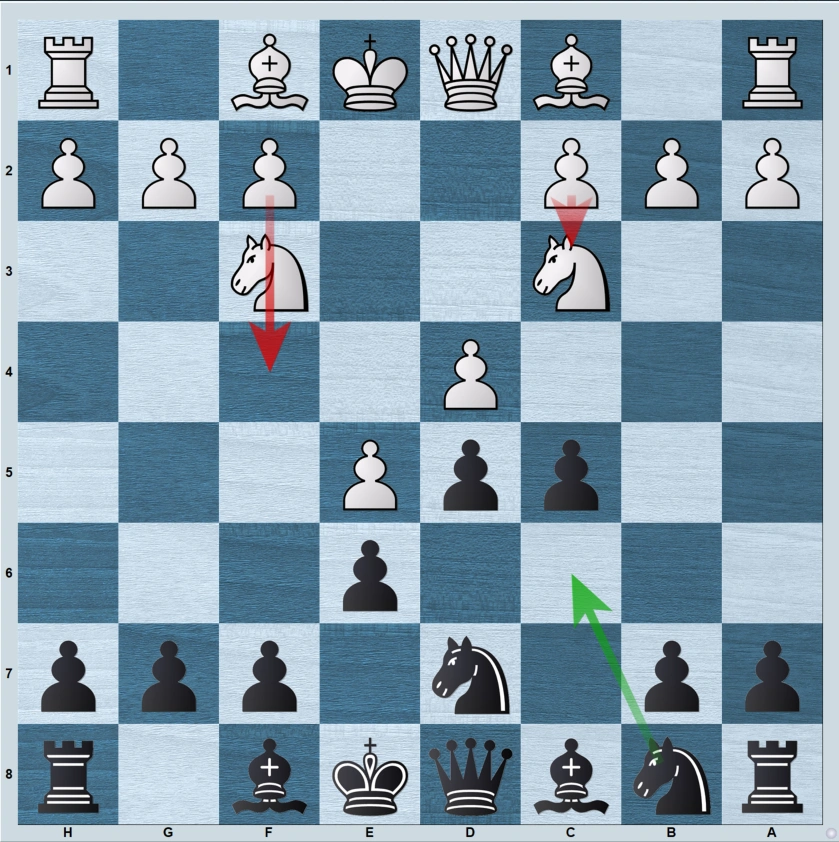
How to play against the Knights Variation
Position after 5...c5

2. d3 - King's Indian Attack

This was the favorite weapon against French of legendary Bobby Fischer.
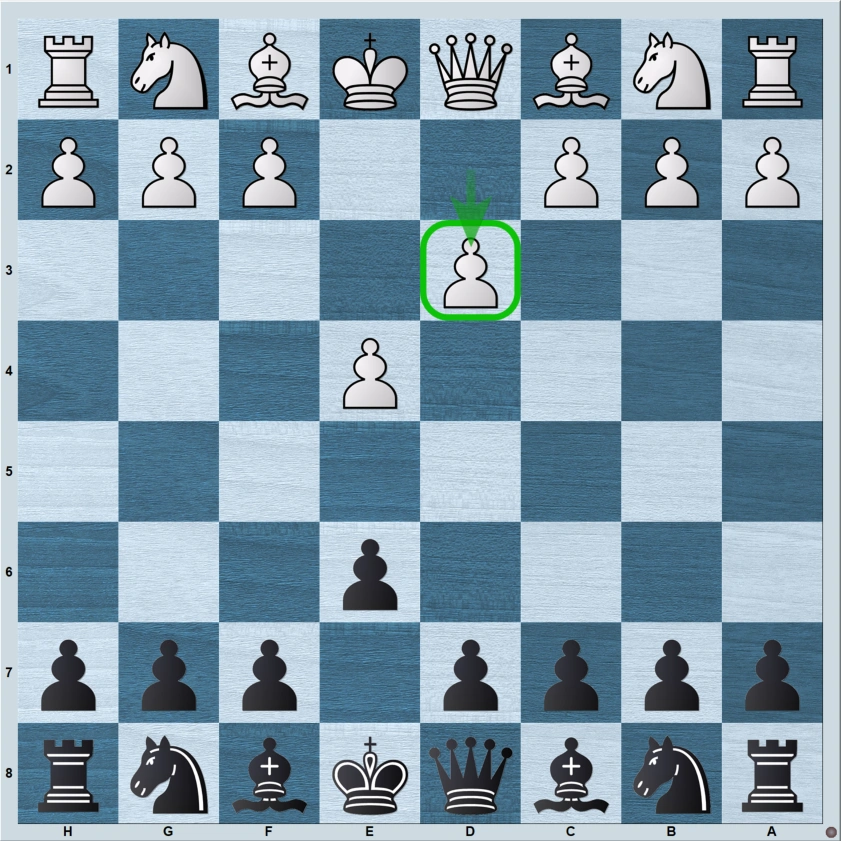
French Defense against the King's Indian Attack setup (2.d3)
Position after 2.d3

He was King's Indian fan, and White pieces too, he would go with that setup. Nd2, Ngf3, g3, Bg2, 0-0…
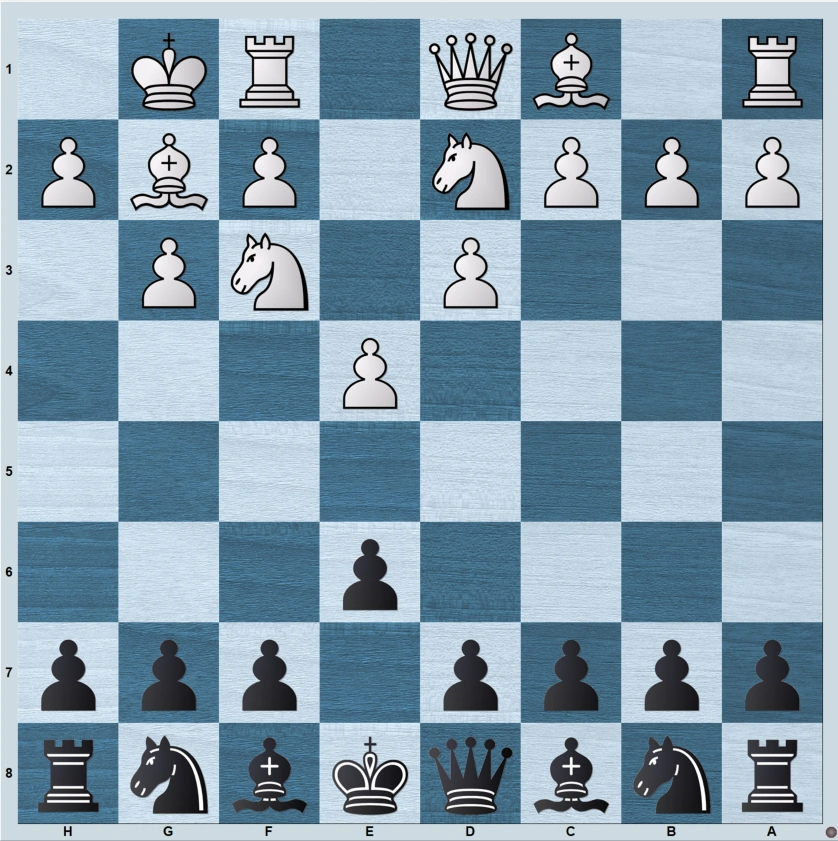
White's setup in the King's Indian Attack against the French Defense
King's Indian Setup

I recommend you play 2…d5 3.Nd2 and surprise with a very uncommon 3…e5!

Yes! Another time, we play e6 and very soon e5.

Against opponent principles? Yes! But it's an exception, as with 2.d3 White didn't care about fighting for the center. Then why don't we take it?

And then easily develop our pieces.

"But after 4.ed5 we can't take back with the pawn, and should take with the Queen developing it early into the game, Avo!"

If you asked this - I'm pleased you're carefully reading all and challenging me! Great question.

There is one nuance.

After 4…Qd5, indeed we develop the Queen early into the game. But hey, who can attack us? There is no more Nc3, it's on d2!

2. d3 - King's Indian Attack vs ?
Event
?
Site
?
Date
2026.06.06
Round
?
White
2. d3 - King's Indian Attack
Black
?
Result
*
ECO
C00
  1. 1. e4
  2. 1... e6
  3. 2. d3
  4. 2... d5
  5. 3. Nd2
  6. 3... e5

    [%csl Ge5][%cal Ge6e5,Gg8f6,Gb8c6,Gf8c5]

  7. 4. exd5
  8. 4... Qxd5

    [%csl Rc3][%cal Rb1c3]

And if 5.c4 - it's a big positional mistake, that weakens the d3 pawn and the d4 square.

2. Qe2 - Chigorin Variation

Another sideline.
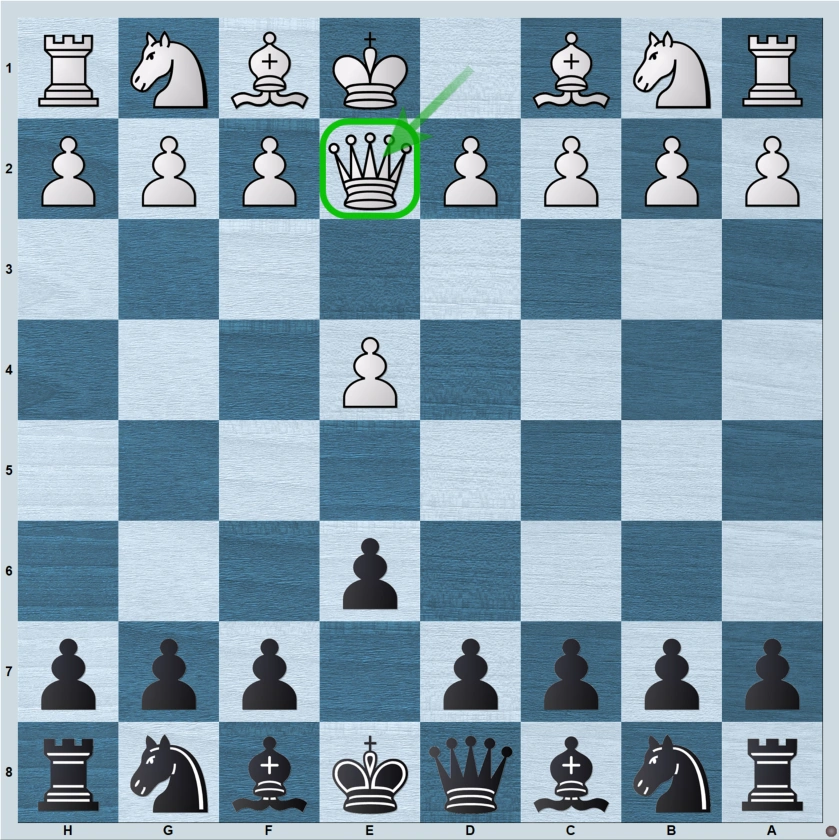
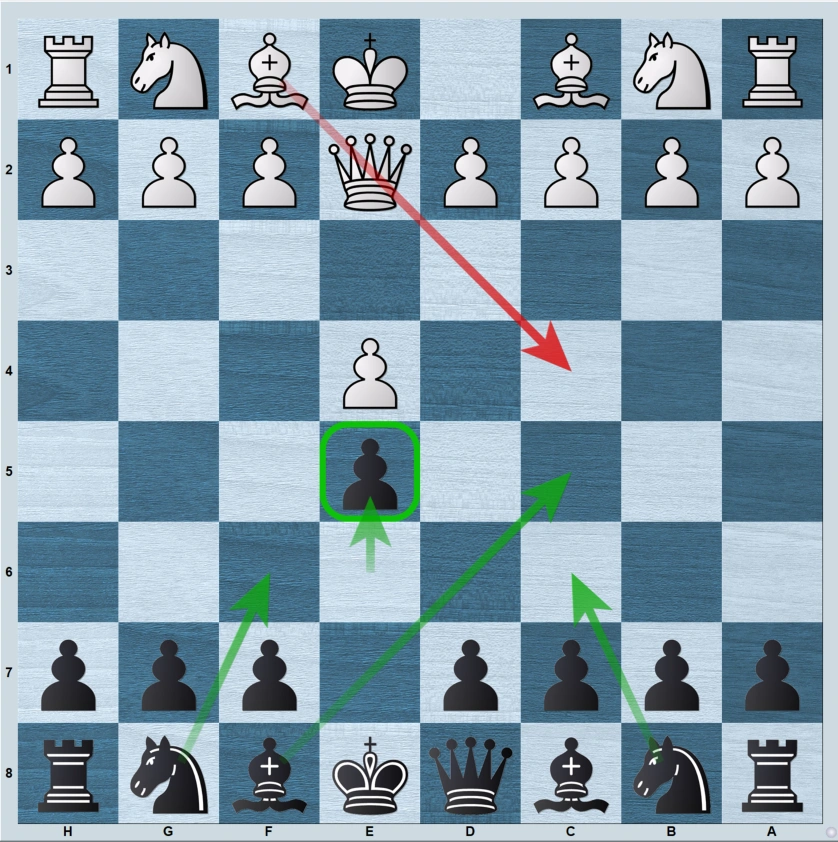
French Defense against the Chigorin Variation (2.Qe2)
Position after 2.Qe2

White's idea is to stop 2…d5 3.ed5 ed5, as our King would be pinned.

The downside - the poor f1 Bishop is blocked.

I recommend surprising again. With the same weapon!

Yes. 2…e5!
French Defense against the Chigorin Variation
Position after 2...e5

If you're laughing now, I understand you 😊

But look. White can't play their standard Bc4 anymore, which they do after 1.e4 e5.

While we can easily develop our pieces, and even fight for the opening advantage.

2. c4 - Steiner Variation

White wants to stop the d5. Almost…
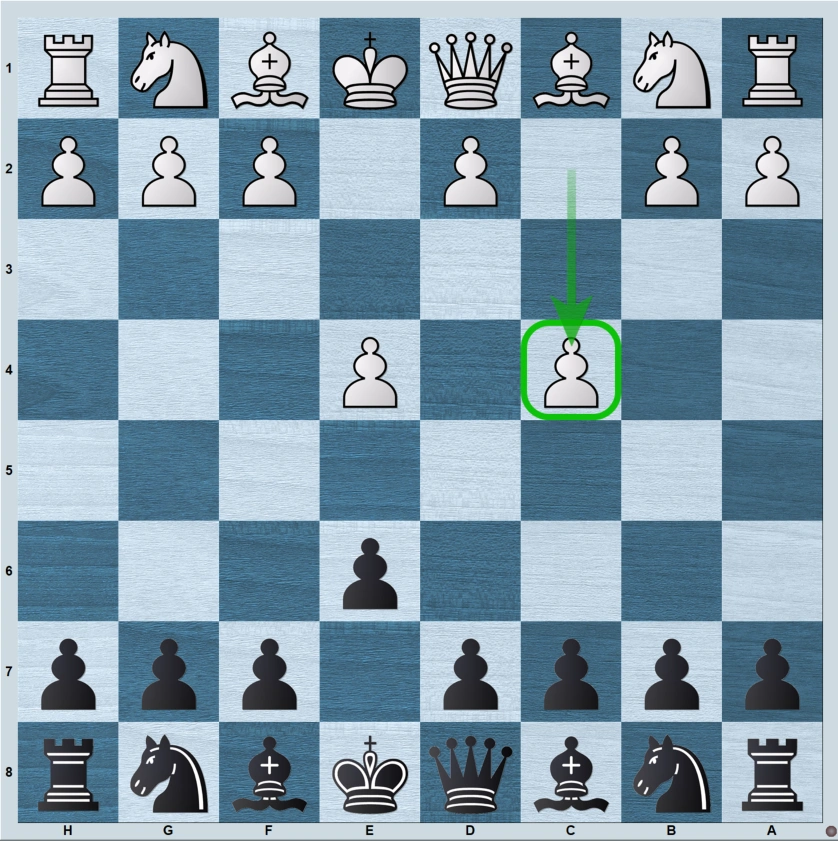
French Defense against the Steiner Variation with 2.c4
Position after 2.c4

We still play 2…d5.

After 3.ed5 ed5 4.cd5, we play 4…Nf6, take it back with the Knight, after which White will suffer with an isolated pawn.
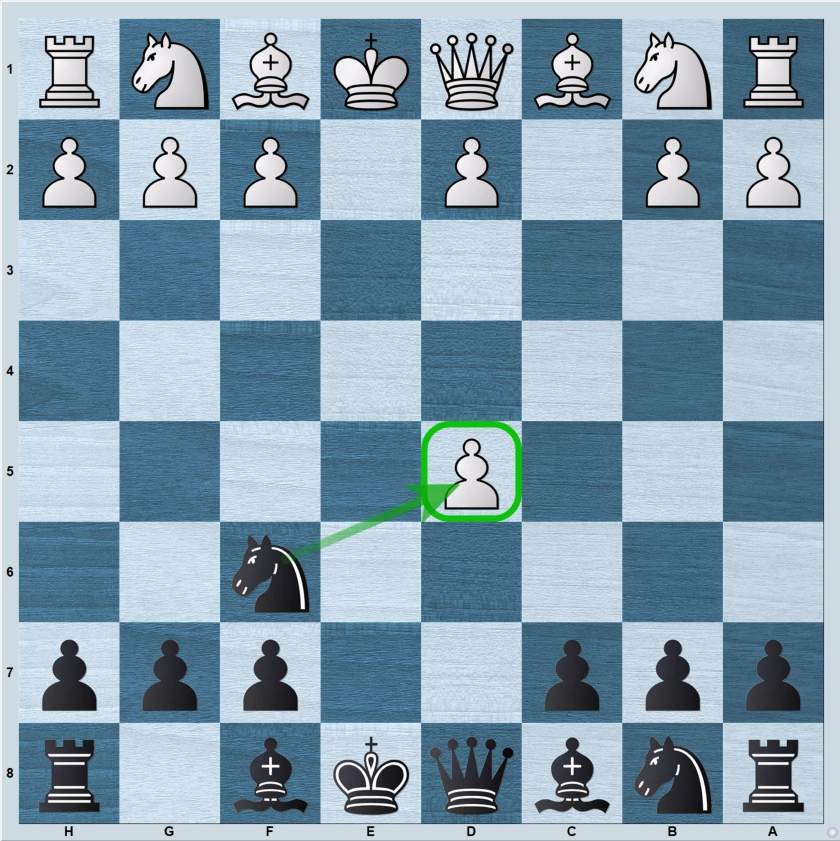
French Defense against the Steiner Variation (2.c4)
Position after 4...Nf6

2. f4 - La Bourdonnais Variation

White wants to have an active pawn on f4, before playing Nf3. But it's bad.
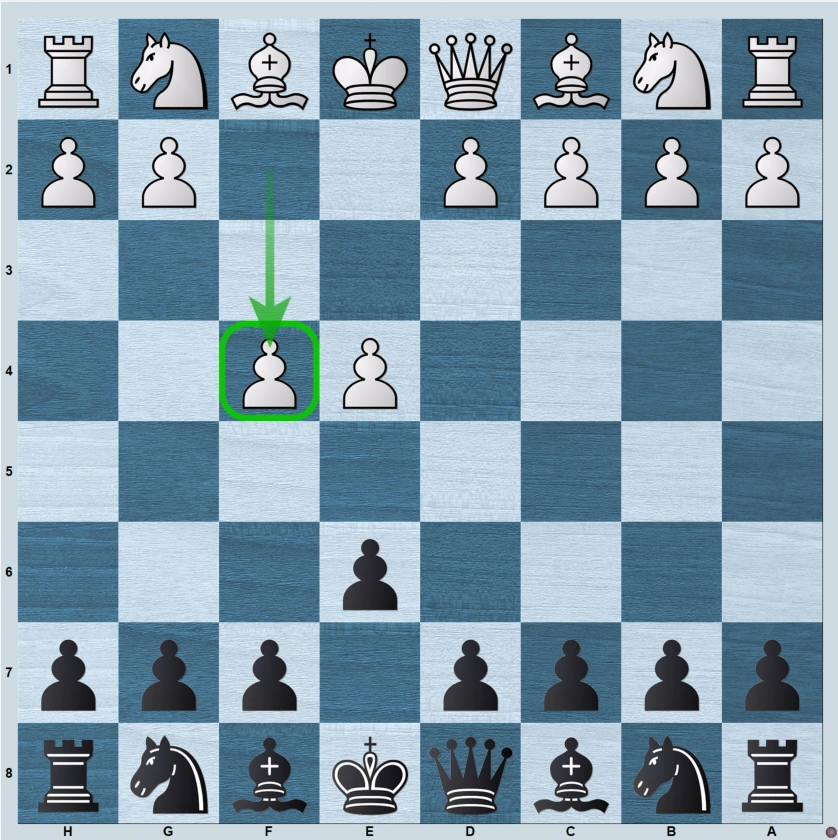
French Defense the La Bourdonnais Variation (2.f4)
Position after 2.f4

After 2…d5 3.e5 c5, it's Black who is better. They control the center, the Knight easily goes to the dream f5 square.
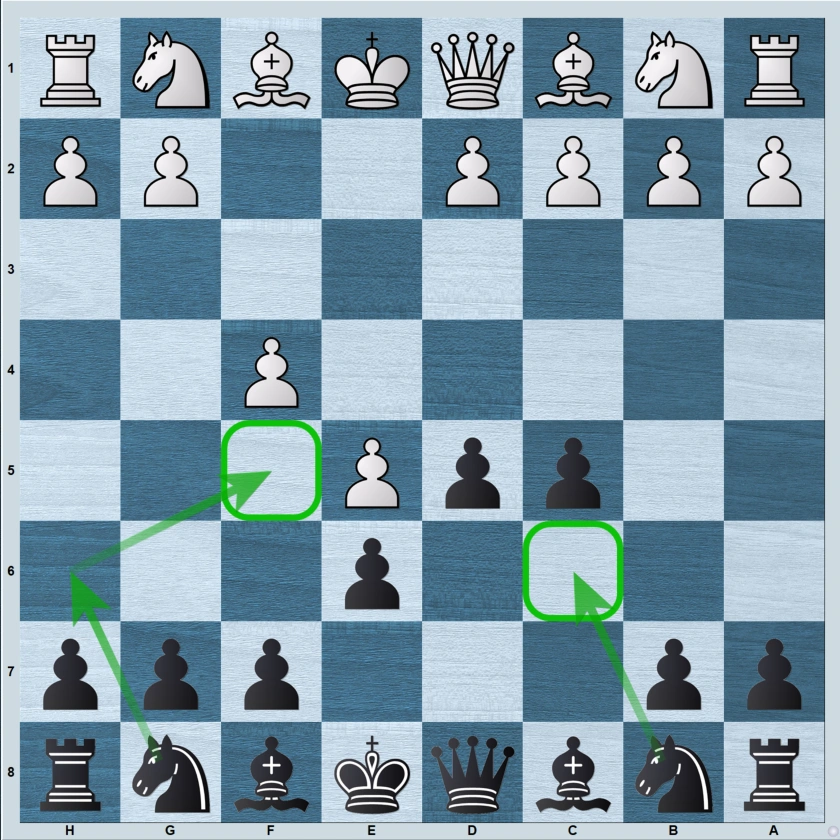
French Defense against the La Bourdonnais Variation (2.f4)
Black's Best Setup

Gambits

There are very aggressive players who love to play gambits against every defense.
It's a good idea to be prepared and shock them.

I'll introduce you the 3 main gambits against French, and how to play against each of them.

2. b3 - Reti Gambit
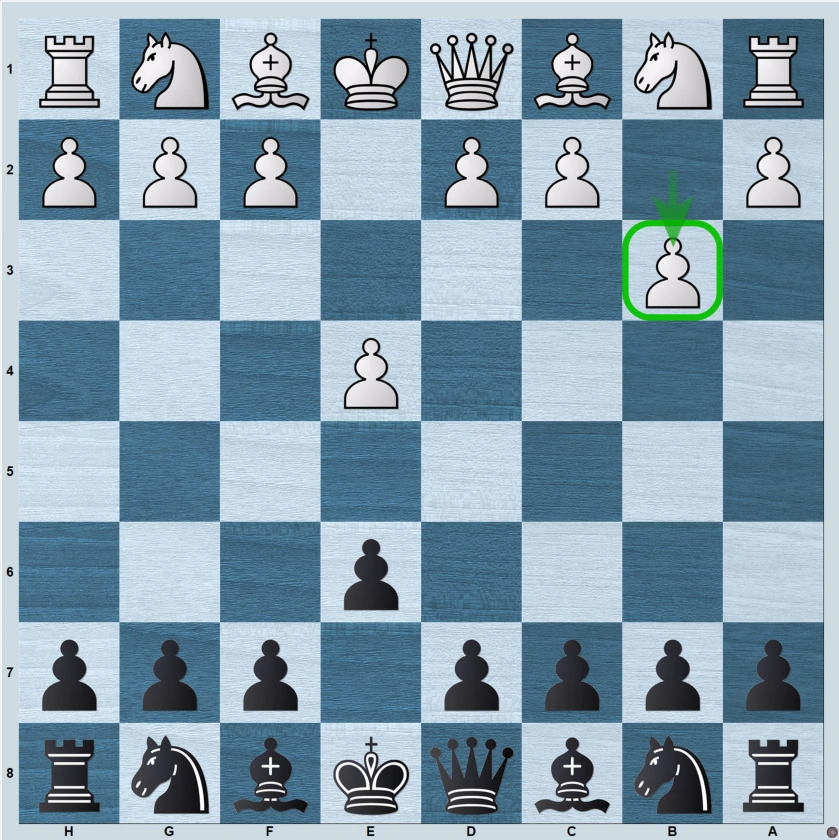
French Defense the 2.b3 Gambit
Position after 2.b3

White prepares to have a fianchetto Bishop and also sacrifice the e4 pawn!
after 2…d5 they play 3.Bb2, ignoring the attacked e4 pawn.

The idea, after 3…de4 4.Nc3 Nf6 to play 5.Qe2, prepare capturing back the e4 pawn and castle long side! Quite interesting, indeed. But…

I recommend to make your opponents very sad, decline the gambit and play 3…Nf6 attacking the e4 pawn with the Knight! This is the move that Reti Gambit players just hate…

After 4.e5 you can go 4…Nfd7 and then your typical plan with c5, Nc6…

2. b3 - Reti Gambit vs ?
Event
?
Site
?
Date
2026.06.06
Round
?
White
2. b3 - Reti Gambit
Black
?
Result
*
ECO
C00
  1. 1. e4
  2. 1... e6
  3. 2. b3

    [%csl Gb3][%cal Gb2b3]

  4. 2... d5
  5. 3. Bb2
  6. 3... Nf6
  7. 4. e5
  8. 4... Nfd7

    [%cal Gc7c5, Gb8c6,Rb2e5]

White's Bishop on b2 is completely misplaced, blocked by their own e5 pawn.

3.Be3 - Alapin Gambit
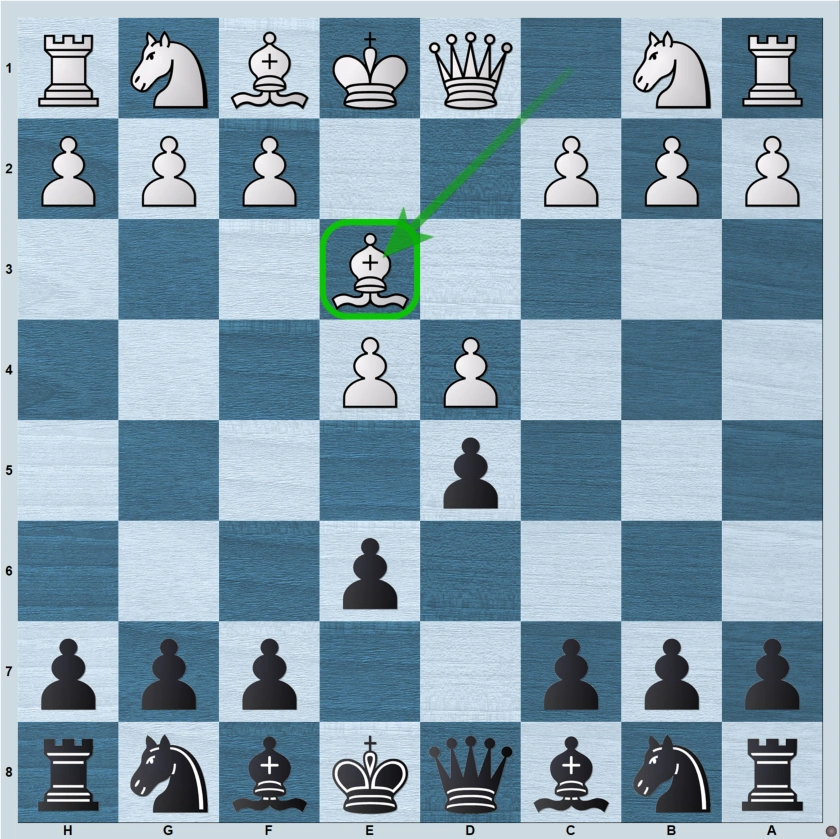
French Defense against the Alapin Gambit (3.Be3)
Position after 3.Be3

This move was popularized by famous Youtuber and good friend of mine NM Nelson Lopez.

White sacrifices the e4 pawn, and after 3…de4, they go 4.f3 ef3 5.Nf3.
For the sacrificed pawn, they get ahead in development. Plus, after they castle short, the Rf1 will be activated.

However this variation has a simple, elegant and just 1-move refutation.
4…Nh6!
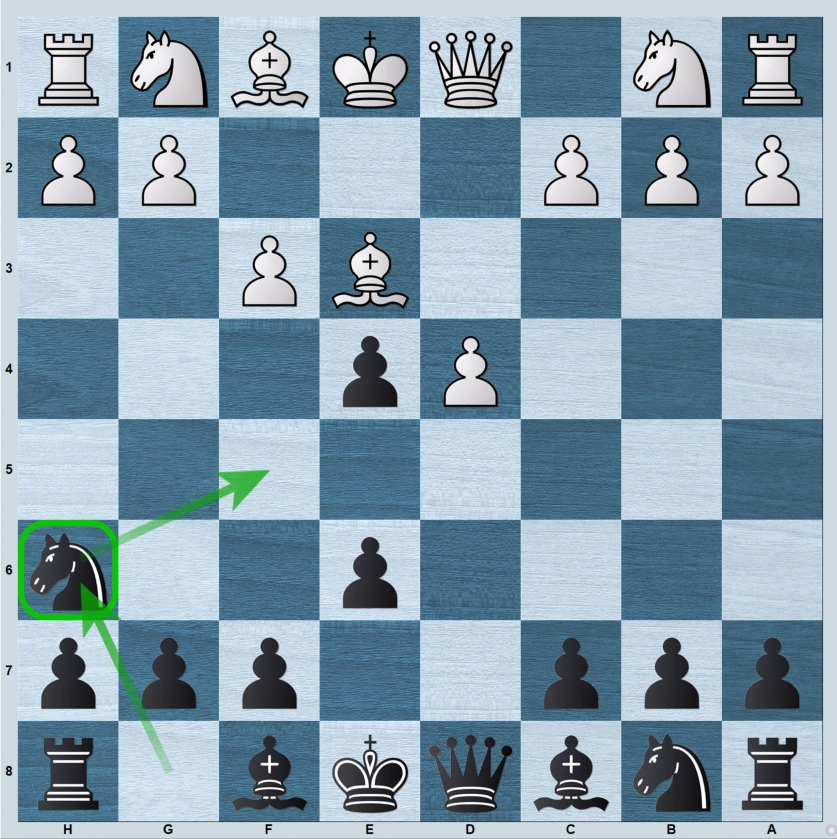
French Defense against the Alapin Gambit (3.Be3)
Position after 4...Nh6

Usually you don't develop your Knights at the corner of the board. Here is an exception. The Knight goes to f5.

And in both cases, 4.Bh6 or 4.fe4, there is a brutal Qh4 check!

This 4…Nh6 completely refutes the 3.Be3 - Alapin Gambit, and Black gets a big advantage.
The refutation I showed you isn't well known, which is good for this gambit lovers. Not good for them if they face you!

4.b4 - Wing Gambit

After 1.e4 e6, instead of main move 2.d4, White goes 2.Nf3.
After 2…d5 3.e5 c5 they gambit with 4.b4.
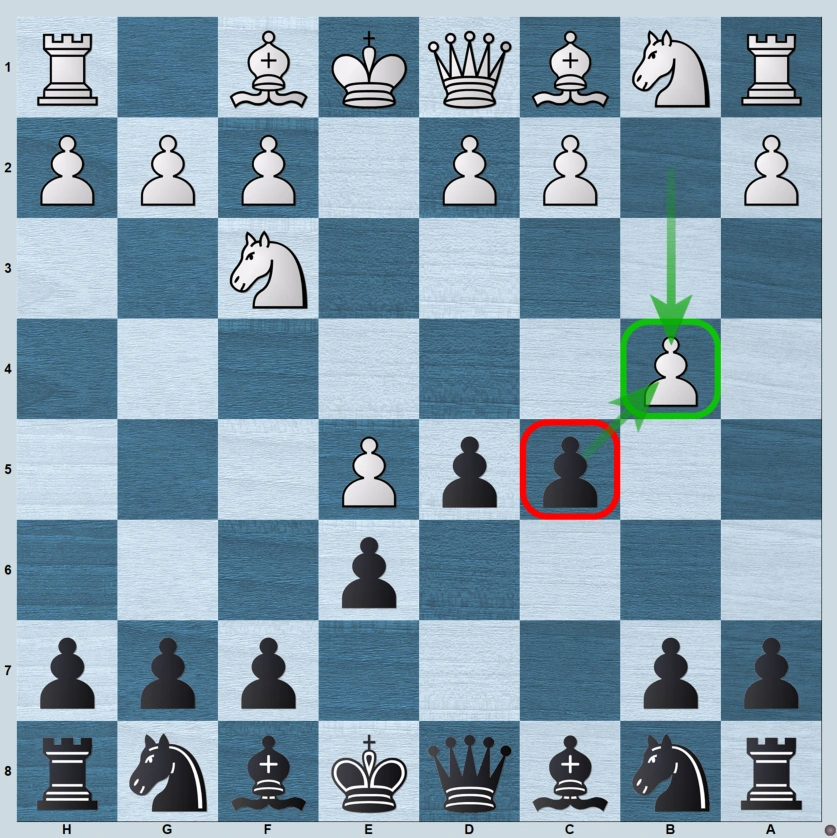
French Defense the Wing Gambit
Position after 4.b4

What's the idea?
Remember, early we talked they when White plays d4, Black plays c5 and start the battle around d4 pawn?

White wants to get rid of that c5 pawn by sacrificing their b pawn.

This is quite practical gambit, as White gets easy and fun play.

The way I recommend is playing anti-gambit, sticking to ChessMood variation, as we played against 3.e5 - advanced variation.

We make a waiting move 3…Bd7 - a very unpleasant one for Wing Gambit players.

Now 4.b4 doesn't make sense, as we'll take it with our Bishop, for free.

So White doesn't have a big choice, rather than to play 4.d4 and transpose to advanced variation, which clearly they didn't want to play, as indicated their 2.Nf3 move.

Beautiful Games with French Defense

As we're getting close to end, I want to share with you some emotions and show you a few very beautiful games with brilliant sacrifices with French Defense, including the promised immortal game by GM Rafael Vaganian.

Game 1

Lkhagvasuren, Tsedendemberel vs Ulybin, Mikhail
Event
Cheliabinsk
Site
Cheliabinsk
Date
1991.??.??
Round
?
White
Lkhagvasuren, Tsedendemberel
Black
Ulybin, Mikhail
Result
0-1
ECO
D05

[%evp 0,70,30,22,25,34,18,18,18,27,66,14,25,8,15,10,10,21,13,-10,-15,-18,-19,-42,-10,-101,-94,-94,14,-1,17,-42,-1,0,0,0,-10,-130,-46,-129,-128,-137,-150,-154,-154,-153,-115,-110,-133,-144,-122,-121,-154,-135,-135,-116,-107,-105,-117,-113,-118,-143,-111,-119,-93,-146,-98,-101,-96,-176,-182,-188,-195]

  1. 1. e4
  2. 1... e6
  3. 2. d4
  4. 2... d5
  5. 3. exd5
  6. 3... exd5
  7. 4. Bd3
  8. 4... c5
  9. 5. dxc5
  10. 5... Bxc5
  11. 6. Nf3
  12. 6... Nf6
  13. 7. O-O
  14. 7... O-O
  15. 8. h3
  16. 8... Nc6
  17. 9. Nbd2
  18. 9... Qd6
  19. 10. Nb3
  20. 10... Bb6
  21. 11. c3
  22. 11... Bxh3
  23. 12. gxh3
  24. 12... Qg3+
  25. 13. Kh1
  26. 13... Qxh3+
  27. 14. Nh2
  28. 14... Ne5
  29. 15. Be2
  30. 15... Nf3
  31. 16. Bf4
  32. 16... Nh4
  33. 17. Bf3
  34. 17... Nh5
  35. 18. Bg3
  36. 18... Qxg3
  37. 19. Rg1
  38. 19... Bxf2
  39. 20. Bxh5
  40. 20... Bxg1
  41. 21. Qxg1
  42. 21... Qe5
  43. 22. Bf3
  44. 22... Nxf3
  45. 23. Nxf3
  46. 23... Qh5+
  47. 24. Nh2
  48. 24... Rfe8
  49. 25. Nd4
  50. 25... Re5
  51. 26. Qg3
  52. 26... Rg5
  53. 27. Qe3
  54. 27... Qg6
  55. 28. Re1
  56. 28... h6
  57. 29. Ndf3
  58. 29... Rh5
  59. 30. Qf4
  60. 30... Rf5
  61. 31. Qc7
  62. 31... Qc6
  63. 32. Qg3
  64. 32... Qf6
  65. 33. Ng4
  66. 33... Qg6
  67. 34. Nh4
  68. 34... Rh5
  69. 35. Kg2
  70. 35... Rxh4

0-1

Game 2

Hector, Jonny vs Berg, Emanuel
Event
SWE-chT 0405
Site
Sweden
Date
2005.03.12
Round
10
White
Hector, Jonny
Black
Berg, Emanuel
Result
0-1
ECO
C15

[%evp 0,56,25,18,32,27,39,24,34,19,20,30,38,15,12,-15,-5,-2,1,4,16,-17,-5,-34, -25,-12,-22,-87,-37,-73,-85,-116,-119,-115,-41,-162,-159,-177,-177,-164,-168, -166,-354,-367,-396,-361,-356,-676,-700,-809,-889,-889,-889,-889,-889,-889, -954,-954,-928]

  1. 1. e4
  2. 1... e6
  3. 2. d4
  4. 2... d5
  5. 3. Nc3
  6. 3... Bb4
  7. 4. Nge2
  8. 4... Nc6
  9. 5. a3
  10. 5... Ba5
  11. 6. e5
  12. 6... Nge7
  13. 7. b4
  14. 7... Bb6
  15. 8. Na4
  16. 8... O-O
  17. 9. c3
  18. 9... f6
  19. 10. f4
  20. 10... Bd7
  21. 11. h4
  22. 11... Qe8
  23. 12. h5
  24. 12... Nd8
  25. 13. Nb2
  26. 13... Nf7
  27. 14. g4
  28. 14... fxe5
  29. 15. fxe5
  30. 15... a5
  31. 16. Bf4
  32. 16... Bb5
  33. 17. Rg1
  34. 17... Nc6
  35. 18. Rg2
  36. 18... Nfxe5
  37. 19. Bxe5
  38. 19... Nxe5
  39. 20. dxe5
  40. 20... Rxf1+
  41. 21. Kxf1
  42. 21... Qf7+
  43. 22. Ke1
  44. 22... Qf3
  45. 23. c4
  46. 23... Qxg2
  47. 24. c5
  48. 24... Rf8
  49. 25. Kd2
  50. 25... Rf2
  51. 26. Nd3
  52. 26... Bxd3
  53. 27. Kxd3
  54. 27... Qf3+
  55. 28. Kd2
  56. 28... d4

0-1

Game 3

Reshevsky, S.. vs Vaganian, R..
Event
Skopje
Site
Skopje
Date
1976.??.??
Round
?
White
Reshevsky, S..
Black
Vaganian, R..
Result
0-1
ECO
C05

[%evp 0,47,21,42,46,26,30,30,30,30,34,-5,-5,-10,-10,-3,13,-2,6,0,6,15,15,-15, 16,8,9,0,0,-35,70,70,70,-67,-71,-71,-66,-304,-310,-314,-314,-314,-317,-311, -285,-305,-321,-321,-336,-454]

  1. 1. e4
  2. 1... e6
  3. 2. d4
  4. 2... d5
  5. 3. Nd2
  6. 3... Nf6
  7. 4. e5
  8. 4... Nfd7
  9. 5. f4
  10. 5... c5
  11. 6. c3
  12. 6... Nc6
  13. 7. Ndf3
  14. 7... Qa5
  15. 8. Kf2
  16. 8... Be7
  17. 9. Bd3
  18. 9... Qb6
  19. 10. Ne2
  20. 10... f6
  21. 11. exf6
  22. 11... Bxf6
  23. 12. Kg3
  24. 12... cxd4
  25. 13. cxd4
  26. 13... O-O
  27. 14. Re1
  28. 14... e5
  29. 15. fxe5
  30. 15... Ndxe5
  31. 16. dxe5
  32. 16... Bh4+
  33. 17. Kxh4
  34. 17... Rxf3
  35. 18. Rf1
  36. 18... Qb4+
  37. 19. Bf4
  38. 19... Qe7+
  39. 20. Bg5
  40. 20... Qe6
  41. 21. Bf5
  42. 21... Rxf5
  43. 22. Nf4
  44. 22... Qxe5
  45. 23. Qg4
  46. 23... Rf7
  47. 24. Qh5
  48. 24... Ne7
  49. 25. g4
  50. 25... Ng6+
  51. 26. Kg3
  52. 26... Bd7
  53. 27. Rae1
  54. 27... Qd6
  55. 28. Bh6
  56. 28... Raf8

0-1

Game 4

Short, Nigel D vs Vallejo Pons, Francisco
Event
Reggio Emilia 53rd
Site
Reggio Emilia
Date
2010.12.31
Round
4
White
Short, Nigel D
Black
Vallejo Pons, Francisco
Result
0-1
ECO
C11
  1. 1. e4
  2. 1... e6
  3. 2. d4
  4. 2... d5
  5. 3. Nc3
  6. 3... Nf6
  7. 4. e5
  8. 4... Nfd7
  9. 5. f4
  10. 5... c5
  11. 6. Nf3
  12. 6... Nc6
  13. 7. Ne2
  14. 7... Be7
  15. 8. c3
  16. 8... a5
  17. 9. h4
  18. 9... O-O
  19. 10. Rh3
  20. 10... f6
  21. 11. a3
  22. 11... Rf7
  23. 12. Be3
  24. 12... Nb6
  25. 13. b3
  26. 13... Qf8
  27. 14. Qb1
  28. 14... a4
  29. 15. dxc5
  30. 15... Bxc5
  31. 16. Bxc5
  32. 16... Qxc5
  33. 17. b4
  34. 17... Qf8
  35. 18. Ned4
  36. 18... fxe5
  37. 19. Nxc6
  38. 19... e4
  39. 20. Nce5
  40. 20... Rxf4
  41. 21. Nh2
  42. 21... Qf5
  43. 22. Neg4
  44. 22... Rxf1+
  45. 23. Nxf1
  46. 23... Qxg4
  47. 24. Ne3
  48. 24... Qg6
  49. 25. Kf2
  50. 25... e5
  51. 26. Rg3
  52. 26... Qf6+
  53. 27. Kg1
  54. 27... Be6
  55. 28. Qe1
  56. 28... Rf8
  57. 29. Rd1
  58. 29... Kh8
  59. 30. h5
  60. 30... Qh4
  61. 31. c4
  62. 31... d4
  63. 32. c5
  64. 32... Nc4
  65. 33. Nf1
  66. 33... Qxh5
  67. 34. Rc1
  68. 34... e3
  69. 35. b5
  70. 35... e4
  71. 36. Qb4
  72. 36... e2
  73. 37. Nh2
  74. 37... Qf5
  75. 38. Nf3
  76. 38... Qf4
  77. 39. Qe1
  78. 39... Qe3+

0-1

Game 5

Hector, Jonny vs Berg, Emanuel
Event
SWE-chT 0405
Site
Sweden
Date
2005.03.12
Round
10
White
Hector, Jonny
Black
Berg, Emanuel
Result
0-1
ECO
C15

[%evp 0,56,25,18,32,27,39,24,34,19,20,30,38,15,12,-15,-5,-2,1,4,16,-17,-5,-34, -25,-12,-22,-87,-37,-73,-85,-116,-119,-115,-41,-162,-159,-177,-177,-164,-168, -166,-354,-367,-396,-361,-356,-676,-700,-809,-889,-889,-889,-889,-889,-889, -954,-954,-928]

  1. 1. e4
  2. 1... e6
  3. 2. d4
  4. 2... d5
  5. 3. Nc3
  6. 3... Bb4
  7. 4. Nge2
  8. 4... Nc6
  9. 5. a3
  10. 5... Ba5
  11. 6. e5
  12. 6... Nge7
  13. 7. b4
  14. 7... Bb6
  15. 8. Na4
  16. 8... O-O
  17. 9. c3
  18. 9... f6
  19. 10. f4
  20. 10... Bd7
  21. 11. h4
  22. 11... Qe8
  23. 12. h5
  24. 12... Nd8
  25. 13. Nb2
  26. 13... Nf7
  27. 14. g4
  28. 14... fxe5
  29. 15. fxe5
  30. 15... a5
  31. 16. Bf4
  32. 16... Bb5
  33. 17. Rg1
  34. 17... Nc6
  35. 18. Rg2
  36. 18... Nfxe5
  37. 19. Bxe5
  38. 19... Nxe5
  39. 20. dxe5
  40. 20... Rxf1+
  41. 21. Kxf1
  42. 21... Qf7+
  43. 22. Ke1
  44. 22... Qf3
  45. 23. c4
  46. 23... Qxg2
  47. 24. c5
  48. 24... Rf8
  49. 25. Kd2
  50. 25... Rf2
  51. 26. Nd3
  52. 26... Bxd3
  53. 27. Kxd3
  54. 27... Qf3+
  55. 28. Kd2
  56. 28... d4

0-1

My Best Games with French Defense

And if you're curious how I use French myself, I'll share with you few games. Just quick reminder - I play French Attack, not defense, haha.

Game 1

Li, Chao vs Grigoryan, Avetik
Event
World Championship(under20)
Site
?
Date
2009.10.31
Round
10
White
Li, Chao
Black
Grigoryan, Avetik
Result
0-1
ECO
C18

[%evp 0,94,15,21,32,43,43,20,20,18,18,22,14,22,18,14,14,15,56,25,49,10,9,-13, -1,-13,-17,-17,-18,-24,-14,-33,8,-41,-13,-46,-24,-22,0,-24,-21,-45,-31,-33,-7, -66,-65,-16,0,0,0,0,0,0,93,40,152,131,126,131,129,126,119,79,158,-215,-49,-46, -91,-101,-91,-78,-79,-314,-408,-334,-359,-370,-370,-360,-242,-240,-241,-260, -237,-236,-258,-252,-258,-240,-240,-268,-281,-301,-298,-368,-383]

  1. 1. e4
  2. 1... e6
  3. 2. d4
  4. 2... d5
  5. 3. Nc3
  6. 3... Bb4
  7. 4. e5
  8. 4... Ne7
  9. 5. a3
  10. 5... Bxc3+
  11. 6. bxc3
  12. 6... c5
  13. 7. Qg4
  14. 7... O-O
  15. 8. Bd3
  16. 8... Nbc6
  17. 9. Qh5
  18. 9... Ng6
  19. 10. Nf3
  20. 10... Qc7
  21. 11. Be3
  22. 11... c4
  23. 12. Bxg6
  24. 12... fxg6
  25. 13. Qg4
  26. 13... Qf7
  27. 14. Ng5
  28. 14... Qe8
  29. 15. h4
  30. 15... b5
  31. 16. Qe2
  32. 16... Bd7
  33. 17. g4
  34. 17... Qe7
  35. 18. f4
  36. 18... Be8
  37. 19. Kd2
  38. 19... a5
  39. 20. Qg2
  40. 20... h6
  41. 21. Nf3
  42. 21... Rb8
  43. 22. h5
  44. 22... gxh5
  45. 23. f5
  46. 23... exf5
  47. 24. gxf5
  48. 24... Rxf5
  49. 25. Nh4
  50. 25... Rf7
  51. 26. Ng6
  52. 26... Qe6
  53. 27. Rxh5
  54. 27... Kh7
  55. 28. Rg1
  56. 28... Rf2+
  57. 29. Qxf2
  58. 29... Bxg6
  59. 30. Rh2
  60. 30... Ne7
  61. 31. Rhg2
  62. 31... b4
  63. 32. Bg5
  64. 32... bxc3+
  65. 33. Kxc3
  66. 33... Qb6
  67. 34. Bc1
  68. 34... Qb1
  69. 35. Rxg6
  70. 35... Nxg6
  71. 36. e6
  72. 36... Qa1+
  73. 37. Kd2
  74. 37... Rf8
  75. 38. Qe3
  76. 38... Rf4
  77. 39. e7
  78. 39... Qxd4+
  79. 40. Qxd4
  80. 40... Rxd4+
  81. 41. Kc3
  82. 41... Re4
  83. 42. e8=Q
  84. 42... Rxe8
  85. 43. Kd4
  86. 43... Re2
  87. 44. Kxd5
  88. 44... Rxc2
  89. 45. Kc5
  90. 45... Ne5
  91. 46. Be3
  92. 46... g5
  93. 47. Kb5
  94. 47... c3

0-1

Game 2

Hovhannisyan, Robert vs Grigoryan, Avetik
Event
73rd ch-ARM 2013
Site
?
Date
2013.01.12
Round
1
White
Hovhannisyan, Robert
Black
Grigoryan, Avetik
Result
0-1
ECO
C12

[%evp 0,84,15,23,20,17,21,21,35,38,20,16,20,-26,27,31,19,30,47,20,23,23,44,46, 41,37,31,-4,-6,-1,20,17,-3,-2,24,-23,-30,-26,-27,13,25,15,15,16,45,18,15,-5,29, 30,43,64,0,-2,69,0,-29,-29,-89,-93,-93,-93,-68,-163,-137,-185,-202,-195,-205, -298,-203,-308,-222,-507,-353,-353,-420,-462,-513,-992,-1019,-1042,-1057,-1185, -1252,-1252,-1252]

  1. 1. e4
  2. 1... e6
  3. 2. d4
  4. 2... d5
  5. 3. Nc3
  6. 3... Nf6
  7. 4. Bg5
  8. 4... Bb4
  9. 5. e5
  10. 5... h6
  11. 6. Bc1
  12. 6... Nfd7
  13. 7. a3
  14. 7... Be7
  15. 8. Qg4
  16. 8... g6
  17. 9. Nf3
  18. 9... c5
  19. 10. dxc5
  20. 10... Nc6
  21. 11. Bb5
  22. 11... Nxc5
  23. 12. O-O
  24. 12... a6
  25. 13. Be2
  26. 13... Qc7
  27. 14. Re1
  28. 14... b6
  29. 15. Bf1
  30. 15... Bb7
  31. 16. h4
  32. 16... O-O-O
  33. 17. b4
  34. 17... Nd7
  35. 18. Qg3
  36. 18... d4
  37. 19. Ne4
  38. 19... Ndxe5
  39. 20. Nxe5
  40. 20... Qxe5
  41. 21. Bf4
  42. 21... Qh5
  43. 22. Nd6+
  44. 22... Bxd6
  45. 23. Bxd6
  46. 23... g5
  47. 24. Bc7
  48. 24... gxh4
  49. 25. Qh2
  50. 25... Rd7
  51. 26. Bxb6
  52. 26... Rg8
  53. 27. b5
  54. 27... axb5
  55. 28. a4
  56. 28... f6
  57. 29. Qh3
  58. 29... Ne5
  59. 30. Kh1
  60. 30... Qf5
  61. 31. Qxf5
  62. 31... exf5
  63. 32. Ra3
  64. 32... Nc4
  65. 33. Bxc4
  66. 33... bxc4
  67. 34. Re6
  68. 34... c3
  69. 35. Rxf6
  70. 35... h3
  71. 36. Rxh6
  72. 36... hxg2+
  73. 37. Kg1
  74. 37... Re7
  75. 38. Ra1
  76. 38... Rge8
  77. 39. Kh2
  78. 39... Re1
  79. 40. Rxe1
  80. 40... Rxe1
  81. 41. Rh8+
  82. 41... Kd7
  83. 42. Rh7+
  84. 42... Ke6

0-1

Game 3

Solodovnichenko, Yuri vs Grigoryan, Avetik
Event
Belgorod
Site
?
Date
2008.02.28
Round
4
White
Solodovnichenko, Yuri
Black
Grigoryan, Avetik
Result
0-1
ECO
C11

[%evp 0,54,19,38,43,18,28,25,72,47,7,20,18,13,13,0,24,38,31,-2,18,14,16,20,15, 7,8,-12,8,-15,-8,-8,-40,-38,-42,-22,-22,-22,0,-46,-48,-64,0,-185,-183,-183, -168,-181,-175,-377,-512,-528,-404,-404,-401,-1309,-1505]

  1. 1. e4
  2. 1... e6
  3. 2. d4
  4. 2... d5
  5. 3. Nc3
  6. 3... Nf6
  7. 4. e5
  8. 4... Nfd7
  9. 5. f4
  10. 5... c5
  11. 6. Nf3
  12. 6... Nc6
  13. 7. Be3
  14. 7... Be7
  15. 8. Qd2
  16. 8... O-O
  17. 9. dxc5
  18. 9... Bxc5
  19. 10. O-O-O
  20. 10... Qa5
  21. 11. Bxc5
  22. 11... Nxc5
  23. 12. Kb1
  24. 12... Bd7
  25. 13. h4
  26. 13... Rfd8
  27. 14. Rh3
  28. 14... Be8
  29. 15. Nd4
  30. 15... Rac8
  31. 16. Nb3
  32. 16... Nxb3
  33. 17. cxb3
  34. 17... f6
  35. 18. exf6
  36. 18... Nb4
  37. 19. f5
  38. 19... d4
  39. 20. Qg5
  40. 20... Rc7
  41. 21. f7+
  42. 21... Rxf7
  43. 22. a3
  44. 22... Nc6
  45. 23. fxe6
  46. 23... Rf5
  47. 24. b4
  48. 24... dxc3
  49. 25. Qc1
  50. 25... Nxb4
  51. 26. axb4
  52. 26... Rxf1
  53. 27. Rxf1
  54. 27... Bg6+

0-1

French Defense by ChessMood Students

ChessMood students just loved French attack, and they warm my heart every time, they post their games in our forum, sharing their beautiful games with French Attack, following the variations I taught them in the course. (you'll find link at the end)

Here are a few of them.

Game 1

Game 1 vs ?
Event
?
Site
?
Date
????.??.??
Round
?
White
Game 1
Black
?
Result
*
ECO
C04

[%evp 0,36,23,30,32,26,32,16,46,45,40,44,49,20,31,35,-3,31,18,7,0,-47,-36,-38, -29,-67,-62,-79,-63,-59,-79,-201,-201,-229,-225,-254,-683,-29999,-30000]

  1. 1. e4
  2. 1... e6
  3. 2. d4
  4. 2... d5
  5. 3. Nd2
  6. 3... Nc6
  7. 4. Ngf3
  8. 4... Nf6
  9. 5. e5
  10. 5... Nd7
  11. 6. c3
  12. 6... f6
  13. 7. exf6
  14. 7... Qxf6
  15. 8. Bd3
  16. 8... Bd6
  17. 9. O-O
  18. 9... e5
  19. 10. dxe5
  20. 10... Ndxe5
  21. 11. Nxe5
  22. 11... Nxe5
  23. 12. Be2
  24. 12... O-O
  25. 13. Nf3
  26. 13... c6

    [%csl Gc8,Gd5, Gd6,Gf6,Gf8]

  27. 14. Nxe5
  28. 14... Qxe5
  29. 15. g3
  30. 15... Bh3
  31. 16. Re1
  32. 16... Rxf2
  33. 17. Bf3
    1. 17. Kxf2
    2. 17... Bc5+
    3. 18. Kf3
    4. 18... Qe4#
  34. 17... Bc5
    1. 17... Rf1+
    2. 18. Rxf1
    3. 18... Bc5+
    4. 19. Kh1
  35. 18. Rxe5
  36. 18... Rf1#

Game 2

Game 2 vs ?
Event
?
Site
?
Date
????.??.??
Round
?
White
Game 2
Black
?
Result
*
ECO
C12

[%evp 0,58,19,11,32,26,27,29,38,35,35,32,32,18,18,-25,-19,-44,-27,-27,-24,-39, -11,-10,-16,-13,18,-36,-38,-36,-71,-72,-80,-70,-73,-203,-143,-178,-178,-187, -199,-210,-197,-198,-201,-203,-211,-201,-180,-173,-196,-231,-176,-157,-286, -754,-764,-771,-771,-785,-803]

  1. 1. e4
  2. 1... e6
  3. 2. d4
  4. 2... d5
  5. 3. Nc3
  6. 3... Nf6
  7. 4. Bg5
  8. 4... h6
  9. 5. Bxf6
  10. 5... Qxf6
  11. 6. e5
  12. 6... Qd8
  13. 7. Nf3
  14. 7... c5
  15. 8. Qd2
  16. 8... cxd4
  17. 9. Nxd4
  18. 9... Nc6
  19. 10. f4
  20. 10... Qa5
  21. 11. Nb3
  22. 11... Qb6
  23. 12. O-O-O
  24. 12... a5
  25. 13. Kb1
  26. 13... a4
  27. 14. Nd4
  28. 14... a3
  29. 15. b3
  30. 15... Bb4
  31. 16. Qe3
  32. 16... Nxd4
  33. 17. Rxd4
  34. 17... Bc5
  35. 18. Ne2
  36. 18... Bd7
  37. 19. c3
  38. 19... Bb5
  39. 20. Qd2
  40. 20... Bxe2
  41. 21. Bxe2
  42. 21... Bxd4
  43. 22. cxd4
  44. 22... O-O
  45. 23. g4
  46. 23... Ra4
  47. 24. Rd1
  48. 24... Rc8
  49. 25. f5
  50. 25... exf5
  51. 26. gxf5
  52. 26... Rb4
  53. 27. f6
  54. 27... Rxb3+
  55. 28. axb3
  56. 28... Qxb3+
  57. 29. Ka1
  58. 29... Rc2

Game 3

Game 3 vs ?
Event
?
Site
?
Date
????.??.??
Round
?
White
Game 3
Black
?
Result
*
ECO
C02

[%evp 0,2,32,26,35]

  1. 1. e4
  2. 1... e6
  3. 2. d4
  4. 2... d5
  5. 3. e5
  6. 3... Bd7
  7. 4. Nf3
  8. 4... a6
  9. 5. c3
  10. 5... Bb5
  11. 6. Bxb5+
  12. 6... axb5
  13. 7. O-O
  14. 7... Nd7
  15. 8. Ng5
  16. 8... Nb6
  17. 9. Qh5
  18. 9... g6
  19. 10. Qf3
  20. 10... Qd7
  21. 11. Qh3
  22. 11... h6
  23. 12. f4
  24. 12... Ne7
  25. 13. Nf3
  26. 13... Nf5
  27. 14. b3
  28. 14... c6
  29. 15. a4
  30. 15... bxa4
  31. 16. bxa4
  32. 16... Rxa4
  33. 17. Rxa4
  34. 17... Nxa4
  35. 18. Ba3
  36. 18... Bxa3
  37. 19. Nxa3
  38. 19... Nxc3
  39. 20. Nc2
  40. 20... Ne2+
  41. 21. Kf2
  42. 21... Nxf4
  43. 22. Qg4
  44. 22... g5
  45. 23. Ra1
  46. 23... O-O
  47. 24. Nxg5
  48. 24... hxg5
  49. 25. Qxg5+
  50. 25... Ng6
  51. 26. Ra3
  52. 26... Qe7
  53. 27. Qh5
  54. 27... Qh4+
  55. 28. Qxh4
  56. 28... Ngxh4
  57. 29. g3
  58. 29... Ng6
  59. 30. h4
  60. 30... Rb8
  61. 31. h5
  62. 31... Nge7
  63. 32. g4
  64. 32... Nh6
  65. 33. g5
  66. 33... Nhf5
  67. 34. Kf3
  68. 34... Kg7
  69. 35. Kg4
  70. 35... Nc8
  71. 36. h6+
  72. 36... Kh7
  73. 37. Kh5
  74. 37... Nb6
  75. 38. Ra7
  76. 38... Nc4
  77. 39. Nb4
  78. 39... Nxd4
  79. 40. Nd3
  80. 40... Nf3
  81. 41. Nf4
  82. 41... Rg8
  83. 42. Rxb7
  84. 42... Rxg5#

Game 4

Game 4 vs ?
Event
?
Site
?
Date
????.??.??
Round
?
White
Game 4
Black
?
Result
*
ECO
C02

[%evp 0,34,29,38,35,26,26,8,8,6,51,8,62,31,29,29,37,4,2,-20,-25,-14,0,-182, -187,-304,-308,-568,-576,-595,-605,-611,-608,-597,-609,-614,-610]

  1. 1. e4
  2. 1... e6
  3. 2. d4
  4. 2... d5
  5. 3. e5
  6. 3... Bd7
  7. 4. Nf3
  8. 4... a6
  9. 5. c3
  10. 5... Bb5
  11. 6. Bd3
  12. 6... Bxd3
  13. 7. Qxd3
  14. 7... c5
  15. 8. b3
  16. 8... Nc6
  17. 9. Be3
  18. 9... cxd4
  19. 10. cxd4
  20. 10... Nb4
  21. 11. Qd1
  22. 11... Rc8
  23. 12. Na3
  24. 12... Qa5
  25. 13. Rc1
  26. 13... Nd3+
  27. 14. Ke2
  28. 14... Nxc1+
  29. 15. Bxc1
  30. 15... Bxa3
  31. 16. Bxa3
  32. 16... Qxa3
  33. 17. Qd2
  34. 17... Ne7

Game 5

Game 5 vs ?
Event
?
Site
?
Date
????.??.??
Round
?
White
Game 5
Black
?
Result
*
ECO
C11
  1. 1. e4
  2. 1... e6
  3. 2. d4
  4. 2... d5
  5. 3. Nc3
  6. 3... Nf6
  7. 4. e5
  8. 4... Ng8
  9. 5. f4
  10. 5... c5
  11. 6. Nf3
  12. 6... Nc6
  13. 7. Be3
  14. 7... cxd4
  15. 8. Nxd4
  16. 8... Nxd4
  17. 9. Qxd4
  18. 9... Ne7
  19. 10. Bb5+
  20. 10... Bd7
  21. 11. O-O-O
  22. 11... Nf5
  23. 12. Qd3
  24. 12... a6
  25. 13. Bxd7+
  26. 13... Qxd7
  27. 14. Bf2
  28. 14... h5
  29. 15. Ne4
  30. 15... Qa4
  31. 16. Nc3
  32. 16... Qxf4+
  33. 17. Rd2
  34. 17... Bb4
  35. 18. Kb1
  36. 18... Rc8
  37. 19. g3
  38. 19... Qg5
  39. 20. Ne4
  40. 20... Qe7
  41. 21. Nd6+
  42. 21... Bxd6
  43. 22. exd6
  44. 22... Nxd6
  45. 23. Bd4
  46. 23... Ne4
  47. 24. Re2
  48. 24... O-O
  49. 25. Rg1
  50. 25... e5
  51. 26. Be3
  52. 26... Qb4
  53. 27. Ka1
  54. 27... Rfd8
  55. 28. g4
  56. 28... h4
  57. 29. g5
  58. 29... Qc4
  59. 30. Qd1
  60. 30... d4
  61. 31. Bc1
  62. 31... d3
  63. 32. cxd3
  64. 32... Rxd3
  65. 33. Qe1
  66. 33... Rd4
  67. 34. g6
  68. 34... f6
  69. 35. b3
  70. 35... Qd5
  71. 36. Bb2
  72. 36... Rc6
  73. 37. Re3
  74. 37... Rc2
  75. 38. Kb1
  76. 38... Rdd2
  77. 39. Ba1
  78. 39... Rxa2
  79. 40. Qxh4
  80. 40... Rxa1+
  81. 41. Kxa1
  82. 41... Qa5+

How to Learn the French Defense

First of all, accept my congratulations! If you've made this far (and not just scrolled!), you should already know a lot to start trying French! For learning it deeper, I want to suggest two paths:

1) French Attack - BlackMood Openings

I've recorded a course, where I share all you need to know for playing French under 2,000 level. I'll take you to the next step, of what you learned in this guide. And as a bonus, you'll also learn how to play against 1.d4. We play 1…e6 again, and then Dutch Attack!
BlackMood Openings Course

2) French with Eric Rosen

I was teaching French Attack to my friend and famous content creator IM Eric Rosen. You can also start from here. It's on Youtube.

Thank You!

Dear future potential friend! (remember, at the beginning I said, if you fall in love with chess we're potential friends.)

Thank you for reading and for your trust. I know your time is limited, and trusting me as your guide…reading what I put it together here… what can I say… THANK YOU!!!

I'm wishing you beautiful games with French Defense, or French Attack (happy if you liked and adopted the new name, we gave at ChessMood), and looking forward to seeing you inside the French course, or who knows, maybe in real life!

Just say "Avo, I play French Attack", and I know you're one of us.

With best wishes and love, For your growth and fun journey,
GM Avetik (or Avo, as my friends call me) ❤️

Frequently Asked Questions

What is the French Defense in chess?

The French Defense begins with 1.e4 e6, preparing 2...d5. Black plays ...e6 first (rather than 1...d5 directly) so that after a capture they can recapture with the e-pawn instead of the Queen — avoiding the tempo loss after 1...d5 2.exd5 Qxd5 3.Nc3. Many think the French is passive, but it's actually one of the most aggressive openings in chess, at ChessMood we call it the "French Attack."

Why is the opening called the "French Defense"?

The opening is named after a celebrated correspondence match played between the London Chess Club and the Paris Chess Club from 1834 to 1836. Jacques Chamouillet, a member of the Paris team, persuaded his teammates to answer 1.e4 with 1...e6, and the Parisians went on to win the match, permanently associating the move with their city. Earlier games featuring 1...e6 do exist, but it was the Paris team's victory that fixed the opening's identity in the chess world.

How do you play the French Defense as Black?

Start with 1.e4 e6, planning 2...d5 to fight for the center. From there, your move depends on White's reply:

Against the Exchange (3.exd5): recapture with 3...exd5 to unlock the light-squared Bishop, then go for the aggressive long-castle attack: ...Nc6, ...Bd6, ...Nge7, ...Bf5, ...Qd7, 0-0-0, then ...f6-g5-h5.
Against the Advance (3.e5): the ChessMood line is 3...Bd7 4. Nf3 a6, planning ...Bb5 to trade the problem Bishop.
Against 3. Nc3: pick the Rubinstein (3...dxe4), Winawer (3...Bb4), or Classical (3...Nf6).
Against the Tarrasch (3. Nd2) and the Schlechter (3. Bd3): play the tricky 3...Nc6, attacking d4 immediately.

How does White typically meet the French Defense?

After 2.d4 d5, White's four main options are 3.exd5 (Exchange), 3.e5 (Advance), 3.Nc3, and 3.Nd2 (Tarrasch). The underrated sideline 3.Bd3 (Schlechter / ChessMood Variation) is what we recommend in the ChessMood White repertoire. White can also avoid 2.d4 with the Two Knights Variation, 2.d3 (King's Indian Attack, Bobby Fischer's favorite vs. the French), 2.Qe2 (Chigorin), 2.c4 (Steiner), or 2.f4 (La Bourdonnais).

What are the main variations of the French Defense?

After 1.e4 e6 2.d4 d5, the four main lines are the Exchange (3.exd5), the Advance (3.e5), 3.Nc3 (branching into the Rubinstein, Winawer, and Classical, which itself contains the Steinitz, McCutcheon, and McCutcheon Gambit), and the Tarrasch (3.Nd2). The key sideline is 3.Bd3, the Schlechter / ChessMood Variation.

Beyond move 3, White can also choose the Two Knight Variation, the King's Indian Attack (2.d3), the Chigorin (2.Qe2), the Steiner (2.c4), or the La Bourdonnais (2.f4).

Is the French Defense a good opening in general?

The opening has been the third most popular reply to 1.e4 for decades, briefly overtaking 1...e5 around 2006. It has top-level pedigree from Alekhine (who beat Capablanca with the Winawer in their 1927 World Championship), Botvinnik, Petrosian, Korchnoi, Karpov, Vaganian, Dreev, Kamsky, Bareev, and Morozevich, so yes, it's indeed one of the best openings in chess.

What is the main weakness of the French Defense?

The light-squared Bishop on c8, what we at ChessMood call "the biggest problem of French." It gets locked behind Black's own e6 pawn, and often in many variations Black's plans revolve around solving it. The typical solutions are to trade it via ...Bd7 and ...Bb5 (especially in the Advance Variation, where the ChessMood line 3...Bd7 4.Nf3 a6 is built around exactly this idea.)

Why is the Exchange Variation so common at lower levels?

Although 3.exd5 is the least popular reply at the top level, it's harmless, and Black has zero opening problems, it's the most common move you'll face below 1,500. The reason is psychological: most players don't know much theory, and trading pieces is their instinct. What they often don't realize is that they're not really trading the e4 pawn for the d5 pawn, they're trading their active e4 pawn for Black's passive e6 pawn. After 3...exd5, Black's light-squared Bishop is unlocked and Black has a fully equal, comfortable game.

Related Openings

Internal-linking block. Each item links to its own landing page.

  • Caro-Kann Defense (1.e4 c6)
  • Sicilian Defense (1.e4 c5)
  • Pirc Defense (1.e4 d6)
  • Scandinavian Defense (1.e4 d5)
  • Modern Defense (1.e4 g6)

Table of Contents

This website uses cookies. To learn more, visit our Cookie Policy.