Benko Gambit Handbook - Guided by a Grandmaster

Create your free account

OR Register This site is protected by reCAPTCHA and the Google Privacy Policy and Terms of Service apply.

Create your free account

By clicking “Register”, you agree to our
terms of service and privacy policy

This site is protected by reCAPTCHA and the Google Privacy Policy and Terms of Service apply.

Log in

OR

Reset password

Hi friends, GM Hovhannes Gabuzyan here.

I've played a lot of openings in my life. After I learned Benko, I fell in love with it. Nothing to memorize, all about ideas. Super fun and super practical.

I think the Benko is one of the most underestimated weapons against 1.d4 and I walk the talk. Recently I beat Super GM Nihal Sarin with it. And on my way to my second Armenian champion title. Benko won one of the decisive games. I'll show you both later in the guide.

After playing the Benko for years, I even recorded a full course on it for ChessMood — and the students love it too.

Here's what we're going to do together:

  • I'll show you the main idea so the moves feel logical instead of memorized.
  • I'll walk you through every variation you'll actually face: the lines where White accepts and fights (7.e4, 7.g3), the lines where White accepts but tries to escape the fight (5.b6, 5.f3, 5.e3, 5.Nc3), and the lines where White declines the gambit entirely.
  • I'll share 5 brutal tactics every Benko player should know on sight.
  • I'll give you the practical patterns — the positions that come up over and over, the traps to set, what to do in the endgame.
  • And I'll show you the most instructive Benko games — mine, classics, and a few educational gems — so you can see how the ideas play out against real opposition.

Ready? Let's go.

History, and Why It Has Two Names

Quick history before we get into the moves. If you're not interested, skip ahead to the next section — but I think it's a nice story.

Benko has two names, and there's a reason for each.

I actually learned Benko later in my chess life. All my life before that, I knew it as the Volga Gambit. That's what we called it in Armenia, and that's what they still call it across the former Soviet Union. The name comes from a 1946 article by B. Argunov in Shakhmaty v SSSR, the main Soviet chess magazine. Argunov wrote from Kuibyshev — today's Samara — on the Volga River. Hence the name.

The "Benko" name came later, and from the West. In the late 1960s, Hungarian-American Grandmaster Pal Benko started playing this opening regularly at the top level, refining the theory, and publishing his analysis.
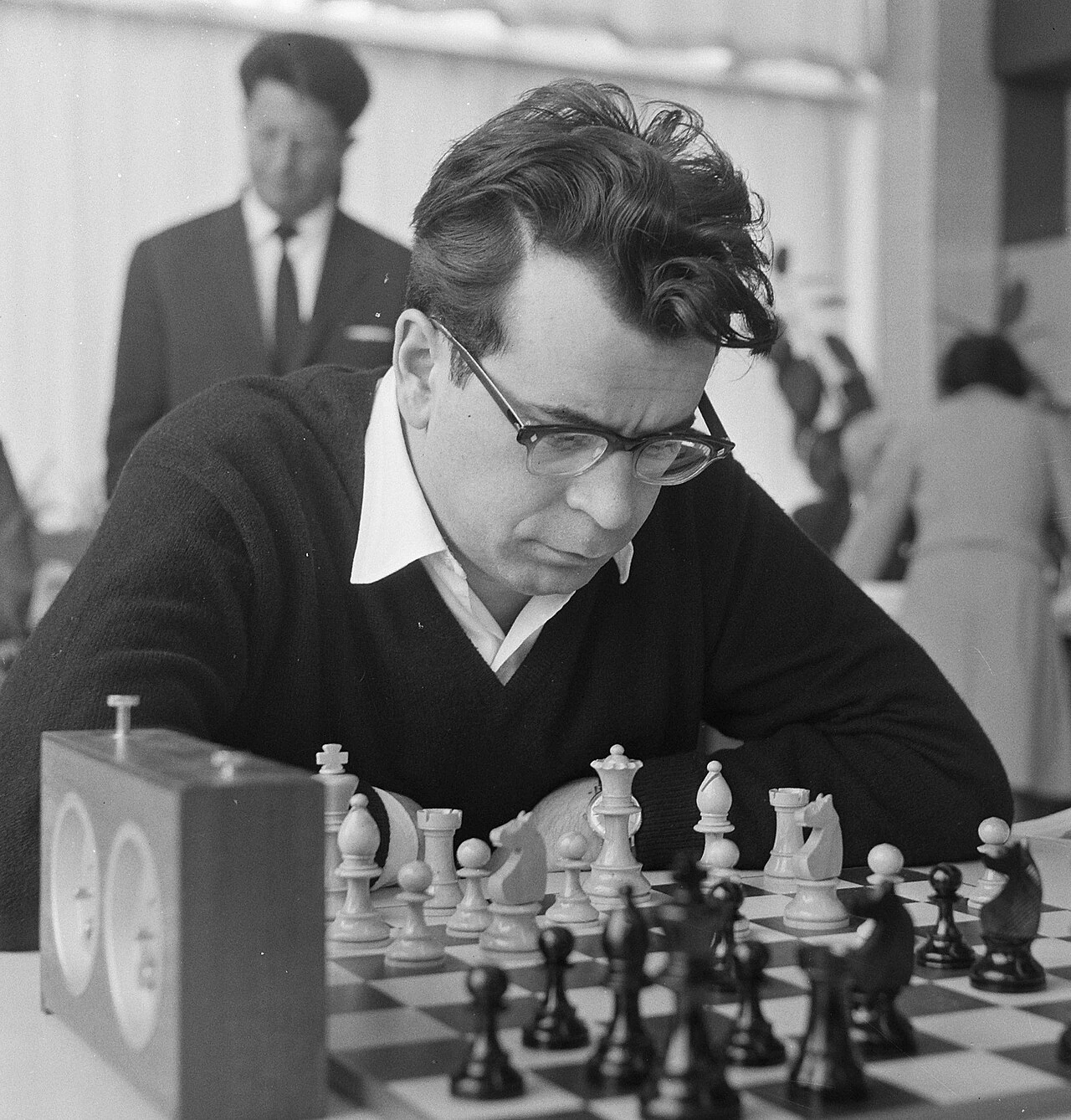
Pal Benko concentrating during a chess game in 1964, Historical photo
Source: Dutch National Archives, The Hague

His 1974 book The Benko Gambit gave the opening its first complete English-language treatment. After that, the name stuck everywhere outside the former USSR.

So depending on where you grew up, you might know it as the Benko, the Volga, or the Volga-Benko Gambit. Same opening, same first three moves, same ideas. I'll mostly call it the Benko in this guide because that's the more common name in English-language chess.

One last detail for the database minded: the Encyclopaedia of Chess Openings classifies the Benko Gambit under codes A57, A58, and A59. If you've ever seen those on an opening explorer or in a database, that's us.

Benko Players

A few of the players who shaped this opening:

  • Pal Benko himself — the man who gave the opening its modern theory and Western name. His games are still the cleanest demonstrations of the core ideas.
  • Mikhail Tal, who used the Benko in his characteristic sacrificial style and showed how dangerous the attacking potential could be.
  • Garry Kasparov, who played it in his early career, including some sharp wins.
  • Veselin Topalov, Vasyl Ivanchuk, Michael Adams, Alexei Shirov, Boris Gelfand, Viswanathan Anand — all played it at the highest level.
  • Magnus Carlsen has reached for it more than once when he needed to play for a win with Black.

That's a serious list. Benko isn't a sideline curiosity. It's an opening that world champions have trusted in critical games.

Now let's look at what they actually do with it.

The Main Idea Behind the Benko Gambit

After 1.d4 Nf6 2.c4 c5 3.d5, Black plays 3...b5.
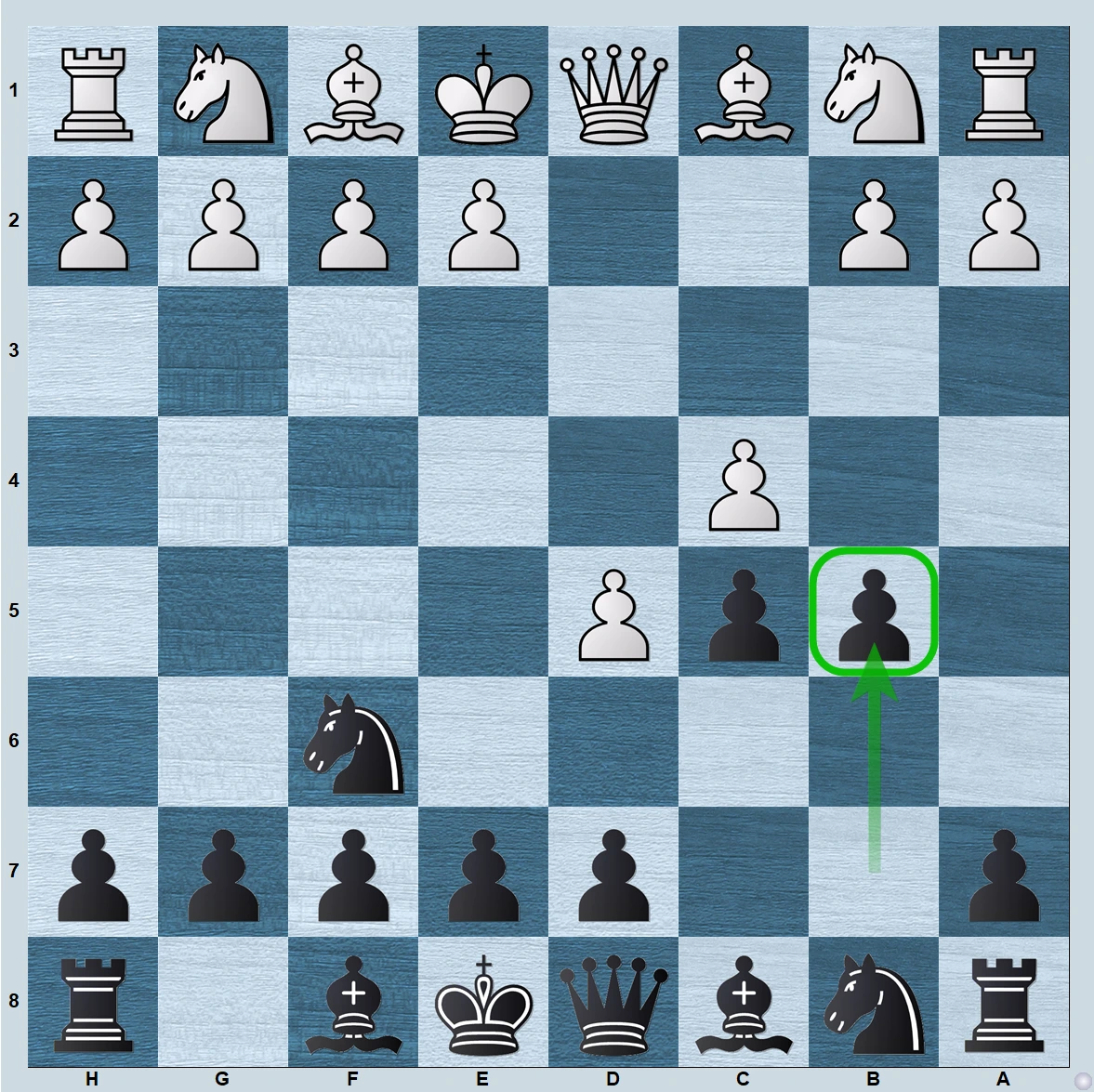
Starting position of the Benko Gambit after 1.d4 Nf6 2.c4 c5 3.d5 b5,Main diagram
Position after 3...b5

At first glance, it looks strange. We're giving up a pawn on move 3. Why?

Because Benko isn't like other gambits. Most gambits work on tempo: you give a pawn, you get a few moves of attack, and if the attack doesn't work you're just down a pawn. Benko is different. You give one pawn, but you get open files, an active bishop, and pressure on the queenside. The compensation doesn't go away.

A quick word before we look at the position: as you read the rest of this guide, keep one thing in your head — we play on the queenside. That's where every Benko game is decided.

Now look at what happens after the natural 4.cxb5 a6 5.bxa6 Bxa6:
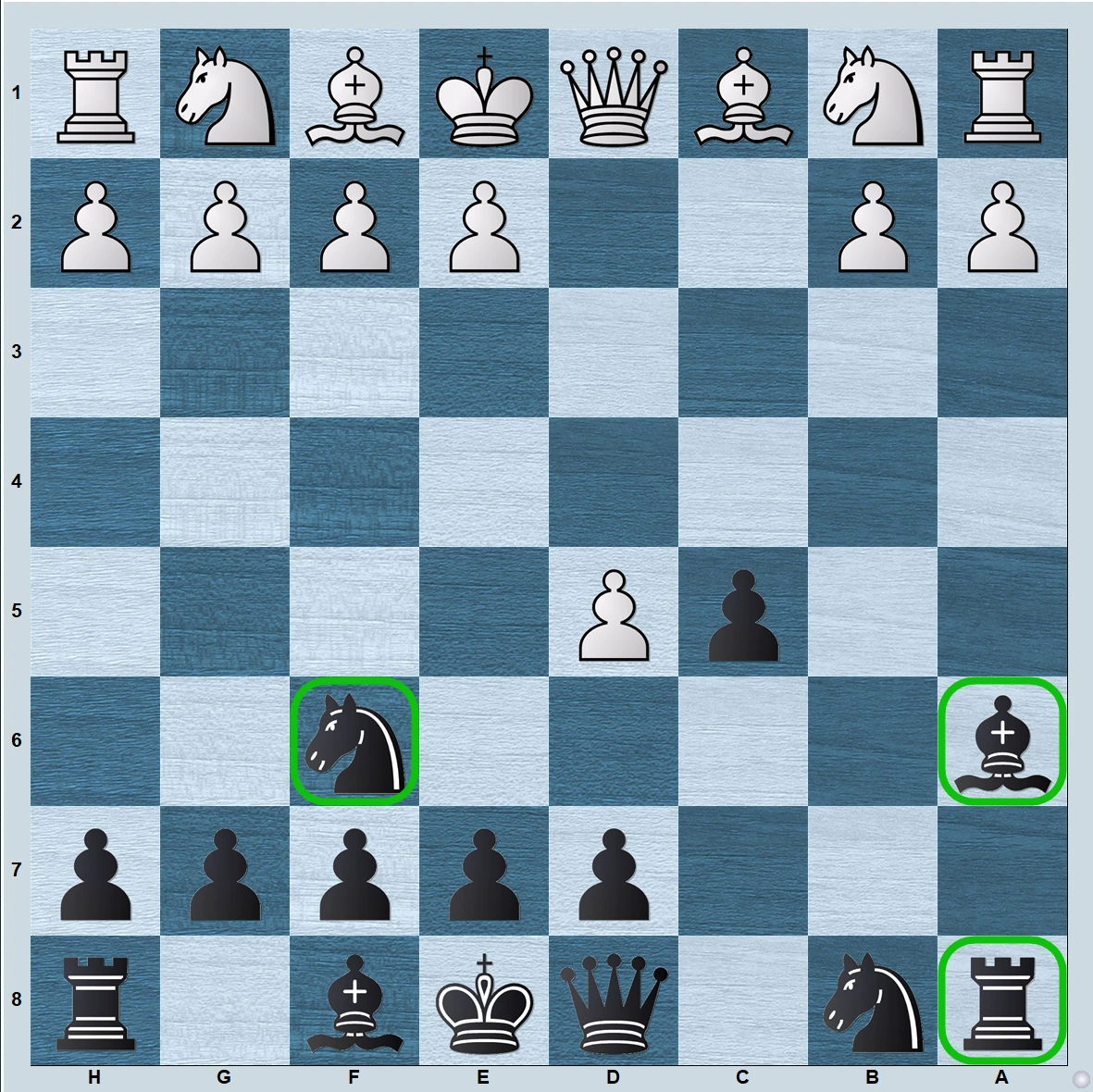
Position after 5...Bxa6 in the Benko Gambit Accepted main line,Variation
Position after 5...Bxa6

This is the logic of the Benko:

  • Better development. We've already developed three pieces. White hasn't moved any. We're ahead before the middlegame even starts.
  • Two half-open files on the queenside. The a-file is already ours. The rook on a8 is a working piece without having to move. The b-file is half-open and waiting for our other rook to come to it.
  • White's f1-bishop is a problem piece. The natural way to develop it is e4, but then we trade on f1, White loses the right to castle, and their king has to walk to safety. Every move they spend on that is a move we spend improving our pieces.
  • A clear plan from move 5. While our opponent is still figuring out what kind of game this is, we know exactly what we're doing.

Here's the part that surprises most players: Benko stays good into the endgame. Trade queens? Fine. Simplify the position? Even better. The half-open files stay open. The dark-squared bishop on g7 stays strong. White's queenside stays under pressure. Many of my Benko wins have come in endgames where I was technically still down a pawn, but my pieces were so much more active that the extra pawn meant nothing.

Now let's flip the board and see what White can do. White has three real options:

  1. Accept and fight the main lines: 7.e4 King's Walk, 7.g3 Fianchetto
  2. Accept and look for a sideline: 5.b6 and 5.f3 try to give the pawn back or change the structure; 5.e3 and 5.Nc3 are quieter tries when White doesn't know what to do
  3. Decline the gambit entirely: 4.Nf3, 4.e3, 4.Qc2, 4.b3

We'll get to all of them.

Benko Gambit Accepted

When White takes the pawn, we're in real Benko territory. This is where everything we set up earlier starts paying off: open files, active pieces, queenside pressure.

I've split the accepted lines into two groups based on White's intention:

  • The main lines (7.e4 and 7.g3), where White takes the pawn and is willing to fight on our terms.
  • The escape attempts (5.b6, 5.f3, 5.e3, 5.Nc3), where White takes the pawn but immediately tries to avoid the typical Benko fight.

I'll cover all six. The good news: in the main lines, our setup is the same in both cases. Learn one piece arrangement, you handle both 7.e4 and 7.g3.

The move order starts the same way every time:

1.d4 Nf6 2.c4 c5 3.d5 b5 4.cxb5 a6 5.bxa6 Bxa6 6.Nc3 d6
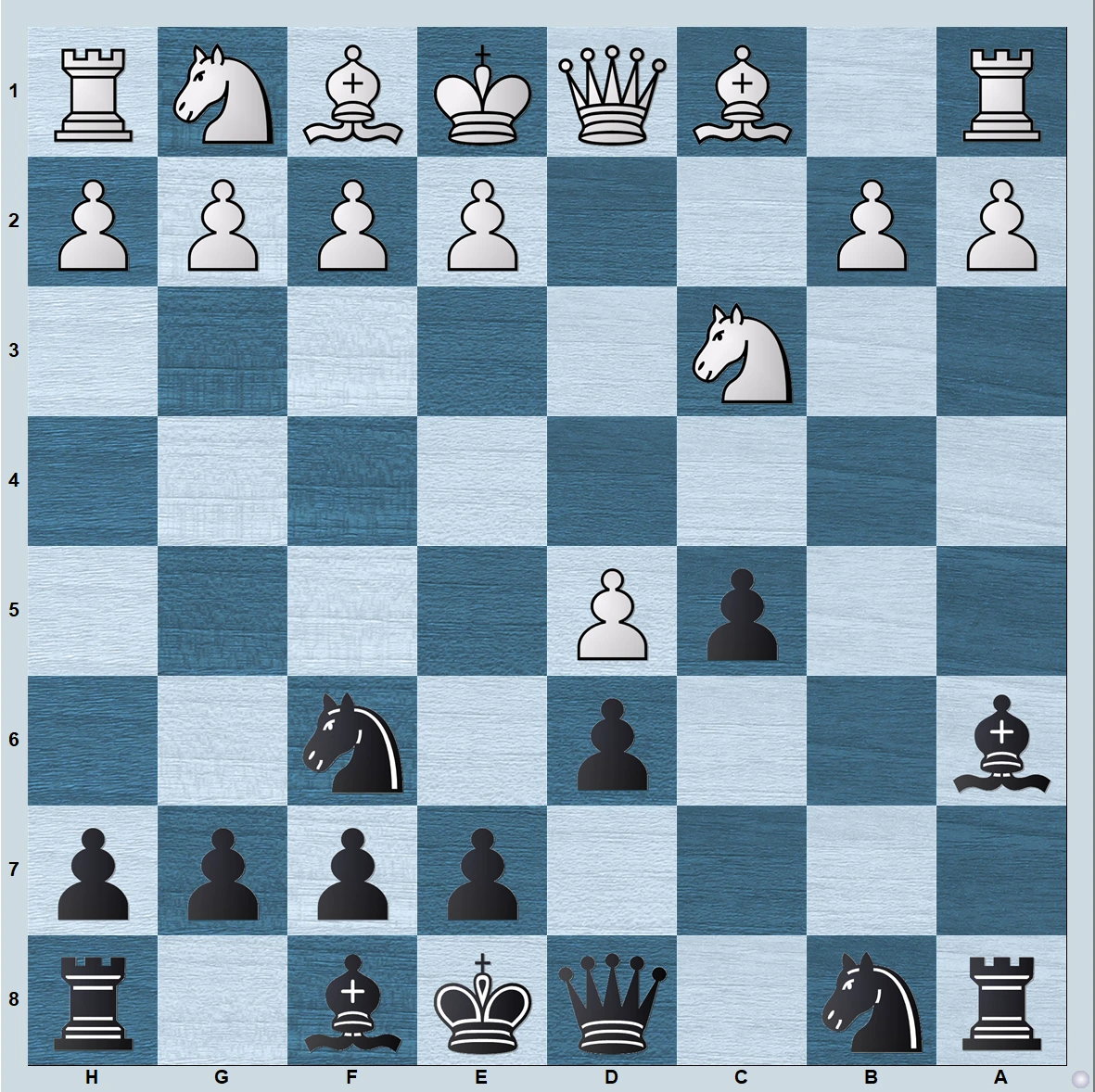
Position after 6...d6 — Black completes the standard setup,Variation
Position after 6...d6

From here, White decides what kind of game they want.

7.e4 — King's Walk

1.d4 Nf6 2.c4 c5 3.d5 b5 4.cxb5 a6 5.bxa6 Bxa6 6.Nc3 d6 7.e4
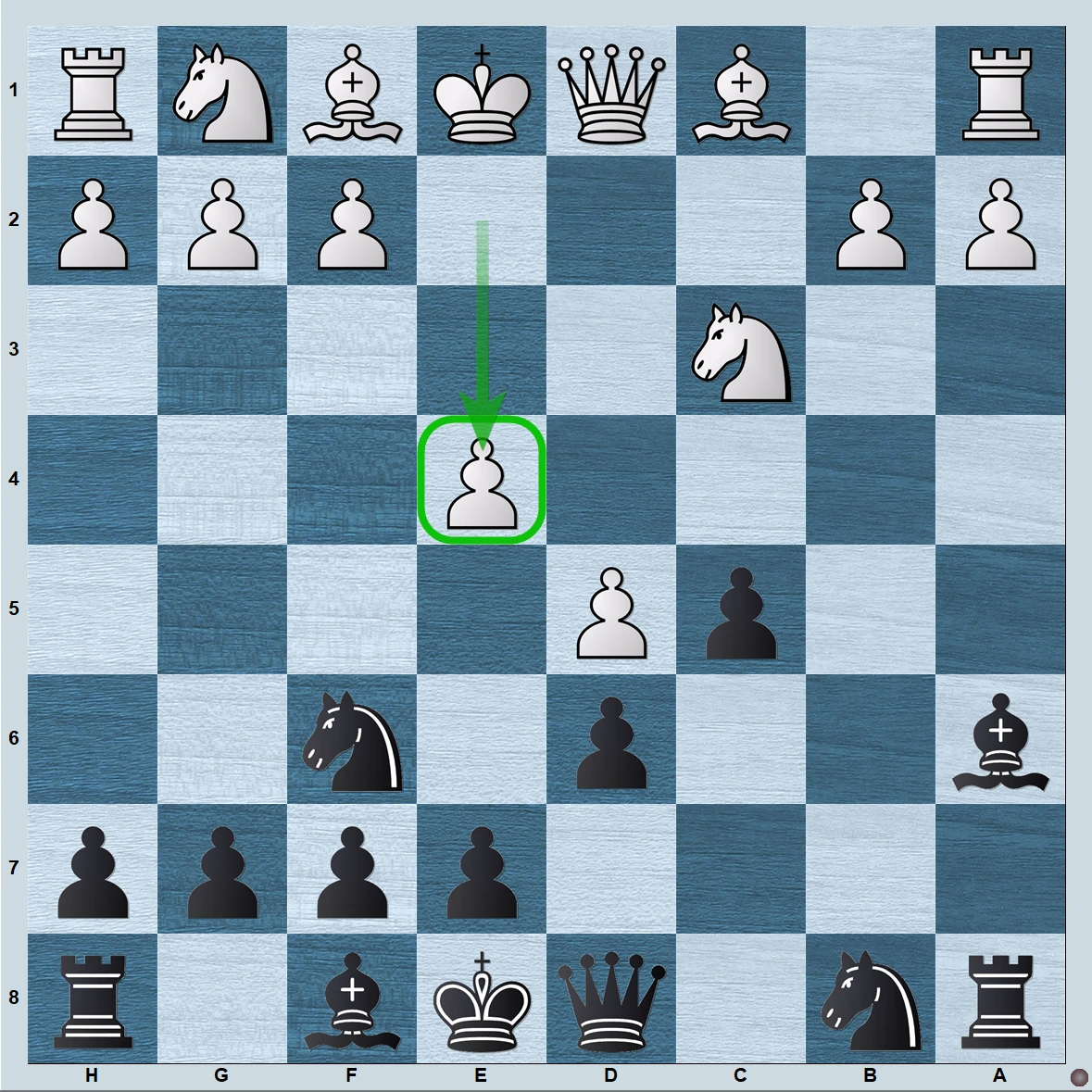
Position after 7.e4 in the King’s Walk variation,Variation
Position after 7.e4

Our setup — the Benko recipe

This is the piece arrangement you want in almost every Benko Accepted game:

  • g6 — opens the diagonal for the bishop
  • Bg7 — onto the long diagonal, eyeing White's queenside
  • 0-0 — king to safety
  • Nbd7 — flexible knight, freeing the b8 square
  • Qa5 — pressuring the queenside
  • Rfb8 — bringing the second rook to the half-open b-file

Once you have this setup, every piece is aimed at White's queenside, every file is working, and you have a comfortable, easy-to-play position.
 

7.e4 — King's Walk vs ?
Event
?
Site
?
Date
2026.06.04
Round
?
White
7.e4 — King's Walk
Black
?
Result
*
ECO
A59
  1. 1. d4
  2. 1... Nf6
  3. 2. c4
  4. 2... c5
  5. 3. d5
  6. 3... b5
  7. 4. cxb5
  8. 4... a6
  9. 5. bxa6
  10. 5... Bxa6
  11. 6. Nc3
  12. 6... d6
  13. 7. e4

    This is the classical main line. White grabs central space and accepts that the bishop trade is coming.

  14. 7... Bxf1
  15. 8. Kxf1

    White has lost the right to castle. The king has to walk to safety the long way around with g3 and Kg2. That's two tempos handed to us, time we'll use to build our setup. Our setup — the Benko recipe. This is the piece arrangement you want in almost every Benko Accepted game:

  16. 8... g6

    opens the diagonal for the bishop

  17. 9.
  18. 9... Bg7

    onto the long diagonal, eyeing White's queenside

  19. 10.
  20. 10... O-O

    king to safety

  21. 11.
  22. 11... Nbd7

    flexible knight, freeing the b8 square

  23. 12.
  24. 12... Qa5

    pressuring the queenside

  25. 13.
  26. 13... Rfb8

    bringing the second rook to the half-open b-file. Once you have this setup, every piece is aimed at White's queenside, every file is working, and you have a comfortable, easy-to-play position.

7.g3 — The Fianchetto Line

1.d4 Nf6 2.c4 c5 3.d5 b5 4.cxb5 a6 5.bxa6 Bxa6 6.Nc3 d6 7.g3
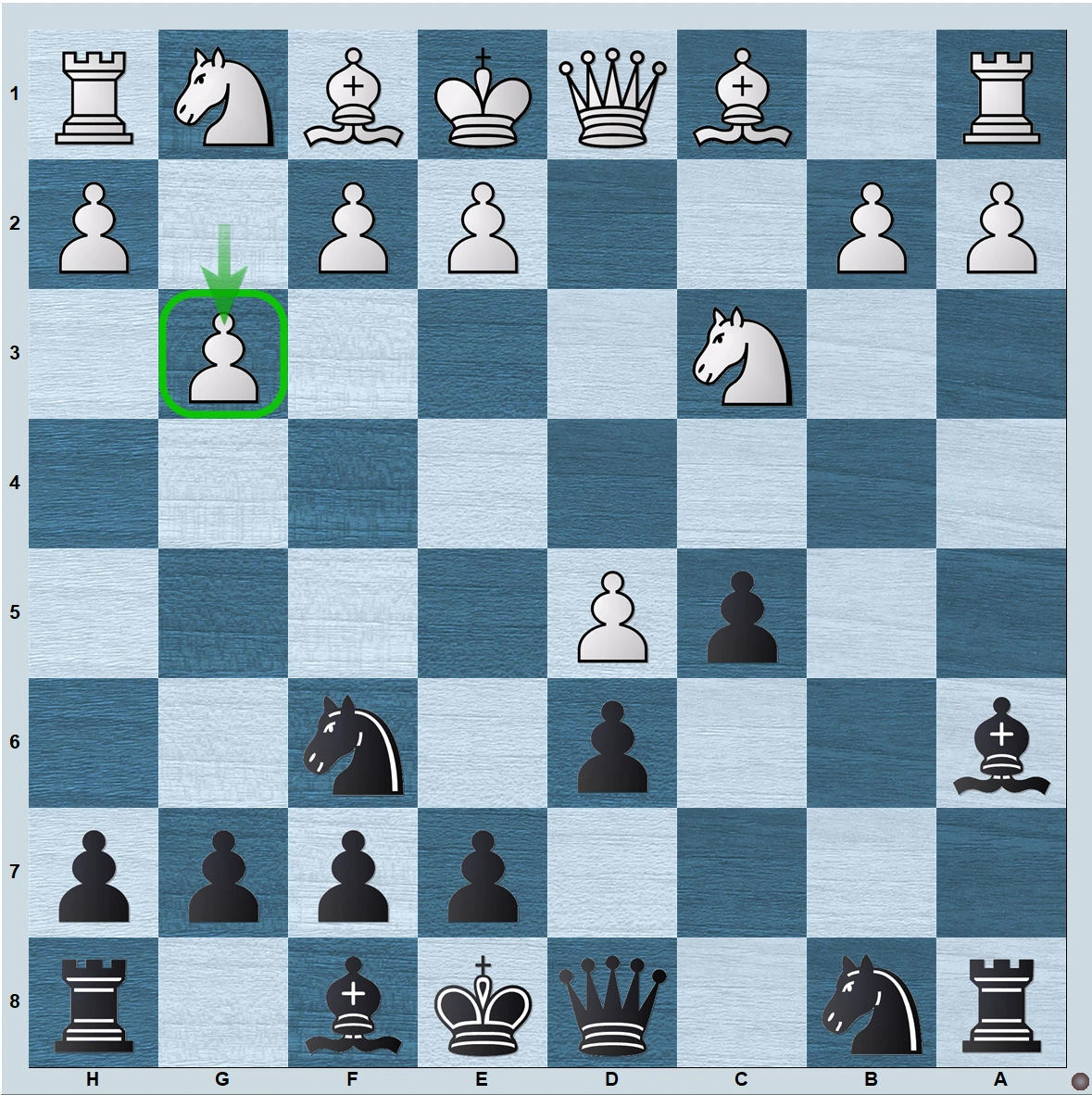
Position after 7.g3 in the Fianchetto Variation,Variation
Position after 7.g3

Instead of going e4 and accepting the bishop trade, White plays 7.g3. The idea is simple: fianchetto the f1-bishop to g2, avoid the trade on f1, and keep the right to castle.

The good news for us: our plan doesn't change.

Remember our setup from 7.e4? Same exact setup here:

  • g6, Bg7, 0-0, Nbd7, Qa5, Rfb8

Same pieces, same squares, same target: the queenside.


7.g3 — The Fianchetto Line vs ?
Event
?
Site
?
Date
2026.06.04
Round
?
White
7.g3 — The Fianchetto Line
Black
?
Result
*
ECO
A58

[%evp 0,24,25,26,18,-4,31,38,62,62,61,49,60,62,59,69,54,16,19,-22,-9,-42,-42, -85,-89,-264,-104]

  1. 1. d4
  2. 1... Nf6
  3. 2. c4
  4. 2... c5
  5. 3. d5
  6. 3... b5
  7. 4. cxb5
  8. 4... a6
  9. 5. bxa6
  10. 5... Bxa6
  11. 6. Nc3
  12. 6... d6
  13. 7. g3

    Instead of going e4 and accepting the bishop trade, White plays 7.g3. The idea is simple: fianchetto the f1-bishop to g2, avoid the trade on f1, and keep the right to castle. The good news for us: our plan doesn't change. Remember our setup from 7.e4? Same exact setup here:

  14. 7... g6
  15. 8.
  16. 8... Bg7
  17. 9.
  18. 9... O-O
  19. 10.
  20. 10... Nbd7
  21. 11.
  22. 11... Qa5
  23. 12.
  24. 12... Rfb8

    Same pieces, same squares, same target: the queenside.

5.b6 — White Gives the Pawn Back

1.d4 Nf6 2.c4 c5 3.d5 b5 4.cxb5 a6 5.b6
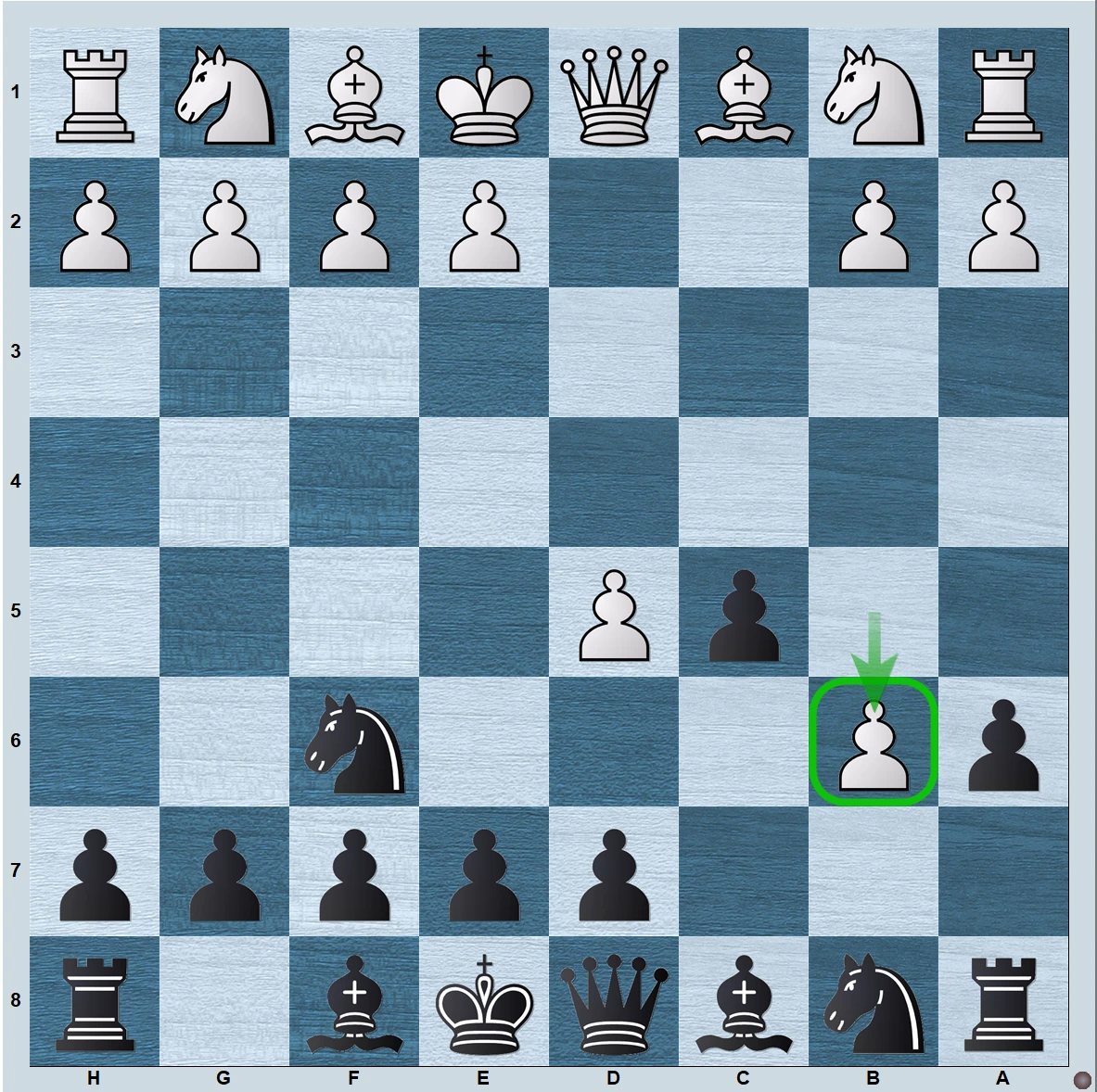
Position after 5.b6 — White immediately returns the gambit pawn,Variation
Position after 5.b6

White takes the pawn and immediately gives it back, hoping to deflate the whole point of the gambit. No open a-file for free, no easy compensation.

Our response: 5...Qxb6. We take the pawn back with the queen and develop normally: d6, g6, Bg7, 0-0, Nbd7. Then we play a5 followed by Ba6 to trade the light-squared bishops. After that, the position is comfortable and our pieces are more natural than White's.
 

5.b6 — White Gives the Pawn vs ?
Event
?
Site
?
Date
2026.06.04
Round
?
White
5.b6 — White Gives the Pawn
Black
?
Result
*
ECO
A57

[%evp 0,24,35,20,19,-11,43,37,51,43,63,45,28,-51,-10,-74,-20,-105,-68,-130, -140,-221,-156,-246,-164,-278,-165]

  1. 1. d4
  2. 1... Nf6
  3. 2. c4
  4. 2... c5
  5. 3. d5
  6. 3... b5
  7. 4. cxb5
  8. 4... a6
  9. 5. b6

    White takes the pawn and immediately gives it back, hoping to deflate the whole point of the gambit. No open a-file for free, no easy compensation. Our response:

  10. 5... Qxb6

    We take the pawn back with the queen and develop normally:

  11. 6.
  12. 6... d6
  13. 7.
  14. 7... g6
  15. 8.
  16. 8... Bg7
  17. 9.
  18. 9... O-O
  19. 10.
  20. 10... Nbd7

    Then we play

  21. 11.
  22. 11... a5

    followed by

  23. 12.
  24. 12... Ba6

    to trade the light-squared bishops. After that, the position is comfortable and our pieces are more natural than White's.

5.f3 — Dlugy Variation

1.d4 Nf6 2.c4 c5 3.d5 b5 4.cxb5 a6 5.f3
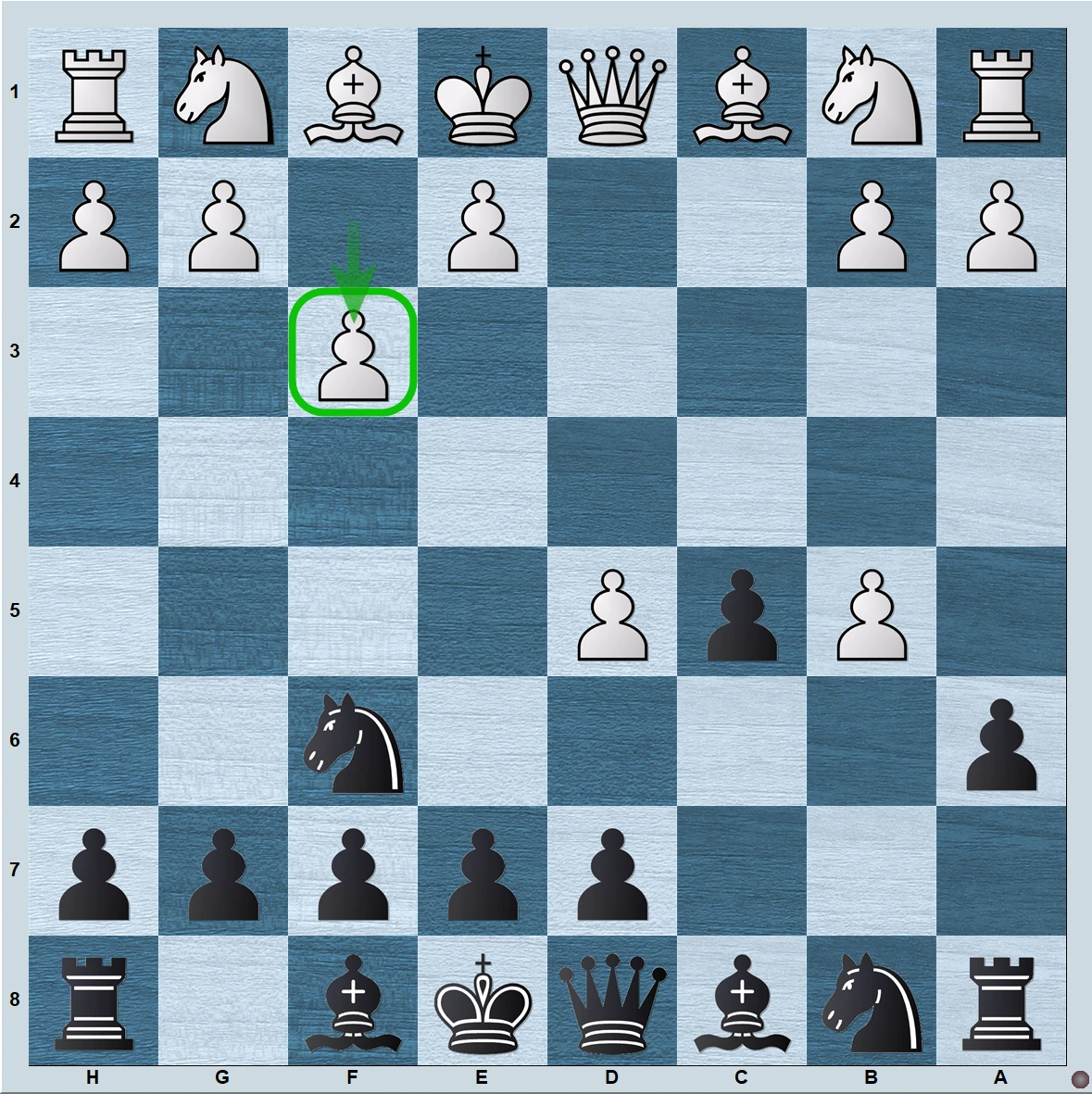
Position after 5.f3 in the Dlugy Variation,Variation
Position after 5.f3

White's idea is straightforward: if we take on b5, they play e4 next, threatening e5 and Bxb5. They want to keep the central tension and refuse the bishop trade.

Instead of going into complicated lines, we keep everything simple. Remember our setup? That's it. We go again.

A possible continuation:

5...d6 6.e4 g6 7.Nc3 Bg7 8.Bd3 0-0 9.Nge2 Nbd7 10.0-0 Ne5 11.Be3 Nxd3 12.Qxd3 axb5 13.Nxb5 Ba6 with a fine position.
 

5.f3 — Dlugy Variation vs ?
Event
?
Site
?
Date
2026.06.04
Round
?
White
5.f3 — Dlugy Variation
Black
?
Result
*
ECO
E81

[%evp 0,26,18,19,26,-11,37,40,40,40,50,38,96,88,79,73,72,57,59,71,59,49,60,48, 36,34,46,41,54]

  1. 1. d4
  2. 1... Nf6
  3. 2. c4
  4. 2... c5
  5. 3. d5
  6. 3... b5
  7. 4. cxb5
  8. 4... a6
  9. 5. f3

    White's idea is straightforward: if we take on b5, they play e4 next, threatening e5 and Bxb5.

  10. 5... d6

    Instead of going into complicated lines, we keep everything simple. Remember our setup? That's it. We go again.

    1. 5... axb5
    2. 6. e4

      [%cal Gf1b5, Ge4e5] They want to keep the central tension and refuse the bishop trade.

  11. 6. e4
  12. 6... g6
  13. 7. Nc3
  14. 7... Bg7
  15. 8. Bd3
  16. 8... O-O
  17. 9. Nge2
  18. 9... Nbd7
  19. 10. O-O
  20. 10... Ne5
  21. 11. Be3
  22. 11... Nxd3
  23. 12. Qxd3
  24. 12... axb5
  25. 13. Nxb5
  26. 13... Ba6

    with a fine position.

5.e3 — The Quiet Modern Approach

1.d4 Nf6 2.c4 c5 3.d5 b5 4.cxb5 a6 5.e3
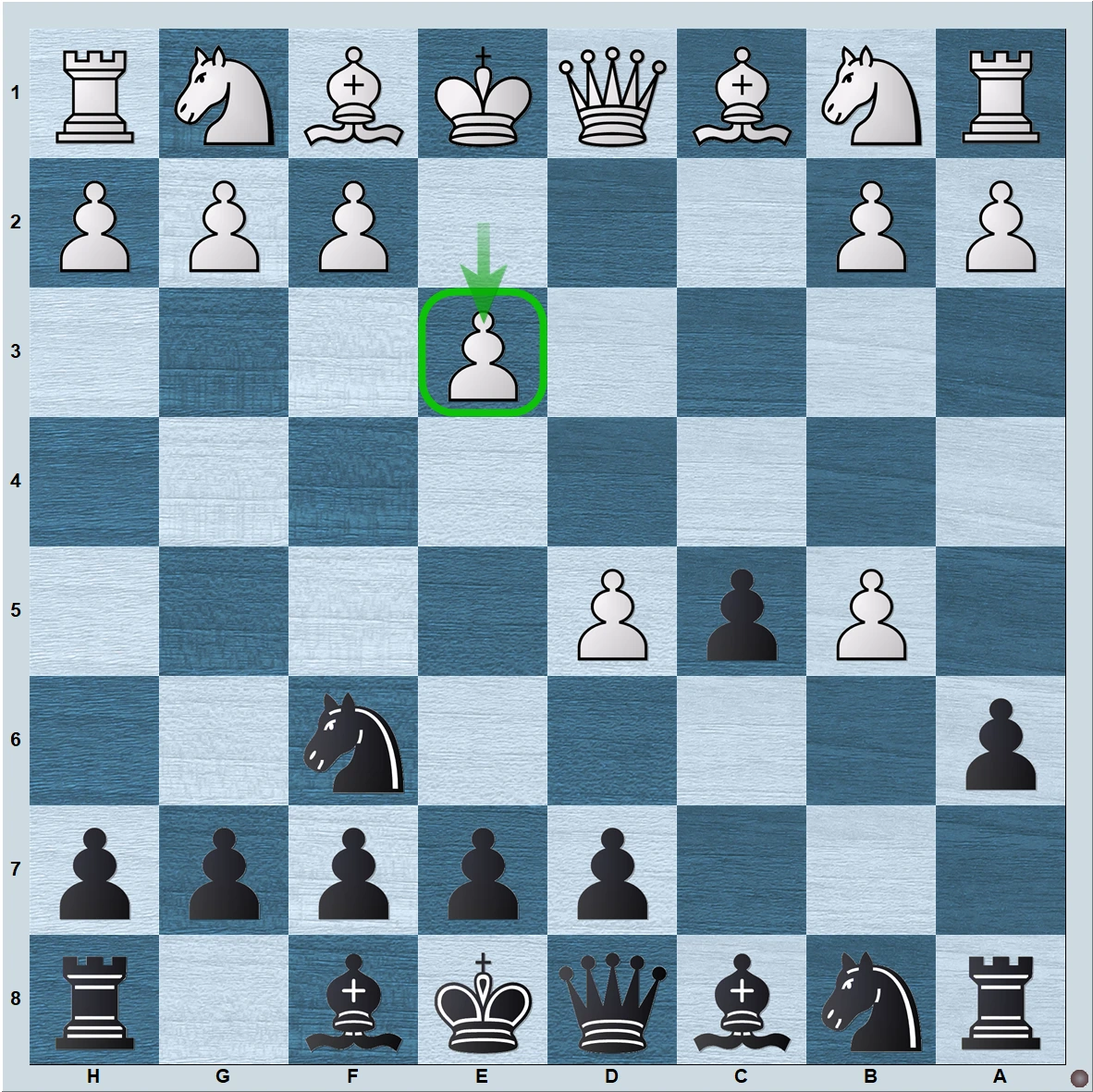
Position after 5.e3 — Modern Approach by White,Variation
Position after 5.e3

The most modern try. White takes the pawn, plays a quiet e3, and protects the b5 pawn with their f1-bishop. We could play axb5 Bxb5 Ba6 right away (it's playable), but it's even better to wait until White develops the f1-bishop, then take on b5, winning a tempo.

So, remember our setup? 😄 Yeah, we go again.

A possible continuation:
 

5.e3 — Modern Approach vs ?
Event
?
Site
?
Date
2026.06.04
Round
?
White
5.e3 — Modern Approach
Black
?
Result
*
ECO
A58

[%evp 0,26,19,26,27,-11,40,40,40,50,66,61,90,89,89,85,102,66,58,71,67,67,59, 60,67,34,32,21,14]

  1. 1. d4
  2. 1... Nf6
  3. 2. c4
  4. 2... c5
  5. 3. d5
  6. 3... b5
  7. 4. cxb5
  8. 4... a6
  9. 5. e3

    The most modern try. White takes the pawn, plays a quiet e3, and protects the b5 pawn with their f1-bishop.

  10. 5... d6

    So, remember our setup? 😄 Yeah, we go again. A possible continuation:

    1. 5... axb5
    2. 6. Bxb5

      We could play this right away, it's playable. But it's even better to wait until White develops the f1-bishop, then take on b5, winning a tempo.

  11. 6. Nc3
  12. 6... g6
  13. 7. Nf3
  14. 7... Bg7
  15. 8. Be2

    (Here we could take on b5 earlier, but Bxb5 would come with a check, so we wait.)

  16. 8... O-O
  17. 9. O-O
  18. 9... axb5
  19. 10. Bxb5
  20. 10... Ba6
  21. 11. Bxa6
  22. 11... Nxa6
  23. 12.
  24. 12... Qb6
  25. 13.
  26. 13... Rfb8

5.Nc3 — Zaitsev Variation

1.d4 Nf6 2.c4 c5 3.d5 b5 4.cxb5 a6 5.Nc3

5.Nc3 — Zaitsev Variation vs ?
Event
?
Site
?
Date
2026.06.04
Round
?
White
5.Nc3 — Zaitsev Variation
Black
?
Result
*
ECO
A57

[%evp 0,28,20,27,18,6,40,40,40,42,61,26,25,1,-3,29,20,14,14,15,4,10,13,-20, -25,-104,-83,-395,-110,-430,-119]

  1. 1. d4
  2. 1... Nf6
  3. 2. c4
  4. 2... c5
  5. 3. d5
  6. 3... b5
  7. 4. cxb5
  8. 4... a6
  9. 5. Nc3
  10. 5... axb5

    remember to take

  11. 6. e4
    1. 6. Nxb5
    2. 6... Ba6

      transposition to main line

  12. 6... b4
  13. 7. Nb5

    crerating a trap :)

  14. 7... d6

    we go with our usual setup, they need to do something. They have strategical problems, mainly because of half-trapped b5 knight

    1. 7... Nxe4?
    2. 8. Qe2

      [%cal Re1e8]

    3. 8... Nf6??
    4. 9. Nd6#

      [%csl Re8][%cal Gd6e8,Ge2e8]

  15. 8. Bd3
  16. 8... g6
  17. 9. Nf3
  18. 9... Bg7
  19. 10. O-O
  20. 10... O-O
  21. 11.
  22. 11... Ba6
  23. 12.
  24. 12... Qb6
  25. 13.
  26. 13... Nbd7
  27. 14.
  28. 14... Rfb8

Benko Gambit Declined

When White declines the gambit, they refuse to take on b5 entirely. None of these lines are dangerous, but you should know what to do against each one.

4.Nf3 — The Solid Decline

4.Nf3 — The Solid Decline vs ?
Event
?
Site
?
Date
2026.06.04
Round
?
White
4.Nf3 — The Solid Decline
Black
?
Result
*
ECO
A57

[%evp 0,16,22,27,24,24,41,40,50,42,68,76,63,61,93,72,95,55,59]

  1. 1. d4
  2. 1... Nf6
  3. 2. c4
  4. 2... c5
  5. 3. d5
  6. 3... b5
  7. 4. Nf3

    We take the pawn and give it back.

  8. 4... bxc4
  9. 5. Nc3
  10. 5... d6
  11. 6. e4
  12. 6... g6
  13. 7. Bxc4
  14. 7... Bg7
  15. 8. O-O
  16. 8... O-O

    [%cal Ga7a5,Gc8a6] And then we go a5, Ba6 and play in the Queenside, using our super-strong dark-squared Bishop.

4.e3 — The Quiet Decline

White defends the c4 pawn with the bishop. This move often transposes into the 4.Nf3 line after a few moves.
 

4.e3 — The Quiet Decline vs ?
Event
?
Site
?
Date
2026.06.04
Round
?
White
4.e3 — The Quiet Decline
Black
?
Result
*
ECO
A57

[%evp 0,16,26,18,15,6,40,40,40,0,44,30,33,43,37,34,38,33,25]

  1. 1. d4
  2. 1... Nf6
  3. 2. c4
  4. 2... c5
  5. 3. d5
  6. 3... b5
  7. 4. e3

    [%csl Rc1] This is very passive move, limiting the dark-squared Bishop. We choose exactly same plan as against 4.Nf3

  8. 4... bxc4
  9. 5. Bxc4
  10. 5... d6
  11. 6. Nf3
  12. 6... g6
  13. 7. Nc3
  14. 7... Bg7
  15. 8. O-O
  16. 8... O-O

    [%cal Ga7a5,Gc8a6]

4.Qc2 — The Awkward Decline

White defends the c4 pawn with the queen. Black can still follow the usual plan after taking on c4.

4.Qc2 — The Awkward Decline vs ?
Event
?
Site
?
Date
2026.06.04
Round
?
White
4.Qc2 — The Awkward Decline
Black
?
Result
*
ECO
A57

[%evp 0,16,18,15,15,6,40,40,42,6,1,25,69,53,47,50,46,45,39]

  1. 1. d4
  2. 1... Nf6
  3. 2. c4
  4. 2... c5
  5. 3. d5
  6. 3... b5
  7. 4. Qc2
  8. 4... bxc4
  9. 5. e4

    We do exactly the same!

  10. 5... d6
  11. 6. Bxc4
  12. 6... g6
  13. 7. Nf3
  14. 7... Bg7
  15. 8. O-O
  16. 8... O-O

    [%cal Ga7a5,Gc8a6]

4.b3 — The Modern Sideline

4.b3 — The Modern Sideline vs ?
Event
?
Site
?
Date
2026.06.04
Round
?
White
4.b3 — The Modern Sideline
Black
?
Result
*
ECO
A57

[%evp 0,24,26,20,27,19,43,43,44,-22,24,-9,-3,-61,-43,-18,-7,-31,-23,-41,-13, -18,0,-15,-6,-9,-17]

  1. 1. d4
  2. 1... Nf6
  3. 2. c4
  4. 2... c5
  5. 3. d5
  6. 3... b5
  7. 4. b3

    Not a good move.

  8. 4... bxc4
  9. 5. bxc4

    [%csl Rc4] The c4 is a weak pawn, and in the future, we'll attack it.

  10. 5... d6
  11. 6. Bb2
  12. 6... g6
  13. 7. e4
  14. 7... Bg7
  15. 8. Bd3
  16. 8... O-O
  17. 9. Nf3
  18. 9... Bg4

    a small trick, as we don't have possibility to exchange the light square via a6 sqaure. It's totally fine to exchange it with f3 knight!

  19. 10. O-O
  20. 10... Nbd7
  21. 11. h3
  22. 11... Bxf3
  23. 12. Qxf3
  24. 12... Rb8

    [%cal Gb8b1,Gd8a5] Black has advantage

Benko Gambit Practical — Tips & Patterns

Up to now, we've covered the theory: how to play every variation you'll meet over the board. That's the foundation. Now let's look at how the Benko actually plays — the practical tips and patterns that turn theory into wisdom.

The Benko doesn't ask you to memorize variations as much as it asks you to recognize patterns. Once you've played a few games with it, the same positions, the same plans, and the same traps keep coming up.

Here are the practical patterns I want every Benko player to know.

Queen exchange vs ?
Event
Moscow
Site
Moscow
Date
1935.02.27
Round
9
White
Queen exchange
Black
?
Result
*
ECO
A59

[%evp 0,28,20,30,19,19,43,43,44,44,66,66,67,67,59,74,67,72,71,59,73,70,74,74, 63,75,73,59,45,47,77]

  1. 1. d4
  2. 1... Nf6
  3. 2. c4
  4. 2... c5
  5. 3. d5
  6. 3... b5
  7. 4. cxb5
  8. 4... a6
  9. 5. bxa6
  10. 5... Bxa6
  11. 6. Nc3
  12. 6... d6
  13. 7. e4
  14. 7... Bxf1
  15. 8. Kxf1
  16. 8... g6
  17. 9. Nf3
  18. 9... Bg7
  19. 10. g3
  20. 10... O-O
  21. 11. Kg2
  22. 11... Nbd7
  23. 12. h3
  24. 12... Qa5
  25. 13. Qe2
  26. 13... Rfb8
  27. 14. Re1

    [#]

  28. 14... Qa6!

    In Benko, White's Queen protects the Queenside and the d3 square (where our Knights go often.) Trading the Queens is actually favorable for Black!

  29. 15. Qxa6
  30. 15... Rxa6

    [%cal Gc5c4,Gd7c5,Gc5d3] Now White Queenside is weaker. And we plan to bring the Knight to d3.

Get the Knight to d3! vs ?
Event
?
Site
?
Date
2026.06.04
Round
?
White
Get the Knight to d3!
Black
?
Result
*

[%evp 0,7,11,19,-28,24,18,17,8,-1] [#] Bg7 is limited with Nf6. So we move the Knight, who travels to a dream square on d3!

  1. 1... Ng4

    [%csl Ga1,Gg7] [%cal Gh8a1]

  2. 2. Qc2
  3. 2... Nge5

    [%csl Gd3][%cal Ge5d3]

  4. 3. Nxe5
  5. 3... Nxe5
  6. 4. Bf4
  7. 4... Nd3

    [%csl Rb2,Gd3,Gg7][%cal Gf8b8] Just look at Black pieces

Breaking the structure with c4 vs ?
Event
?
Site
?
Date
2026.06.04
Round
?
White
Breaking the structure with c4
Black
?
Result
*

[%evp 0,3,8,-16,-48,-44] [#] White's a2 and b3 pawns are weak, but also protect each other. By trading a pawn, we make on of those a target!

  1. 1... c4!
  2. 2. bxc4
    1. 2. Bb2
    2. 2... Qb6

      [%csl Rb3]

  3. 2... Qxc4

    [%csl Ra2]

5 Brutal Tactics in the Benko Gambit

Now for the fun part.

The Benko is a positional gambit at its core, but it produces some of the most spectacular tactics in modern chess. The half-open files, the active pieces, and the dark-squared bishop on g7 add up to attacking chances that often end in fireworks.

Here are five tactics every Benko player should recognize on sight.

Tactic #1

Benko - Tactics: Chapter 2
Event
Benko - Tactics: Chapter 2
Date
2024.08.14
Result
*
ECO
?
Opening
?

[%evp 0,1,-55,-152]

  1. 19... Nxc4

Tactic #2

Benko - Tactics: Chapter 5
Event
Benko - Tactics: Chapter 5
Date
2024.08.14
Result
*
ECO
?
Opening
?

[%evp 0,5,3,-25,-37,-37,-88,-53]

  1. 18... Nd3
  2. 19. exd3
  3. 19... cxd3
  4. 20. Qxd3
  5. 20... Rxc3

Tactic #3

Benko - Tactics: Chapter 10
Event
Benko - Tactics: Chapter 10
Date
2024.08.14
Result
*
ECO
?
Opening
?

[%evp 0,9,-23,-43,-43,-44,-39,-59,-59,-51,-57,-49]

  1. 18... Nxb2
  2. 19. Bxb2
  3. 19... Rxb2
  4. 20. Qxb2
  5. 20... Bxc3
  6. 21. Qc2
  7. 21... Bxe2
  8. 22. Qxe2
  9. 22... Bxa1

Tactic #4

Benko - Tactics: Chapter 14
Event
Benko - Tactics: Chapter 14
Date
2024.08.14
Result
*
ECO
?
Opening
?

[%evp 0,3,-109,-146,-149,-142]

  1. 20... Rxb2
  2. 21. Qxb2
  3. 21... Bxc3

Tactic #5

Benko - Tactics: Chapter 17
Event
Benko - Tactics: Chapter 17
Date
2024.08.14
Result
*
ECO
?
Opening
?

[%evp 0,5,-93,-104,-121,-125,-114,-124]

  1. 12... Qxc3
  2. 13. bxc3
  3. 13... Nxe4+
  4. 14. Ke2
  5. 14... Nxd2

Great Benko Games

This is where everything comes together. The games in this section show the Benko at its best, in my own play, in classical games by world-class players, and in instructive examples that demonstrate the key ideas you'll meet in your own games.

Masera, Umberto vs Benko, Pal C
Event
Reggio Emilia-13 1970/71
Site
Reggio Emilia
Date
1970.12.30
Round
5
White
Masera, Umberto
Black
Benko, Pal C
Result
0-1
ECO
A57

[%evp 0,50,27,27,25,-6,33,44,56,-30,22,-3,-3,1,2,-57,-54,-106,-110,-110,-139, -166,-185,-272,-319,-319,-355,-364,-362,-362,-284,-283,-302,-293,-243,-249, -225,-261,-280,-281,-263,-260,-310,-332,-334,-362,-305,-308,-289,-357,-309, -774,-901]

  1. 1. d4
  2. 1... Nf6
  3. 2. c4
  4. 2... c5
  5. 3. d5
  6. 3... b5
  7. 4. b3?
  8. 4... bxc4
  9. 5. bxc4
  10. 5... d6
  11. 6. Nc3
  12. 6... g6
  13. 7. Bb2
  14. 7... Bg7
  15. 8. f3
  16. 8... Nbd7
  17. 9. e4
  18. 9... Rb8
  19. 10. Qc2
  20. 10... Qa5
  21. 11. Kf2?
  22. 11... Nxe4+!
  23. 12. fxe4
  24. 12... Rxb2!
  25. 13. Qxb2
  26. 13... Bxc3
  27. 14. Qc1
  28. 14... Nf6
  29. 15. Nf3
    1. 15. Bd3
    2. 15... Bxa1
    3. 16. Qxa1
    4. 16... Qd2+
  30. 15... Nxe4+
  31. 16. Ke3
  32. 16... Bxa1
  33. 17. Qxa1
  34. 17... Nf6
  35. 18. Bd3
  36. 18... O-O
  37. 19. h3
  38. 19... Ba6
  39. 20. Rb1
  40. 20... e5
  41. 21. dxe6
  42. 21... fxe6
  43. 22. Rb3
  44. 22... Qc7
  45. 23. Ra3
  46. 23... Bc8
  47. 24. Qb2
  48. 24... d5
  49. 25. Qe5??
  50. 25... Ng4+!

0-1

Gavrilov, Alexei V vs Andreikin, Dmitry
Event
Moscow op-A
Site
Moscow
Date
2012.01.29
Round
2
White
Gavrilov, Alexei V
Black
Andreikin, Dmitry
Result
0-1
ECO
A59

[%evp 0,103,25,25,27,-3,45,45,46,49,51,47,104,70,67,67,71,67,64,64,71,71,73, 76,76,61,70,46,42,45,45,45,45,53,36,4,5,0,1,-34,-36,-39,-52,-52,-72,-50,-65, -58,-51,-44,-50,-96,-65,-87,-88,-79,-89,-147,-120,-119,-132,-132,-121,-130, -124,-143,-130,-134,-130,-134,-105,-97,-73,-116,-68,-123,-106,-115,-114,-111, -111,-128,-130,-131,-138,-133,-131,-177,-199,-196,-184,-204,-208,-205,-235, -249,-239,-263,-228,-312,-336,-517,-527,-547,-557,-557]

  1. 1. d4
  2. 1... Nf6
  3. 2. c4
  4. 2... c5
  5. 3. d5
  6. 3... b5
  7. 4. cxb5
  8. 4... a6
  9. 5. bxa6
  10. 5... g6
  11. 6. Nc3
  12. 6... Bxa6
  13. 7. Nf3
  14. 7... Bg7
  15. 8. e4
  16. 8... Bxf1
  17. 9. Kxf1
  18. 9... d6
  19. 10. g3
  20. 10... O-O
  21. 11. Kg2
  22. 11... Nbd7
  23. 12. Re1
  24. 12... Ng4
  25. 13. Re2
  26. 13... Qa5
  27. 14. Rc2
  28. 14... Nge5
  29. 15. Nxe5
  30. 15... Nxe5
  31. 16. Qe2
  32. 16... Qa6
  33. 17. Qxa6
  34. 17... Rxa6
  35. 18. Bd2
  36. 18... Rb8
  37. 19. Rd1
  38. 19... Nd3
  39. 20. b3
  40. 20... Nb4
  41. 21. Rb2
  42. 21... Ra3
  43. 22. Be1
  44. 22... f5
  45. 23. exf5
  46. 23... gxf5
  47. 24. Re2
  48. 24... Kf7
  49. 25. h3
  50. 25... Rb7
  51. 26. g4
  52. 26... Bxc3
  53. 27. Bxc3
  54. 27... Nxa2
  55. 28. Ba1
  56. 28... Nb4
  57. 29. gxf5
  58. 29... Nxd5
  59. 30. Rxd5
  60. 30... Rxa1
  61. 31. Rd3
  62. 31... Rb1
  63. 32. Ree3
  64. 32... Kf6
  65. 33. Rf3
  66. 33... Re1
  67. 34. Rf4
  68. 34... Rb8
  69. 35. Rh4
  70. 35... Rg8+
  71. 36. Kf3
  72. 36... Kxf5
  73. 37. b4
  74. 37... cxb4
  75. 38. Rf4+
  76. 38... Ke5
  77. 39. Rxb4
  78. 39... Rf8+
  79. 40. Kg3
  80. 40... Rg1+
  81. 41. Kh2
  82. 41... Rfg8
  83. 42. Re3+
  84. 42... Kd5
  85. 43. h4
  86. 43... R8g2+
  87. 44. Kh3
  88. 44... Rg7
  89. 45. Rb5+
  90. 45... Kd4
  91. 46. Rg5
  92. 46... R7xg5
  93. 47. hxg5
  94. 47... e5
  95. 48. Kh4
  96. 48... e4
  97. 49. Kh5
  98. 49... Ke5
  99. 50. f3
  100. 50... d5
  101. 51. fxe4
  102. 51... Kf4
  103. 52. Rh3
  104. 52... Rxg5+
  105. 53. Kh6
  106. 53... dxe4
  107. 54. Rh4+
  108. 54... Rg4

0-1

Duessel, Udo vs Iturrizaga Bonelli, Eduardo
Event
Basel op
Site
Basel
Date
2015.01.02
Round
3
White
Duessel, Udo
Black
Iturrizaga Bonelli, Eduardo
Result
0-1
ECO
A58

[%evp 0,54,26,27,27,-4,45,45,47,69,67,51,93,64,64,68,45,21,32,23,27,33,28,22, 37,42,47,35,52,46,46,0,0,0,2,-7,-4,6,0,0,2,2,-9,22,-40,-34,-51,-132,-138,-139, -139,-128,-143,-333,-343,-351,-360]

  1. 1. d4
  2. 1... Nf6
  3. 2. c4
  4. 2... c5
  5. 3. d5
  6. 3... b5
  7. 4. cxb5
  8. 4... a6
  9. 5. bxa6
  10. 5... g6
  11. 6. Nc3
  12. 6... Bxa6
  13. 7. g3
  14. 7... d6
  15. 8. Bg2
  16. 8... Bg7
  17. 9. Nf3
  18. 9... Nbd7
  19. 10. O-O
  20. 10... O-O
  21. 11. Re1
  22. 11... Qa5
  23. 12. Qc2
  24. 12... Nb6
  25. 13. e4
  26. 13... Nfd7
  27. 14. Bg5
  28. 14... Nc4
  29. 15. Rac1
  30. 15... h6
  31. 16. Bf4
  32. 16... Rfb8
  33. 17. b3
  34. 17... Nce5
  35. 18. Nxe5
  36. 18... Nxe5
  37. 19. Bxe5
  38. 19... Bxe5
  39. 20. Nb1
  40. 20... Bd4
  41. 21. Nd2
  42. 21... Bb5
  43. 22. a4
  44. 22... Bxa4
  45. 23. Nc4
  46. 23... Bxb3
  47. 24. Nxa5
  48. 24... Bxc2
  49. 25. Nc6
  50. 25... Rb2
  51. 26. Nxe7+
  52. 26... Kf8
  53. 27. Nc6
  54. 27... Bxf2+

0-1

Gharibyan, Mamikon vs Gabuzyan, Hovhannes
Event
ARM-ch 81st
Site
Yerevan
Date
2021.02.20
Round
5
White
Gharibyan, Mamikon
Black
Gabuzyan, Hovhannes
Result
0-1
ECO
A59
  1. 1. d4
  2. 1... Nf6
  3. 2. c4
  4. 2... c5
  5. 3. d5
  6. 3... b5
  7. 4. cxb5
  8. 4... a6
  9. 5. bxa6
  10. 5... Bxa6
  11. 6. Nc3
  12. 6... d6
  13. 7. Nf3
  14. 7... g6
  15. 8. e4
  16. 8... Bxf1
  17. 9. Kxf1
  18. 9... Bg7
  19. 10. h3
  20. 10... O-O
  21. 11. g3
  22. 11... Qb6
  23. 12. Kg2
  24. 12... Na6
  25. 13. Re1
  26. 13... Nd7
  27. 14. a4
  28. 14... Rfb8
  29. 15. Ra3
  30. 15... Nc7
  31. 16. Re2
  32. 16... Qa6
  33. 17. Bg5
  34. 17... h6
  35. 18. Bxe7
  36. 18... Re8
  37. 19. Nb5
  38. 19... Qb6
  39. 20. Nxd6
  40. 20... Rxe7
  41. 21. Nc4
  42. 21... Qa6
  43. 22. b3
  44. 22... Nb6
  45. 23. Nfd2
  46. 23... Rd7
  47. 24. Nxb6
  48. 24... Qxb6
  49. 25. Nc4
  50. 25... Qb7
  51. 26. Qd3
  52. 26... Ne6
  53. 27. a5
  54. 27... Nd4
  55. 28. Re3
  56. 28... Ra7
  57. 29. Nb6
  58. 29... Rd8
  59. 30. Ra4
  60. 30... Qc7
  61. 31. f4
  62. 31... h5
  63. 32. h4
  64. 32... Nc6
  65. 33. Nc4
  66. 33... Nb4
  67. 34. Qd1
  68. 34... f5
  69. 35. Rxb4
  70. 35... cxb4
  71. 36. e5
  72. 36... Qb7
  73. 37. Rd3
  74. 37... Bf8
  75. 38. Qf3
  76. 38... Bc5
  77. 39. d6
  78. 39... Qxf3+
  79. 40. Kxf3
  80. 40... Ra6
  81. 41. Rd5
  82. 41... Rc6
  83. 42. a6
  84. 42... Ra8
  85. 43. a7
  86. 43... Kf7
  87. 44. Na5
  88. 44... Ke6
  89. 45. Rd3
  90. 45... Rb6
  91. 46. d7
  92. 46... Be7
  93. 47. Nc4
  94. 47... Ra6

0-1

Nihal, Sarin vs Gabuzyan, H..
Event
Asrian Mem Rapid 2025
Site
Yerevan ARM
Date
2025.11.27
Round
2.5
White
Nihal, Sarin
Black
Gabuzyan, H..
Result
0-1
ECO
A57

[%evp 0,70,25,27,32,0,21,47,63,46,48,3,-3,2,2,9,17,3,34,15,-6,-27,-40,-26,-35, -56,-61,-77,-81,-81,-38,-58,-96,-43,-63,-59,21,-68,-70,-79,-89,-96,77,86,86, 141,154,142,100,81,139,139,270,306,306,349,349,336,330,-199,-580,-536,-773, -800,-821,-934,-585,-29991,-830,-1100,-909,-944,-978]

  1. 1. d4
  2. 1... Nf6
  3. 2. c4
  4. 2... c5
  5. 3. d5
  6. 3... b5
  7. 4. cxb5
  8. 4... a6
  9. 5. g4
  10. 5... axb5
  11. 6. g5
  12. 6... Ne4
  13. 7. Bg2
  14. 7... f5
  15. 8. gxf6
  16. 8... Nxf6
  17. 9. e4
  18. 9... d6
  19. 10. f4
  20. 10... g6
  21. 11. e5
  22. 11... Nh5
  23. 12. e6
  24. 12... Bg7
  25. 13. Bf3
  26. 13... Qa5+
  27. 14. Kf2
  28. 14... Qa4
  29. 15. Bxh5
  30. 15... gxh5
  31. 16. Qxh5+
  32. 16... Kd8
  33. 17. Ne2
  34. 17... Na6
  35. 18. Nbc3
  36. 18... Qc2
  37. 19. Be3
  38. 19... Nb4
  39. 20. Rhd1
  40. 20... Qxb2
  41. 21. Rab1
  42. 21... Qc2
  43. 22. Bxc5
  44. 22... dxc5
  45. 23. d6
  46. 23... Bxe6
  47. 24. Qxc5
  48. 24... Ke8
  49. 25. Rxb4
  50. 25... Rc8
  51. 26. Qa7
  52. 26... Bf6
  53. 27. d7+
  54. 27... Kf7
  55. 28. dxc8=Q
  56. 28... Rxc8
  57. 29. Rc1
  58. 29... Bh4+
  59. 30. Ke3
  60. 30... Rxc3+
  61. 31. Nxc3
  62. 31... Qf2+
  63. 32. Kd3
  64. 32... Bc4+
  65. 33. Ke4
  66. 33... Qxa7
  67. 34. Nxb5
  68. 34... Bxb5
  69. 35. Rxb5
  70. 35... Qa4+

0-1


ChessMood Students Playing the Benko

Some of the most satisfying moments for me as a coach are seeing ChessMood students put these ideas into practice in their own games. Here are a few favorites.

Game 1 vs ?
Event
?
Site
?
Date
2026.06.05
Round
?
White
Game 1
Black
?
Result
*
ECO
A57

[%evp 0,70,26,26,24,-8,28,35,37,59,66,37,37,36,41,33,31,45,44,26,23,20,29,9,1, -2,-7,-32,-33,-69,-47,-37,-40,-50,-54,-107,-103,-515,-127,-132,-148,-137,-126, -126,-120,-141,-141,-171,-178,-221,-239,-239,-221,-246,-250,-267,-233,-325, -402,-427,-460,-460,-464,-498,-598,-607,-475,-493,-415,-1178,-1148,-1587,-1587]

  1. 1. d4
  2. 1... Nf6
  3. 2. c4
  4. 2... c5
  5. 3. d5
  6. 3... b5
  7. 4. cxb5
  8. 4... a6
  9. 5. b6
  10. 5... Qxb6
  11. 6. Nc3
  12. 6... d6
  13. 7. e4
  14. 7... g6
  15. 8. Nf3
  16. 8... Bg7
  17. 9. Bd3
  18. 9... Nbd7
  19. 10. O-O
  20. 10... O-O
  21. 11. Bc2
  22. 11... a5
  23. 12. Re1
  24. 12... Ng4
  25. 13. Nd2
  26. 13... Nge5
  27. 14. f4

    [#]

  28. 14... Nd3
  29. 15. Nc4
  30. 15... Bd4+
  31. 16. Kf1
  32. 16... Nxb2
  33. 17. Nxb6
  34. 17... Nxd1
  35. 18. Nxd7
  36. 18... Bxd7
  37. 19. Rxd1
  38. 19... Bxc3
  39. 20. Rb1
  40. 20... Rab8
  41. 21. Be3
  42. 21... Bb5+
  43. 22. Kf2
  44. 22... Bc4
  45. 23. a4
  46. 23... Rb4
  47. 24. Bc1
  48. 24... Ba2
  49. 25. Rxb4
  50. 25... cxb4
  51. 26. Be3
  52. 26... b3
  53. 27. Bd3
  54. 27... b2
  55. 28. Bc2
  56. 28... Rb8
  57. 29. Bb1
  58. 29... Bxb1
  59. 30. Rxb1
  60. 30... Rb4
  61. 31. Kf3
  62. 31... Rxa4
  63. 32. Bc1
  64. 32... bxc1=Q
  65. 33. Rxc1
  66. 33... Rc4
  67. 34. Ke3
  68. 34... Bd4+
  69. 35. Kd2
  70. 35... Be3+
Game 2 vs ?
Event
?
Site
?
Date
2026.06.05
Round
?
White
Game 2
Black
?
Result
*
ECO
A57

[%evp 0,56,20,18,27,-11,28,40,45,45,45,51,61,42,63,49,110,60,78,92,81,78,86, 71,64,34,61,-35,-34,-146,-170,-161,-159,-161,-154,-188,-145,-340,-325,-538, -536,-544,-551,-551,-469,-698,-557,-696,-674,-796,-825,-825,-833,-597,-865, -1392,-1414,-1414,-806]

  1. 1. d4
  2. 1... Nf6
  3. 2. c4
  4. 2... c5
  5. 3. d5
  6. 3... b5
  7. 4. cxb5
  8. 4... a6
  9. 5. e3
  10. 5... axb5
  11. 6. Bxb5
  12. 6... Ba6
  13. 7. Nc3
  14. 7... g6
  15. 8. Nf3
  16. 8... Bg7
  17. 9. Bxa6
  18. 9... Nxa6
  19. 10. O-O
  20. 10... O-O
  21. 11. h3
  22. 11... Qb6
  23. 12. Qc2
  24. 12... Rfb8
  25. 13. b3
  26. 13... Nb4
  27. 14. Qd2
  28. 14... Ne4
  29. 15. Nxe4
  30. 15... Bxa1
  31. 16. Bb2
  32. 16... Bxb2
  33. 17. Qxb2
  34. 17... Rxa2
  35. 18. Qc3
  36. 18... d6
  37. 19. Neg5
  38. 19... Nxd5
  39. 20. Qc4
  40. 20... Qxb3
  41. 21. Qh4
  42. 21... Nf6
  43. 22. Qh6
  44. 22... Qb2
  45. 23. e4
  46. 23... Ra1
  47. 24. Rxa1
  48. 24... Qxa1+
  49. 25. Kh2
  50. 25... Rb1
  51. 26. Kg3
  52. 26... Rb3
  53. 27. Kf4
  54. 27... Qc1+
  55. 28. Kg3
  56. 28... Qxg5+
  57. 29. Qxg5
  58. 29... Nxe4+
  59. 30. Kg4
  60. 30... Nxg5
  61. 31. Nxg5
  62. 31... f5+
  63. 32. Kf4
  64. 32... e5#
Game 3 vs ?
Event
?
Site
?
Date
2026.06.05
Round
?
White
Game 3
Black
?
Result
*

[%evp 0,74,19,32,20,21,35,34,40,33,42,29,46,142,43,32,-10,28,28,43,30,84,33, 34,87,30,48,92,80,135,66,64,78,81,89,94,103,119,119,100,105,54,47,-56,50,56,68, -14,93,73,95,66,94,104,107,66,74,-66,23,41,-42,77,-55,74,32,-1,11,-88,1,-197, -138,-144,-257,-255,-232,-315,-394]

  1. 1. d4
  2. 1... Nf6
  3. 2. c4
  4. 2... c5
  5. 3. d5
  6. 3... b5
  7. 4. cxb5
  8. 4... a6
  9. 5. bxa6
  10. 5... Bxa6
  11. 6. Nc3
  12. 6... d6
  13. 7. g3
  14. 7... g6
  15. 8. Bg2
  16. 8... Bg7
  17. 9. Nf3
  18. 9... O-O
  19. 10. O-O
  20. 10... Nbd7
  21. 11. Rb1
  22. 11... Qa5
  23. 12. Bd2
  24. 12... Ng4
  25. 13. Qc2
  26. 13... Qb6
  27. 14. h3
  28. 14... Nge5
  29. 15. Nxe5
  30. 15... Nxe5
  31. 16. b3
  32. 16... Rfb8
  33. 17. a4
  34. 17... Qa7
  35. 18. Rfe1
  36. 18... Rb6
  37. 19. Na2
  38. 19... Bc8
  39. 20. a5
  40. 20... Rb5
  41. 21. e3
  42. 21... Bf5
  43. 22. e4
  44. 22... Bc8
  45. 23. Kh2
  46. 23... Ba6
  47. 24. f4
  48. 24... Nd7
  49. 25. Bf1
  50. 25... Rbb8
  51. 26. Bxa6
  52. 26... Qxa6
  53. 27. b4
  54. 27... Rb7
  55. 28. Nc1
  56. 28... cxb4
  57. 29. Rxb4
  58. 29... Rxb4
  59. 30. Bxb4
  60. 30... Rc8
  61. 31. Qd3
  62. 31... Qa7
  63. 32. Qd2
  64. 32... h5
  65. 33. Nb3

    [#]

  66. 33... Rb8
  67. 34. Nc1
  68. 34... Rxb4
  69. 35. Qxb4
  70. 35... Qf2+
  71. 36. Kh1
  72. 36... Qf3+
  73. 37. Kh2
  74. 37... Bc3

How to Learn the Benko Gambit Deeper

With everything in this guide, you have more than enough to start playing the Benko with confidence. If you want to take it further and study every line in depth, with annotated games, middlegame patterns, and the endgame technique that makes Benko endgames winnable, I recorded a full course for ChessMood that goes much deeper.

https://chessmood.com/course/benko-gambit

Thank You

Friend, thank you for reading. I know your time is limited, and you spent some of it here with me. That means a lot.

I hope you'll try the Benko Gambit in your next game against 1.d4. Play it with confidence. Trust the structure. Press the queenside. And when you win that endgame down a pawn, you'll understand why I love this opening.

Good luck out there.

GM Hovhannes Gabuzyan

Frequently Asked Questions

What is the Benko Gambit?

The Benko Gambit is a chess opening for Black against 1.d4. It starts 1.d4 Nf6 2.c4 c5 3.d5 b5. Black sacrifices the b-pawn to open the a- and b-files, develop quickly, and create long-term pressure on the queenside. It's also called the Volga Gambit, especially in Eastern Europe.

Is the Benko Gambit good?

Yes, very good — especially for club and amateur players. The plans are clear, the same setup works in most variations, and Black often gets better practical chances than White. World champions like Tal, Kasparov, Anand, Topalov, and Carlsen have all played the Benko in serious games.

Why is the Benko Gambit also called the Volga Gambit?

The opening idea was first analyzed in a 1946 article by B. Argunov, written in Kuibyshev (today's Samara) on the Volga River, and published in the Soviet magazine Shakhmaty v SSSR. That's how the name "Volga Gambit" started, and across the former USSR it's still the most common name. The name "Benko" came later, after Hungarian-American Grandmaster Pal Benko popularized it in the West with his 1974 book.

How do you play against the Benko Gambit as White?

The most popular reply at top level is to accept the pawn and play 7.g3 (the Fianchetto Variation), keeping the king safe and avoiding the f1-bishop trade. Many strong players also choose 5.b6 — returning the pawn immediately to deflate Black's compensation. At club level, declining the gambit with 4.Nf3 is also playable, though Black usually gets a comfortable position out of it.

Is the Benko Gambit hard to learn?

Not at all. That's part of why I love it. The Benko is one of the easiest serious openings for Black to learn because the same piece arrangement — d6, g6, Bg7, 0-0, Nbd7, Qa5, Rb8 — works in almost every variation. You don't memorize endless lines. You learn the setup and a few ideas, and the moves play themselves.

Who are the best Benko Gambit players?

Pal Benko himself was the first great Benko practitioner — he scored an incredible 68% with it across 22 tournament games. Mikhail Tal used it for sacrificial attacks. Garry Kasparov played it in his early career. Among modern players, Magnus Carlsen, Veselin Topalov, Viswanathan Anand, Vasyl Ivanchuk, Alexei Shirov, Michael Adams, and Boris Gelfand have all reached it.

Why does Black sacrifice a pawn in the Benko Gambit?

Black isn't really giving up a pawn — Black is buying long-term pressure. After the gambit, Black gets faster development, two half-open queenside files, the strong dark-squared bishop on g7, and a clear plan. Many Benko games are won in endgames where Black is still technically down a pawn but the active piece play makes the material meaningless.


Table of Contents

This website uses cookies. To learn more, visit our Cookie Policy.
