Create your free account

OR Register This site is protected by reCAPTCHA and the Google Privacy Policy and Terms of Service apply.

Create your free account

By clicking “Register”, you agree to our
terms of service and privacy policy

This site is protected by reCAPTCHA and the Google Privacy Policy and Terms of Service apply.

Log in

OR

Reset password

Dear friends,

I'm GM Gabuzyan. All my life I played the King's Indian Defense as Black, and enjoyed it.

One day I asked myself: why not play it as White?

Then I saw Bobby Fischer play the King's Indian Attack, and I fell in love. In this article, I'll share everything I learned. Let's go!

The King's Indian Attack is a setup for White. You play Nf3, g3 and Bg2, you castle, and then come d3, Nbd2 and e4. Many players call it the KIA for short.

1.Nf3 d5 2.g3 Nf6 3.Bg2 e6 4.O-O Be7 5.d3
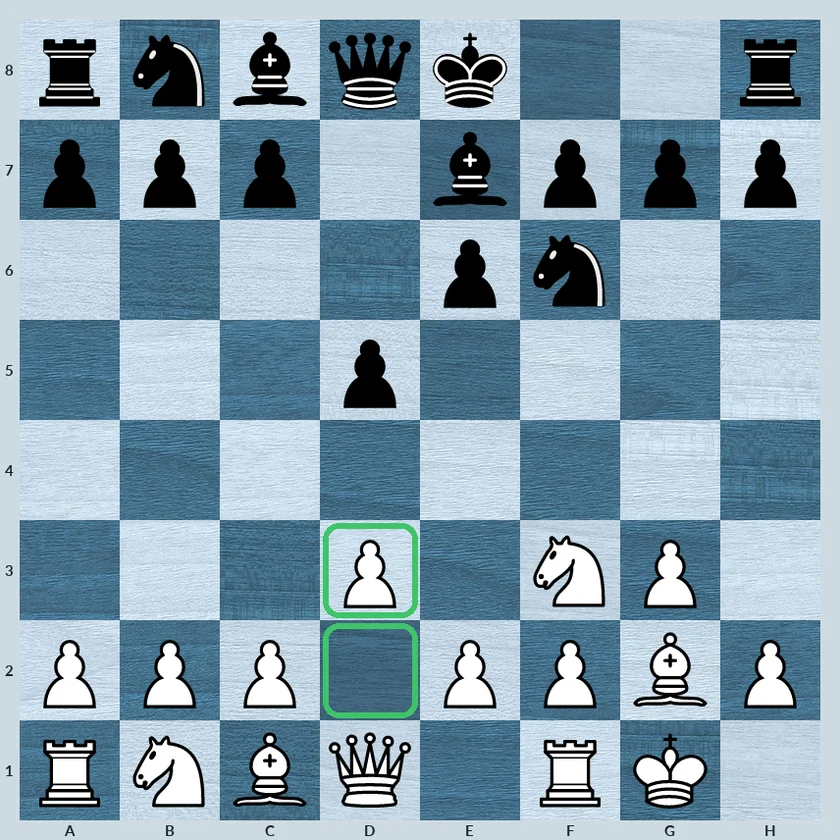
King's Indian Attack setup for White after 1.Nf3 d5 2.g3 Nf6 3.Bg2 e6 4.O-O Be7 5.d3

Look at White's side of the board. The King is castled and the Bishop on g2 looks down the long diagonal. You will reach this picture in almost every King's Indian Attack game.

King's Indian Attack: Black's options vs Unknown
White
King's Indian Attack: Black's options
Result
*
ECO
A07
  1. 1. Nf3
  2. 1... d5
  3. 2. g3

Your opponent has lots of possibilities here, and I am going to show you a practical option against each of them:

  • Black plays ...e6 and ...Be7, the main setup
  • Black plays ...c6 and ...Bg4, the Yugoslav Variation
  • Black plays ...c6 and ...Bf5, the Reversed London System
  • Black takes the center with ...c5 and ...e5, the Reversed King's Indian
  • Black copies your fianchetto with ...g6 and ...Bg7
  • Black plays 2...Nc6
  • The Spassky Variation, 2...b5

At the end I also show how to reach the same positions when you open with 1.e4.

Why It Is Called the King's Indian Attack

Because the King's Indian Attack is the King's Indian Defense with the colors reversed. In that defense Black plays ...Nf6, ...g6 and ...Bg7, and castles. Here White plays the same way.

King's Indian Defense vs Unknown
White
King's Indian Defense
Result
*
ECO
E61
  1. 1. d4
  2. 1... Nf6
  3. 2. c4
  4. 2... g6
  5. 3. Nc3
  6. 3... Bg7

White moves first, so White has one extra move, and that extra move often changes the game.

Your first moves are almost always the same. What changes is Black's setup.

Black Plays ...e6 and ...Be7: The Main Setup

1.Nf3 d5 2.g3 Nf6 3.Bg2 e6

With ...e6 Black closes the c8 Bishop and supports the d5 pawn. Black has more space on the queenside and plans to grow there with ...c5 and ...Nc6.

We have our ideas as well.

4.O-O Be7 5.d3 O-O 6.Nbd2 c5 7.e4 Nc6 8.Re1

King's Indian Attack: main position vs Unknown
White
King's Indian Attack: main position
Result
*
ECO
A07
  1. 1. Nf3
  2. 1... d5
  3. 2. g3
  4. 2... Nf6
  5. 3. Bg2
  6. 3... e6
  7. 4. O-O
  8. 4... Be7
  9. 5. d3
  10. 5... O-O
  11. 6. Nbd2
  12. 6... c5
  13. 7. e4
  14. 7... Nc6
  15. 8. Re1

    [%cal Ge4e5]

This is the main position of the King's Indian Attack. We want to play e5, take space on the kingside and get some interesting attacking chances. Black can allow it and play 8...b5, or Black can take on e4 first.

Black Takes on e4

8...dxe4 9.dxe4

This is not a great choice. Black has traded the advanced d5 pawn for our less advanced d3 pawn, we still have a good center, and we still want e5.

Black can stop that pawn with 9...e5, but then the d5 square is weak, because no Black pawn can guard it anymore. You can read more about squares like this one in our guide to weak squares in chess.

10.c3

The weak d5 square vs Unknown
White
The weak d5 square
Result
*
ECO
A07
  1. 1. Nf3
  2. 1... d5
  3. 2. g3
  4. 2... Nf6
  5. 3. Bg2
  6. 3... e6
  7. 4. O-O
  8. 4... Be7
  9. 5. d3
  10. 5... O-O
  11. 6. Nbd2
  12. 6... c5
  13. 7. e4
  14. 7... Nc6
  15. 8. Re1
  16. 8... dxe4
  17. 9. dxe4
  18. 9... e5
  19. 10. c3

    [%csl Rd5][%cal Gd2c4,Gc1g5,Gc4e3,Ge3d5]

The c3 pawn keeps the c6 Knight out of d4. After that everything is about d5: our Knight goes to c4, Bg5 trades the f6 Knight that guards the square, and a Knight comes around through e3 to land there.

Black Plays 8...b5: The Kingside Attack

Black plays 8...b5 vs Unknown
White
Black plays 8...b5
Result
*
ECO
A07
  1. 1. Nf3
  2. 1... d5
  3. 2. g3
  4. 2... Nf6
  5. 3. Bg2
  6. 3... e6
  7. 4. O-O
  8. 4... Be7
  9. 5. d3
  10. 5... O-O
  11. 6. Nbd2
  12. 6... c5
  13. 7. e4
  14. 7... Nc6
  15. 8. Re1
  16. 8... b5

    [%cal Rb5b4]

Now Black is trying to put pressure on us on the queenside. What do we do?

9.e5

The aggressive way! The pawn attacks the Knight, wins a tempo and takes the space.

9...Nd7 10.Nf1
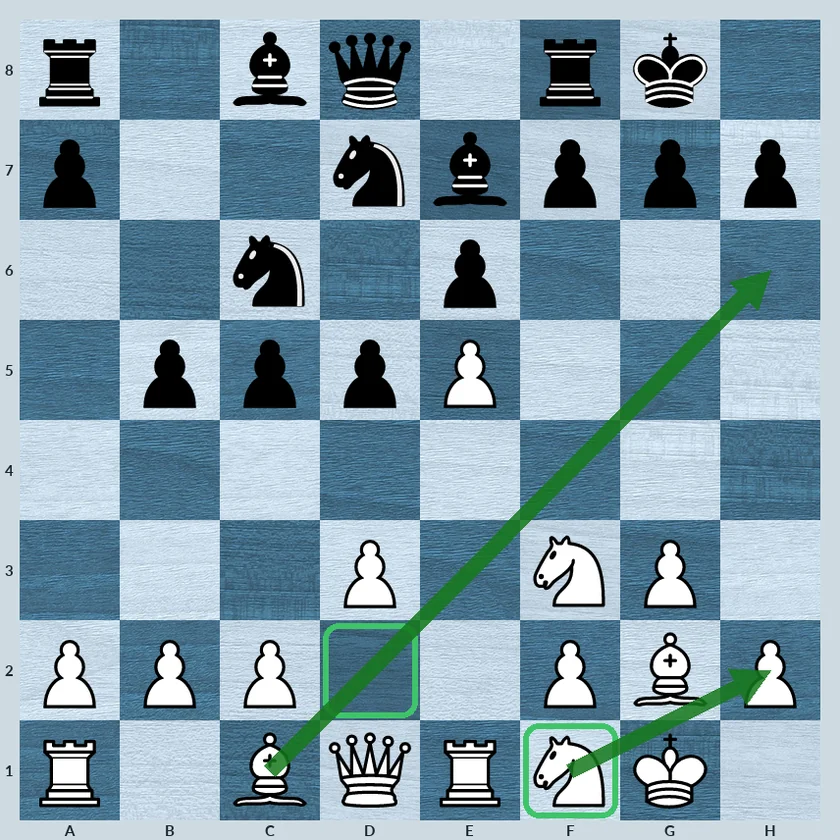
King's Indian Attack main setup after 8...b5 9.e5 Nd7 10.Nf1, the c1 Bishop looks at the kingside and the Knight heads there

We have a space advantage on the kingside, and that is a fantastic reason to start an attack. The Knight move opens the c1 Bishop, which now looks at the kingside, and the Knight itself is planning to go there too.

If Black attacks our e5 pawn with ...Qc7, we can defend it with Bf4 or with Qe2.

In these structures Black mainly wants to push ...a5, ...b4 and ...a4. We launch our own pawn.

10...a5 11.h4 b4 12.h5

King's Indian Attack: main setup vs Unknown
White
King's Indian Attack: main setup
Result
*
ECO
A07
  1. 1. Nf3
  2. 1... d5
  3. 2. g3
  4. 2... Nf6
  5. 3. Bg2
  6. 3... e6
  7. 4. O-O
  8. 4... Be7
  9. 5. d3
  10. 5... O-O
  11. 6. Nbd2
  12. 6... c5
  13. 7. e4
  14. 7... Nc6
  15. 8. Re1
  16. 8... b5
    1. 8... dxe4
    2. 9. dxe4
    3. 9... e5

      [%csl Rd5]

    4. 10. c3

      [%csl Rd5][%cal Gd2c4,Gc1g5,Gc4e3,Ge3d5]

  17. 9. e5
  18. 9... Nd7
  19. 10. Nf1
  20. 10... a5
  21. 11. h4
  22. 11... b4
  23. 12. h5
  24. 12... h6
    1. 12... a4
    2. 13. h6
    3. 13... g6
      1. 13... gxh6
      2. 14. Bxh6
    4. 14. N1h2

      [%csl Re7,Rf6][%cal Gh2g4,Gc1f4,Gd1d2,Gf4g5]

  25. 13. N1h2

    [%csl Rh6][%cal Gh2g4,Gc1f4,Gd1d2,Rf4h6]

What happens if Black ignores this pawn? Let's say 12...a4. We go 13.h6, because we want to ruin the King's position. After 13...gxh6 14.Bxh6 Black's King position is just destroyed. We move the Knight, bring the Queen, and White has a very strong attack.

And if Black answers with 13...g6, there are a bunch of weak dark squares on the kingside. One idea you need to remember here.

14.N1h2

Weak dark squares vs Unknown
White
Weak dark squares
Result
*
ECO
A07
  1. 1. Nf3
  2. 1... d5
  3. 2. g3
  4. 2... Nf6
  5. 3. Bg2
  6. 3... e6
  7. 4. O-O
  8. 4... Be7
  9. 5. d3
  10. 5... O-O
  11. 6. Nbd2
  12. 6... c5
  13. 7. e4
  14. 7... Nc6
  15. 8. Re1
  16. 8... b5
  17. 9. e5
  18. 9... Nd7
  19. 10. Nf1
  20. 10... a5
  21. 11. h4
  22. 11... b4
  23. 12. h5
  24. 12... a4
  25. 13. h6
  26. 13... g6
  27. 14. N1h2

    [%csl Re7,Rf6][%cal Gh2g4,Gc1f4,Gd1d2,Gf4g5]

The Knight goes to g4, the Bishop to f4 and the Queen to d2, and then Bg5 offers to trade Black's dark-square Bishop. Once that Bishop is off the board, the dark squares become even weaker, and that is a fantastic reason to look for checkmate.

Black can also stop our pawn first with 12...h6. Then h6 is a very good pawn to capture one day.

13.N1h2

The h6 pawn is a target vs Unknown
White
The h6 pawn is a target
Result
*
ECO
A07
  1. 1. Nf3
  2. 1... d5
  3. 2. g3
  4. 2... Nf6
  5. 3. Bg2
  6. 3... e6
  7. 4. O-O
  8. 4... Be7
  9. 5. d3
  10. 5... O-O
  11. 6. Nbd2
  12. 6... c5
  13. 7. e4
  14. 7... Nc6
  15. 8. Re1
  16. 8... b5
  17. 9. e5
  18. 9... Nd7
  19. 10. Nf1
  20. 10... a5
  21. 11. h4
  22. 11... b4
  23. 12. h5
  24. 12... h6
  25. 13. N1h2

    [%csl Rh6][%cal Gh2g4,Gc1f4,Gd1d2,Rf4h6]

We go Bf4, Ng4 and Qd2, and we have lots of sacrificing options on the kingside. Remember this idea, and you can already try playing these King's Indian Attack positions.

Black Plays ...c6 and ...Bg4: The Yugoslav Variation

So, champions, we have seen what happens when Black plays ...e6. Next, let's look at ...c6.

1.Nf3 d5 2.g3 Nf6 3.Bg2 c6 4.O-O Bg4

Yugoslav Variation, 4...Bg4 vs Unknown
White
Yugoslav Variation, 4...Bg4
Result
*
ECO
A07
  1. 1. Nf3
  2. 1... d5
  3. 2. g3
  4. 2... Nf6
  5. 3. Bg2
  6. 3... c6
  7. 4. O-O
  8. 4... Bg4

    [%csl Rc6,Rd5]

With the pawns on c6 and d5 Black wants to block our Bishop on g2. And Black's own Bishop comes out before ...e6, so it will not be closed in on c8.

This is called the Yugoslav Variation of the King's Indian Attack, or the Keres Variation, and we follow our usual setup.

5.d3

White also has 5.c4 here, but that goes into the Reti Opening. It is playable, and it is not what we are looking at today.

5...e6 6.Nbd2 Be7 7.e4 O-O

In the main setup we pushed e5 in this kind of position. Here we do not, at least not yet. What is the reason?

After 8.e5 Nfd7

Why not 8.e5 vs Unknown
White
Why not 8.e5
Result
*
ECO
A07
  1. 1. Nf3
  2. 1... d5
  3. 2. g3
  4. 2... Nf6
  5. 3. Bg2
  6. 3... c6
  7. 4. O-O
  8. 4... Bg4
  9. 5. d3
  10. 5... e6
  11. 6. Nbd2
  12. 6... Be7
  13. 7. e4
  14. 7... O-O
  15. 8. e5
  16. 8... Nfd7

    [%csl Rg4][%cal Rg4d1,Gg4h5,Gh5g6,Gc6c5,Gb8c6]

Black's Bishop is no longer on c8, and on g4 it is a very good defender. Try to push h4 and h5 now and it will be very hard: the Bishop guards h5 from g4, and it can also go back to g6.

So we do things in a more flexible way.

8.h3

When Black takes, 8...Bxf3 9.Qxf3, we play with the Bishop pair. The Queen can go to e2, the pawn to f4, and White has a very easy game.

After 8...Bh5 we have an interesting idea. We would like to move the f3 Knight and push the f-pawn, maybe even with crazy ideas like g4 in the future. But the Knight is pinned to our Queen, and for this reason I recommend a Queen move.

9.Qe1 Nbd7 10.Nh2

Yugoslav Variation after 10.Nh2 vs Unknown
White
Yugoslav Variation after 10.Nh2
Result
*
ECO
A07
  1. 1. Nf3
  2. 1... d5
  3. 2. g3
  4. 2... Nf6
  5. 3. Bg2
  6. 3... c6
  7. 4. O-O
  8. 4... Bg4
  9. 5. d3
  10. 5... e6
  11. 6. Nbd2
  12. 6... Be7
  13. 7. e4
  14. 7... O-O
  15. 8. h3
  16. 8... Bh5
  17. 9. Qe1
  18. 9... Nbd7
  19. 10. Nh2

    [%cal Gf2f4,Gg3g4]

Next comes f4, and maybe g4 later.

Yugoslav Variation vs Unknown
White
Yugoslav Variation
Result
*
ECO
A07
  1. 1. Nf3
  2. 1... d5
  3. 2. g3
  4. 2... Nf6
  5. 3. Bg2
  6. 3... c6
  7. 4. O-O
  8. 4... Bg4
  9. 5. d3
    1. 5. c4
  10. 5... e6
  11. 6. Nbd2
  12. 6... Be7
  13. 7. e4
  14. 7... O-O
  15. 8. h3
    1. 8. e5
    2. 8... Nfd7

      [%csl Rg4][%cal Rg4d1,Gg4h5,Gh5g6,Gc6c5,Gb8c6]

    3. 9. h4
  16. 8... Bh5
    1. 8... Bxf3
    2. 9. Qxf3
  17. 9. Qe1
  18. 9... Nbd7
  19. 10. Nh2

Black Plays ...c6 and ...Bf5: The Reversed London System

Do you recognize this position?

1.Nf3 d5 2.g3 Nf6 3.Bg2 c6 4.O-O Bf5

Pawns on c6 and d5, Bishop on f5: it is the London System with the colors reversed.
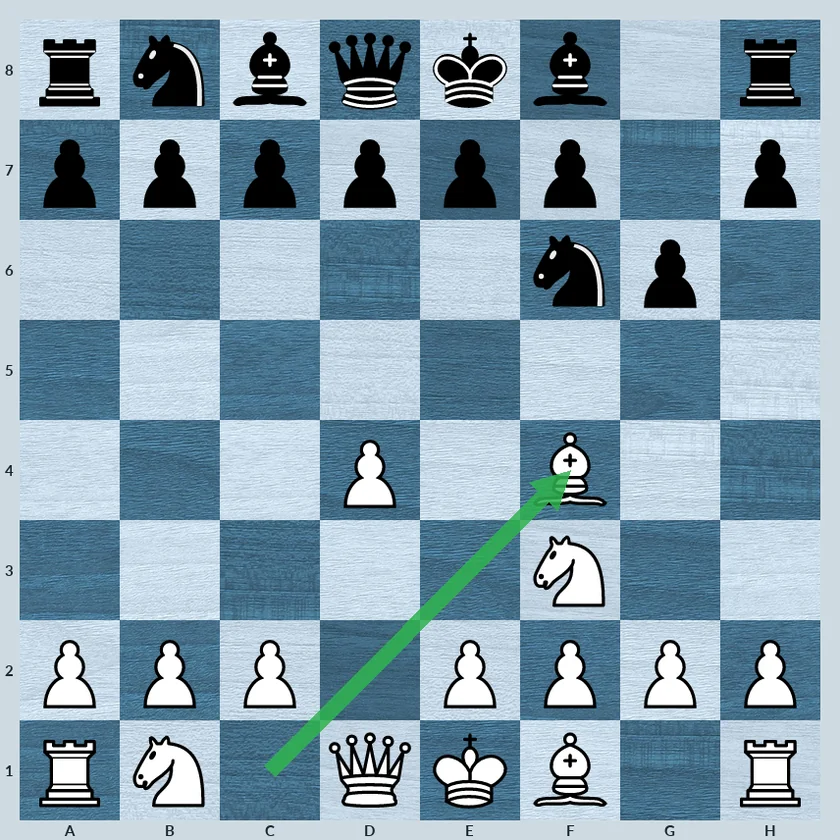
The London System for comparison, with White's Bishop going to f4

Guess what we do here? 5.d3, of course, and Black plays 5...e6.

There is one very interesting way to continue, 6.Nh4, trying to get the Bishop pair. After 6...Bg6 7.Nxg6 hxg6

Reversed London, 6.Nh4 vs Unknown
White
Reversed London, 6.Nh4
Result
*
ECO
A07
  1. 1. Nf3
  2. 1... d5
  3. 2. g3
  4. 2... Nf6
  5. 3. Bg2
  6. 3... c6
  7. 4. O-O
  8. 4... Bf5
  9. 5. d3
  10. 5... e6
  11. 6. Nh4
  12. 6... Bg6
  13. 7. Nxg6
  14. 7... hxg6

    [%cal Rh8h1]

White has the two Bishops, and the position is actually better for White. But at club level it is not very comfortable to play when your opponent has such an open Rook on the h-file.

For that reason you can simply continue our development.

6.Nbd2 Be7 7.Qe1

Reversed London, 7.Qe1 vs Unknown
White
Reversed London, 7.Qe1
Result
*
ECO
A07
  1. 1. Nf3
  2. 1... d5
  3. 2. g3
  4. 2... Nf6
  5. 3. Bg2
  6. 3... c6
  7. 4. O-O
  8. 4... Bf5
  9. 5. d3
  10. 5... e6
  11. 6. Nbd2
  12. 6... Be7
  13. 7. Qe1

    [%csl Ge4][%cal Gd3e4,Gd2e4,Ge1e4,Rf5e4]

This time the Queen does not go to e1 because of a pin. The Bishop on f5 is preventing our e4 push, and with the Queen on e1 the pawn will have three defenders when it gets there: the d3 pawn, the d2 Knight and the Queen.

7...O-O 8.e4 Bg6 9.Nh4

Now Nh4 is fine, because Black has castled and there is no longer a Rook on h8.

After 9...Nbd7 we can take the Bishop at once, or play 10.f4 first. Both lead to very comfortable positions for White in this King's Indian Attack line.

Reversed London System vs Unknown
White
Reversed London System
Result
*
ECO
A07
  1. 1. Nf3
  2. 1... d5
  3. 2. g3
  4. 2... Nf6
  5. 3. Bg2
  6. 3... c6
  7. 4. O-O
  8. 4... Bf5
  9. 5. d3
  10. 5... e6
  11. 6. Nbd2
    1. 6. Nh4
    2. 6... Bg6
    3. 7. Nxg6
    4. 7... hxg6
  12. 6... Be7
  13. 7. Qe1
  14. 7... O-O
  15. 8. e4
  16. 8... Bg6
  17. 9. Nh4
  18. 9... Nbd7
  19. 10. f4

Black Takes the Center With ...c5 and ...e5: The Reversed King's Indian

1.Nf3 d5 2.g3 c5 3.Bg2 Nf6 4.d3 Nc6 5.O-O e5

Black puts three pawns in the center, and we get exactly a King's Indian with the colors reversed.

White can play 6.e4 right away, but after 6...dxe4 7.dxe4 Black can trade Queens on d1. It is not a disaster. I just prefer to keep the Queens on for more practical chances, so I recommend a Knight move first.

6.Nbd2

Now we want e4, and we are not afraid if Black plays 6...e4 first, because Black is not ready for such an advance. After 7.dxe4 dxe4 8.Ng5 the pawn is attacked three times and Black cannot defend it. Black may sacrifice it with 8...e3 9.fxe3. Yes, our pawns are spoiled a little. But the f-file is open for the Rook, we are ahead in development, and a Knight can come to e4, so White is doing much better.

6...Be7 7.e4

Reversed King's Indian after 7.e4 vs Unknown
White
Reversed King's Indian after 7.e4
Result
*
ECO
A08
  1. 1. Nf3
  2. 1... d5
  3. 2. g3
  4. 2... c5
  5. 3. Bg2
  6. 3... Nf6
  7. 4. d3
  8. 4... Nc6
  9. 5. O-O
  10. 5... e5
  11. 6. Nbd2
  12. 6... Be7
  13. 7. e4

Black can trade the pawns here, ignore our pawn and castle, or push 7...d4. The push is the main one.

Black Trades on e4

7...dxe4 8.dxe4 O-O 9.c3

We discussed this King's Indian Attack structure a little while ago in the main setup. Our c3 pawn protects d4 and the d5 square is weak, so in the future the Queen goes to c2 or e2, the Knight goes to c4, and we try to use that central outpost.

Black Castles

7...O-O 8.exd5 Nxd5

This trade opened the diagonal for our g2 Bishop.

9.Re1

The Rook attacks the e5 pawn. Defending it with ...Bf6 or ...Bd6 gives Black a very passive position, so Black may try 9...f6. That also has a downside: it weakens the King on the diagonal.

If we slow down, Black plays ...Be6 and ...Qd7 and secures everything. I recommend the aggressive approach.

10.c3

White prepares d4 vs Unknown
White
White prepares d4
Result
*
ECO
A08
  1. 1. Nf3
  2. 1... d5
  3. 2. g3
  4. 2... c5
  5. 3. Bg2
  6. 3... Nf6
  7. 4. d3
  8. 4... Nc6
  9. 5. O-O
  10. 5... e5
  11. 6. Nbd2
  12. 6... Be7
  13. 7. e4
  14. 7... O-O
  15. 8. exd5
  16. 8... Nxd5
  17. 9. Re1
  18. 9... f6
  19. 10. c3

    [%cal Gd3d4]

We want to go d4 next, maybe even as a sacrifice, because Nb3 can win the pawn back later. And after 10...Be6 the Bishop stands on the same file as our Rook, so 11.d4 breaks the center.

Black Pushes 7...d4

7...d4 8.Nc4

Black's ...d4 push gives us a very nice square for the Knight. From c4 it attacks the e5 pawn and opens the c1 Bishop.

8...Qc7 9.a4

This Knight is very strong, so many times Black will try ...b5 to chase it. That is why we usually play a4 here.

9...O-O 10.Nh4

The Knight makes room for f4 vs Unknown
White
The Knight makes room for f4
Result
*
ECO
A08
  1. 1. Nf3
  2. 1... d5
  3. 2. g3
  4. 2... c5
  5. 3. Bg2
  6. 3... Nf6
  7. 4. d3
  8. 4... Nc6
  9. 5. O-O
  10. 5... e5
  11. 6. Nbd2
  12. 6... Be7
  13. 7. e4
  14. 7... d4
  15. 8. Nc4
  16. 8... Qc7
  17. 9. a4
  18. 9... O-O
  19. 10. Nh4

    [%cal Gf2f4,Gh4f5]

This is the main King's Indian idea: remove the Knight from f3 and push the pawn to f4. 10.Ne1 is possible too. I like 10.Nh4, which is more aggressive, and sometimes the Knight goes on to f5.

Reversed King's Indian vs Unknown
White
Reversed King's Indian
Result
*
ECO
A08
  1. 1. Nf3
  2. 1... d5
  3. 2. g3
  4. 2... c5
  5. 3. Bg2
  6. 3... Nf6
  7. 4. d3
  8. 4... Nc6
  9. 5. O-O
  10. 5... e5
  11. 6. Nbd2
    1. 6. e4
    2. 6... dxe4
    3. 7. dxe4
  12. 6... Be7
    1. 6... e4
    2. 7. dxe4
    3. 7... dxe4
    4. 8. Ng5
    5. 8... e3
    6. 9. fxe3

      ± [%cal Gd2e4]

  13. 7. e4
  14. 7... d4
    1. 7... O-O
    2. 8. exd5
    3. 8... Nxd5
    4. 9. Re1
    5. 9... f6
    6. 10. c3
    7. 10... Be6
    8. 11. d4

      [%csl Re6]

    1. 7... dxe4
    2. 8. dxe4

      [%csl Gd5]

    3. 8... O-O
    4. 9. c3

      [%csl Rd5][%cal Gf3h4,Gf1e1]

  15. 8. Nc4
  16. 8... Qc7
  17. 9. a4
  18. 9... O-O
  19. 10. Nh4
    1. 10. Ne1

Black Copies Our Fianchetto With ...g6 and ...Bg7

Now let's look at what happens when your opponent copies our fianchetto in the King's Indian Attack.

1.Nf3 d5 2.g3 c5 3.Bg2 Nc6 4.O-O g6 5.d3 Bg7 6.Nbd2

From here Black can play in two ways, with 6...e6 or with 6...Nf6.
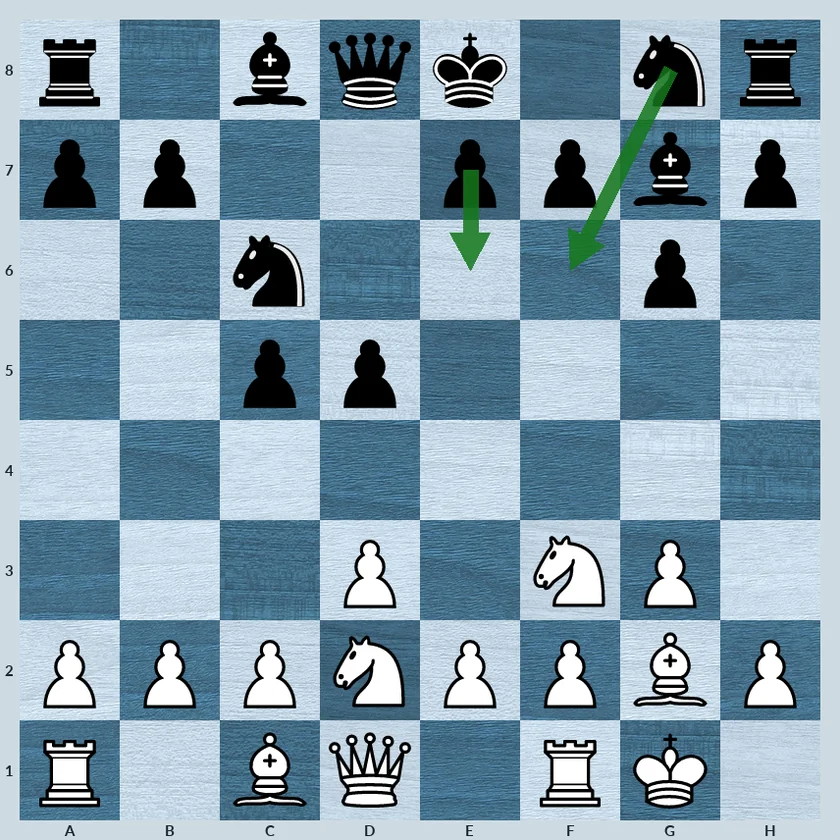
King's Indian Attack against Black's fianchetto after 6.Nbd2: Black chooses between 6...e6 and 6...Nf6

Black Plays ...e6 and ...Nge7

6...e6 7.e4 Nge7 8.Re1 O-O 9.e5

Fianchetto setup after 9.e5 vs Unknown
White
Fianchetto setup after 9.e5
Result
*
ECO
A08
  1. 1. Nf3
  2. 1... d5
  3. 2. g3
  4. 2... c5
  5. 3. Bg2
  6. 3... Nc6
  7. 4. O-O
  8. 4... g6
  9. 5. d3
  10. 5... Bg7
  11. 6. Nbd2
  12. 6... e6
  13. 7. e4
  14. 7... Nge7
  15. 8. Re1
  16. 8... O-O
  17. 9. e5

We are again happy to play e5. Compared to the main setup, Black now has a fianchetto on the kingside, and some of the squares around the King will be even weaker.

9...Qc7 10.Qe2

Black attacks our e5 pawn. We do not have the Knight on f1 yet, which means the c1 Bishop cannot come to f4, so the Queen defends.

10...b5 11.Nf1

Again Nf1 vs Unknown
White
Again Nf1
Result
*
ECO
A08
  1. 1. Nf3
  2. 1... d5
  3. 2. g3
  4. 2... c5
  5. 3. Bg2
  6. 3... Nc6
  7. 4. O-O
  8. 4... g6
  9. 5. d3
  10. 5... Bg7
  11. 6. Nbd2
  12. 6... e6
  13. 7. e4
  14. 7... Nge7
  15. 8. Re1
  16. 8... O-O
  17. 9. e5
  18. 9... Qc7
  19. 10. Qe2
  20. 10... b5
  21. 11. Nf1

    [%csl Rg7][%cal Gh2h4,Gc1f4]

Again Nf1, and then h4, threatening h5 and h6. Our Knight will feel very strong on g4. If Black answers h4 with ...h5, the g5 square becomes weak too: we bring the Bishop out, play Qd2, and trade Black's dark-square Bishop. White has an extremely strong attack on the kingside.

Let me show you something interesting. After 10.Qe2 Black can play a crazy move, 10...g5. Black is sacrificing this pawn, but if we take it, Black captures our central e5 pawn. For that reason I recommend blocking it.

11.h3 h6 12.c3 Ng6 13.d4 cxd4 14.cxd4

The crazy 10...g5 vs Unknown
White
The crazy 10...g5
Result
*
ECO
A08
  1. 1. Nf3
  2. 1... d5
  3. 2. g3
  4. 2... c5
  5. 3. Bg2
  6. 3... Nc6
  7. 4. O-O
  8. 4... g6
  9. 5. d3
  10. 5... Bg7
  11. 6. Nbd2
  12. 6... e6
  13. 7. e4
  14. 7... Nge7
  15. 8. Re1
  16. 8... O-O
  17. 9. e5
  18. 9... Qc7
  19. 10. Qe2
  20. 10... g5
  21. 11. h3
  22. 11... h6
  23. 12. c3
  24. 12... Ng6
  25. 13. d4
  26. 13... cxd4
  27. 14. cxd4

    [%cal Gd2f1,Gf1h2,Gh2g4,Gh3h4]

With 12.c3 we get ready for the Knight coming to g6: d4 follows, and a pawn defends e5. Then White wants Nf1, Nh2 and Ng4, and after that h4 to break Black's pawn structure.

Black Plays 6...Nf6

1.Nf3 d5 2.g3 c5 3.Bg2 Nc6 4.O-O g6 5.d3 Bg7 6.Nbd2 Nf6 7.e4 O-O
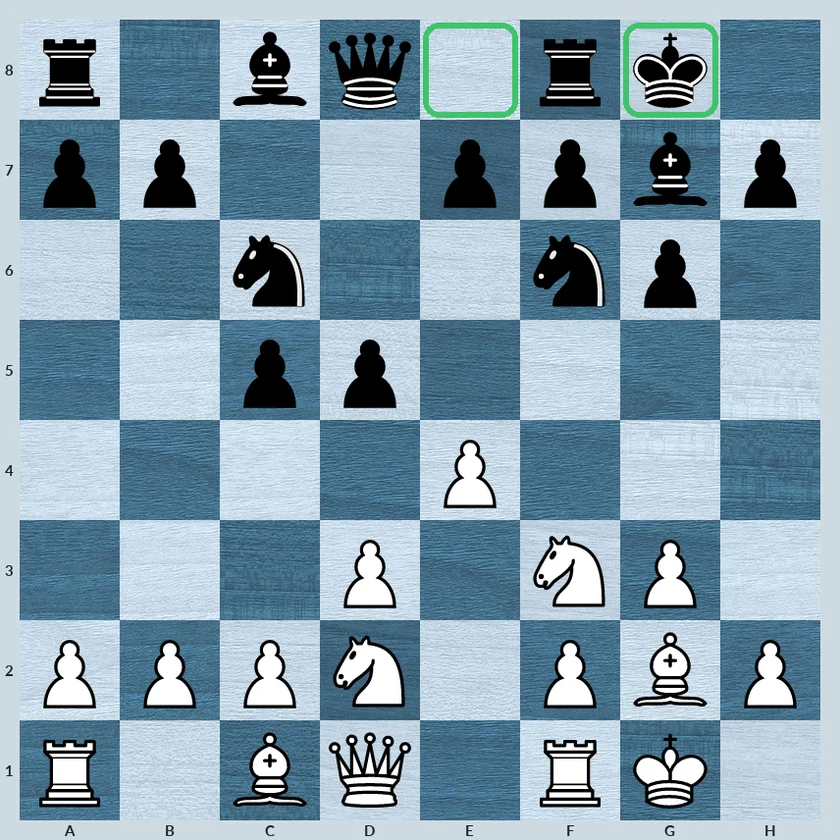
King's Indian Attack against Black's fianchetto after 6...Nf6 7.e4 O-O

Careful now. If we go 8.e5, Black plays 8...Ng4 and at once has three attackers on the pawn. We have only one Knight defending it, and we will not be able to protect it.

8.Re1

Now e5 can be one of our ideas.

Suppose Black plays 8...e5 first. We take, 9.exd5 Nxd5, which opens our Bishop, and then 10.Nc4 attacks the e5 pawn. 10...f6 is a very ugly move, as we already know: it weakens the King, and we can just go 11.c3 and d4.

Black can defend with 10...Re8 instead, and here comes one idea that made me love the King's Indian when I was a kid.

11.Ng5

The Knight heads for e4 vs Unknown
White
The Knight heads for e4
Result
*
ECO
A08
  1. 1. Nf3
  2. 1... d5
  3. 2. g3
  4. 2... c5
  5. 3. Bg2
  6. 3... Nc6
  7. 4. O-O
  8. 4... g6
  9. 5. d3
  10. 5... Bg7
  11. 6. Nbd2
  12. 6... Nf6
  13. 7. e4
  14. 7... O-O
  15. 8. Re1
  16. 8... e5
  17. 9. exd5
  18. 9... Nxd5
  19. 10. Nc4
  20. 10... Re8
  21. 11. Ng5

    [%cal Gg5e4,Ge4d6,Ge4c5]

It is not a very big threat to capture something. The main idea is Ne4: from there the Knight attacks the c5 pawn and gets the option to jump to d6. A Knight coming to d6, from e4 or from c4, creates big disharmony in Black's camp and is very unpleasant to face. So Ng5, and you are doing well.

It is even better for us when Black does not play 8...e5 and takes on e4. After 8...dxe4 9.dxe4 Qc7 10.c3 our c3 pawn limits Black's Bishop on g7. White then prepares e5 with Qe2 or Nc4 and gets more space.

And if Black plays 10...e5, it is the same picture again: a weak square in the center, and 11.Nc4 starts the trip toward it.
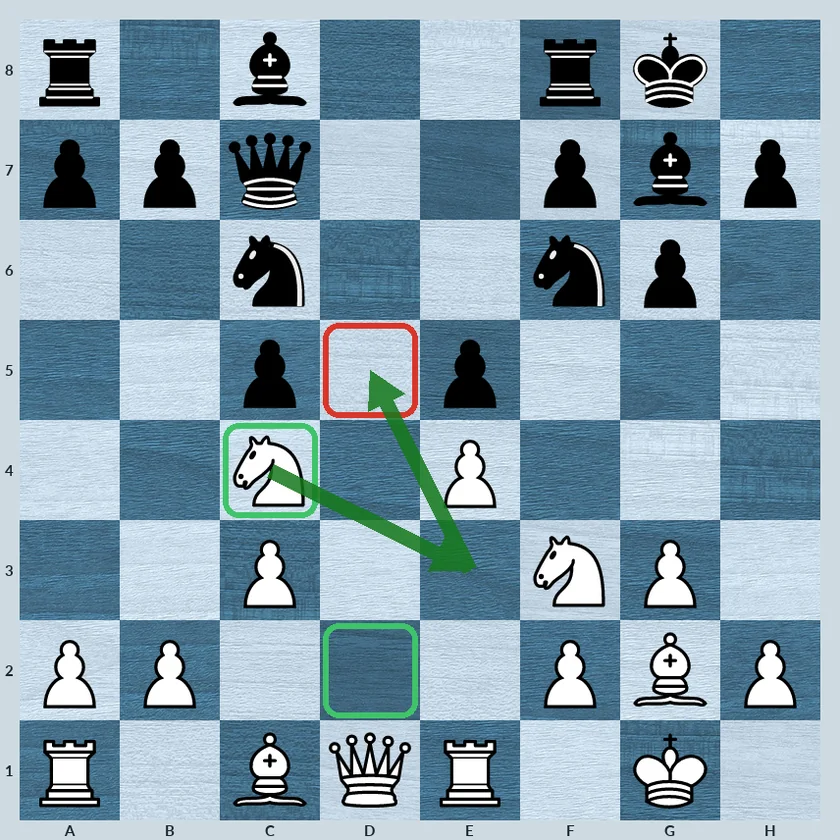
King's Indian Attack after 8...dxe4 9.dxe4 Qc7 10.c3 e5 11.Nc4, the Knight heads for the weak d5 square

Black copies our fianchetto vs Unknown
White
Black copies our fianchetto
Result
*
ECO
A08
  1. 1. Nf3
  2. 1... d5
  3. 2. g3
  4. 2... c5
  5. 3. Bg2
  6. 3... Nc6
  7. 4. O-O
  8. 4... g6
  9. 5. d3
  10. 5... Bg7
  11. 6. Nbd2
  12. 6... e6
    1. 6... Nf6
    2. 7. e4
    3. 7... O-O
    4. 8. Re1
      1. 8. e5
      2. 8... Ng4
    5. 8... dxe4
      1. 8... e5
      2. 9. exd5
      3. 9... Nxd5
      4. 10. Nc4
      5. 10... Re8
        1. 10... f6

          [%csl Rg7]

        2. 11. c3
      6. 11. Ng5

        [%cal Gg5e4,Ge4d6,Ge4c5]

    6. 9. dxe4
    7. 9... Qc7
    8. 10. c3

      [%csl Gc3,Rg7]

    9. 10... e5
    10. 11. Nc4
  13. 7. e4
  14. 7... Nge7
  15. 8. Re1
  16. 8... O-O
  17. 9. e5
  18. 9... Qc7
  19. 10. Qe2
  20. 10... b5
    1. 10... g5
    2. 11. h3
    3. 11... h6
    4. 12. c3
    5. 12... Ng6
    6. 13. d4
    7. 13... cxd4
    8. 14. cxd4

      [%csl Rg8]

  21. 11. Nf1

    [%csl Rg7][%cal Gh2h4,Gc1f4]

Black Plays 2...Nc6: Answer With 3.d4

1.Nf3 d5 2.g3 Nc6

This move is interesting in a way, but it has downsides. The Knight takes the place in front of the c7 pawn, and that pawn is very important in the fight for the center.

That is why we do not go Bg2 and d3 now. Black would take the center very quickly with ...e5 and ...f5, and we would just get a Pirc Defense with the colors reversed, which we do not really want to play.

3.d4
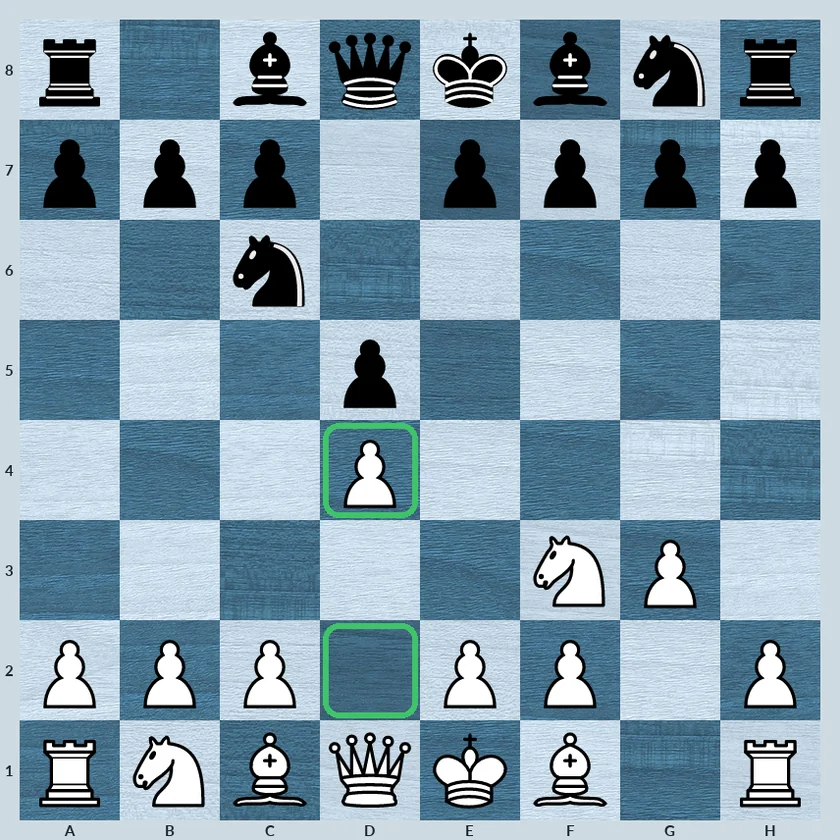
King's Indian Attack move order after 1.Nf3 d5 2.g3 Nc6 3.d4, where White stops the e5 push

In this specific case of the King's Indian Attack, White plays d4 and prevents ...e5.

If Black plays slowly with ...Nf6 and ...e6, the c8 Bishop is closed in and the setup is very passive. We get our pieces out, fight for the center, maybe with e4, and have an easy game. That would be a very dumb way for Black to play. After 2...Nc6 Black at least needs to develop that Bishop.

Black Plays 3...Bg4

3...Bg4 4.Bg2

Any time Black captures on f3, we say thank you for the Bishop pair. After 4...Bxf3 5.Bxf3 the push 5...e5 does not work at the moment: we take, 6.dxe5, and Black cannot take back because the d5 pawn is hanging.

If Black goes 5...Nf6, we are quicker in the fight for the center with 6.c4. We are trying to trade the d5 pawn off and make our Bishop's diagonal longer. After 6...e6 we just develop, with space and the two Bishops.

After 6...dxc4 White has so many good moves: 7.O-O, 7.Bxc6 or 7.d5 are all good.

So this capture on f3 is not scary for White.

4...Nf6 is a concrete moment, and White gets a very nice chance.

5.Ne5

The Knight attacks the Bishop and the c6 Knight. If the Bishop goes back, 5...Bf5 6.Nxc6 bxc6, we have created doubled pawns for Black, a weakness on the queenside.

Taking is even worse: 5...Nxe5 6.dxe5, and now 6...Ne4 loses a piece to 7.f3.

7.f3 attacks two pieces vs Unknown
White
7.f3 attacks two pieces
Result
*
ECO
D02
  1. 1. Nf3
  2. 1... d5
  3. 2. g3
  4. 2... Nc6
  5. 3. d4
  6. 3... Bg4
  7. 4. Bg2
  8. 4... Nf6
  9. 5. Ne5
  10. 5... Nxe5
  11. 6. dxe5
  12. 6... Ne4
  13. 7. f3

    [%cal Gf3e4,Gf3g4]

Both pieces are under attack. And if the Knight goes back somewhere on move 6, we win the pawn on d5.

Black Plays 3...Bf5

3...Bf5 4.Bg2 e6 5.O-O Nf6 6.c4

This Bishop move is a little smarter. We play Bg2 again, castle, and go for the c4 setup. If Black's Knight comes to b4 at some point, Na3 defends c2 and we continue our development.

Black plays 2...Nc6 vs Unknown
White
Black plays 2...Nc6
Result
*
ECO
D02
  1. 1. Nf3
  2. 1... d5
  3. 2. g3
  4. 2... Nc6
  5. 3. d4
  6. 3... Nf6
    1. 3... e6

      [%csl Rc8]

    1. 3... Bg4
    2. 4. Bg2
    3. 4... Nf6
      1. 4... Bxf3
      2. 5. Bxf3
      3. 5... Nf6
        1. 5... e5
        2. 6. dxe5

          [%csl Rd5]

      4. 6. c4
      5. 6... dxc4
        1. 6... e6
      6. 7. O-O
        1. 7. d5
        1. 7. Bxc6+
        2. 7... bxc6
    4. 5. Ne5
    5. 5... Nxe5
      1. 5... Bf5
      2. 6. Nxc6
      3. 6... bxc6
    6. 6. dxe5

      [%csl Rd5]

    7. 6... Ne4
    8. 7. f3
    1. 3... Bf5
    2. 4. Bg2

      [%cal Gc2c4]

    3. 4... e6
    4. 5. O-O
    5. 5... Nf6
    6. 6. c4
  7. 4. Bg2

    [%cal Ge1g1,Gc2c4]

The Spassky Variation: 2...b5

1.Nf3 Nf6 2.g3 b5

This is the Spassky Variation against the King's Indian Attack, and it comes on move two. At first sight it is a very weird move. But Black is trying to put the Bishop on the long diagonal, and take space on the queenside.

There are many options for White here. To keep our King's Indian Attack structure, we continue the same way.

3.Bg2 Bb7 4.O-O c5 5.d3 e6 6.Nbd2 d5 7.e4

If Black does not take, we would love to play e5 and Re1 again, with the ideas you have seen before.

7...dxe4 8.Ng5

Spassky Variation after 8.Ng5 vs Unknown
White
Spassky Variation after 8.Ng5
Result
*
ECO
A05
  1. 1. Nf3
  2. 1... Nf6
  3. 2. g3
  4. 2... b5
  5. 3. Bg2
  6. 3... Bb7
  7. 4. O-O
  8. 4... c5
  9. 5. d3
  10. 5... e6
  11. 6. Nbd2
  12. 6... d5
  13. 7. e4
  14. 7... dxe4
  15. 8. Ng5

    [%cal Gg2b7]

We are pinning this pawn. It cannot take on d3 or push forward, because the Bishop on b7 would be hanging.

After any move, let's say 8...Be7, we capture on e4: 9.Ndxe4. If Black trades with 9...Nxe4 10.Nxe4, we have a threat: a Knight check on f6, and then we capture the Bishop on b7. If Black plays 10...Nc6, we can play this position in many ways. Just get out with the pieces and trade to create some weaknesses on Black's queenside.

Spassky Variation vs Unknown
White
Spassky Variation
Result
*
ECO
A05
  1. 1. Nf3
  2. 1... Nf6
  3. 2. g3
  4. 2... b5
  5. 3. Bg2
  6. 3... Bb7
  7. 4. O-O
  8. 4... c5
  9. 5. d3
  10. 5... e6
    1. 5... d5
    2. 6. Nbd2
    3. 6... e6
    4. 7. e4
    5. 7... dxe4
    6. 8. dxe4
    7. 8... Nxe4
    8. 9. Ne5
    9. 9... Nd6
      1. 9... Nxd2
      2. 10. Bxb7
      3. 10... Nxf1
      4. 11. Qxd8+
      5. 11... Kxd8
      6. 12. Bxa8
    10. 10. Bxb7
    11. 10... Nxb7
    12. 11. Nxf7
    13. 11... Kxf7
    14. 12. Qf3+
  11. 6. Nbd2
  12. 6... d5
  13. 7. e4
  14. 7... dxe4
  15. 8. Ng5
  16. 8... Be7
  17. 9. Ndxe4
  18. 9... Nxe4
  19. 10. Nxe4
  20. 10... Nc6

A Little Trap

Let me also give you a little trap. It is not really something dangerous, but someone may fall for it.

After 7...dxe4 you can also try 8.dxe4 instead of 8.Ng5. If Black takes the pawn with 8...Nxe4, we go 9.Ne5.
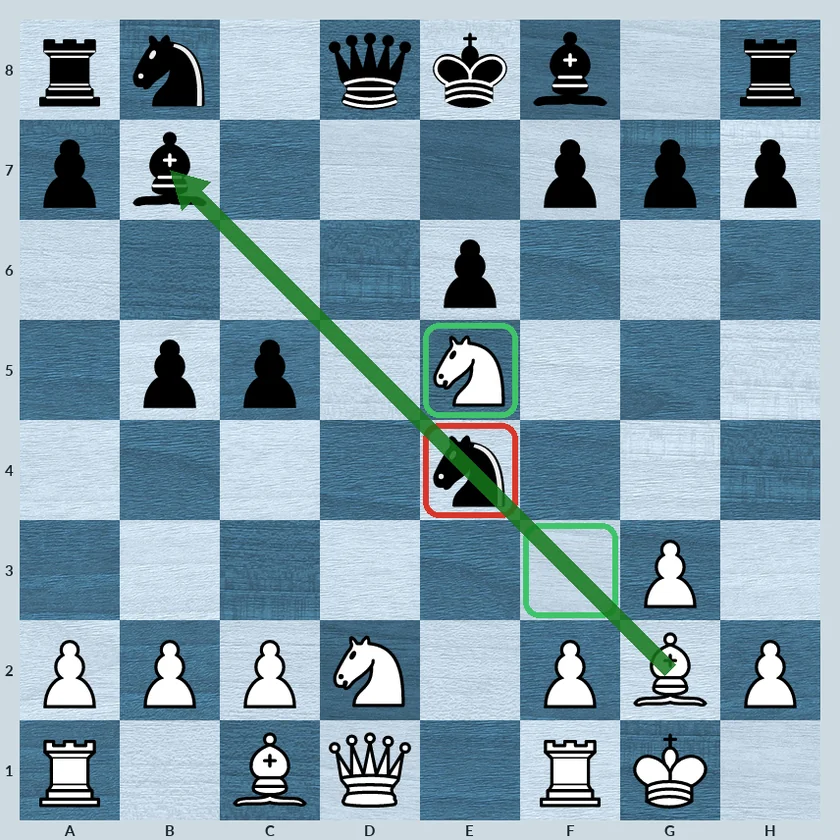
Spassky Variation trap after 8.dxe4 Nxe4 9.Ne5: the Knight on e4 stands in front of the undefended Bishop on b7

Now the Knight on e4 is in trouble, because behind it is the Bishop on b7 and nothing defends that Bishop.

If Black takes on d2, the line goes 9...Nxd2 10.Bxb7 Nxf1 11.Qxd8+ Kxd8 12.Bxa8. Our Bishop has taken the Rook in the corner, Black's Knight on f1 is trapped, and we also threaten Nxf7+.

If Black protects the Bishop with 9...Nd6, we have a very nice tactic.

10.Bxb7 Nxb7 11.Nxf7

A little trap vs Unknown
White
A little trap
Result
*
ECO
A05
  1. 1. Nf3
  2. 1... Nf6
  3. 2. g3
  4. 2... b5
  5. 3. Bg2
  6. 3... Bb7
  7. 4. O-O
  8. 4... c5
  9. 5. d3
  10. 5... e6
  11. 6. Nbd2
  12. 6... d5
  13. 7. e4
  14. 7... dxe4
  15. 8. dxe4
  16. 8... Nxe4
  17. 9. Ne5
  18. 9... Nd6
  19. 10. Bxb7
  20. 10... Nxb7
  21. 11. Nxf7

    [%cal Gf7d8,Gf7h8]

We are forking the Queen and the Rook, so Black has to take: 11...Kxf7 12.Qf3+. The check wins the Knight on b7 back and we stay with the same material. But Black's King is out of castling, and Black has weak pawns, some of them on the queenside. A great position for White.

How to Reach the King's Indian Attack From 1.e4

The Spassky Variation was the last option for Black. Now let me show you a few move orders from other openings that lead to the same King's Indian Attack positions.

From the French Defense

1.e4 e6 2.d3 d5 3.Nd2 c5 4.Ngf3 Nc6 5.g3

The game starts 1.e4 e6, and White says: "Wait, I do not want to play against the French." Then 2.d3, 3.Nd2 and 4.Ngf3 follow, and I am sure you know where it is going.

Our French Defense guide has its own section on this 2.d3 line, seen from Black's side.

From the French Defense vs Unknown
White
From the French Defense
Result
*
ECO
C00
  1. 1. e4
  2. 1... e6
  3. 2. d3
  4. 2... d5
  5. 3. Nd2
  6. 3... c5
  7. 4. Ngf3
  8. 4... Nc6
  9. 5. g3

From the Sicilian Defense

1.e4 c5 2.Nf3 e6 3.d3 Nc6 4.g3 d5 5.Nbd2

It can also happen against a Sicilian with ...e6. Let's say we do not want to play a main-line Sicilian: we go 3.d3, then g3, Nbd2 and Bg2, and we are playing the positions from this guide.

From the Sicilian Defense vs Unknown
White
From the Sicilian Defense
Result
*
ECO
B40
  1. 1. e4
  2. 1... c5
  3. 2. Nf3
  4. 2... e6
  5. 3. d3
  6. 3... Nc6
  7. 4. g3
  8. 4... d5
  9. 5. Nbd2

Two Plans to Remember

The same ideas come back in almost every line of the King's Indian Attack.

  • When you play e5, follow with Nf1, h4 and h5. The Knight goes on to h2 and g4.
  • When a Black Bishop on g4 or f5 gets in your way, play Qe1 to support the e4 push

Where the King's Indian Attack Came From

It grew out of the King's Indian Defense, which became very popular in the 1950s. Botvinnik, Smyslov and Petrosian all played the same setup with White, and so did Bobby Fischer, mostly in the early part of his career.

In 1967 Fischer won with it against Myagmarsuren at the Sousse Interzonal.

Model Games

Play through these King's Indian Attack games after you know the plans above.

Nikolaidis vs Muir, Pula 1997

Nikolaidis, Ioannis vs Muir, Andrew Joseph
Event
EU-chT (Men) 11th
Site
Pula
Date
1997.05.??
Round
9.2
White
Nikolaidis, Ioannis
Black
Muir, Andrew Joseph
Result
1-0
ECO
C00
  1. 1. Nf3
  2. 1... d5
  3. 2. g3
  4. 2... Nf6
  5. 3. Bg2
  6. 3... e6
  7. 4. O-O
  8. 4... Be7
  9. 5. d3
  10. 5... O-O
  11. 6. Nbd2
  12. 6... c5
  13. 7. e4
  14. 7... Nc6
  15. 8. Re1
  16. 8... b5
  17. 9. e5
  18. 9... Nd7
  19. 10. Nf1
  20. 10... a5
  21. 11. h4
  22. 11... b4
  23. 12. N1h2
  24. 12... Ba6
  25. 13. h5
  26. 13... a4
  27. 14. a3
  28. 14... bxa3
  29. 15. bxa3
  30. 15... Rb8
  31. 16. Bf4
  32. 16... Rb2
  33. 17. Qc1
  34. 17... Qb6
  35. 18. Ng4
  36. 18... Nd4
  37. 19. Nxd4
  38. 19... cxd4
  39. 20. Bg5
  40. 20... Bxg5
  41. 21. Qxg5
  42. 21... f6
  43. 22. exf6
  44. 22... Nxf6
  45. 23. h6
  46. 23... Qc7
  47. 24. Rxe6
  48. 24... Nxg4
  49. 25. Re7
  50. 25... Qxe7
  51. 26. Bxd5+
  52. 26... Kh8
  53. 27. Qxe7

1-0

Kamsky vs Lenderman, Saint Louis 2014

Kamsky, Gata vs Lenderman, Aleksandr
Event
USA-ch
Site
Saint Louis
Date
2014.05.14
Round
7
White
Kamsky, Gata
Black
Lenderman, Aleksandr
Result
1-0
ECO
C00
  1. 1. Nf3
  2. 1... d5
  3. 2. g3
  4. 2... Nf6
  5. 3. Bg2
  6. 3... e6
  7. 4. O-O
  8. 4... Be7
  9. 5. d3
  10. 5... O-O
  11. 6. Nbd2
  12. 6... c5
  13. 7. e4
  14. 7... Nc6
  15. 8. Re1
  16. 8... b5
  17. 9. e5
  18. 9... Nd7
  19. 10. Nf1
  20. 10... b4
  21. 11. h4
  22. 11... a5
  23. 12. h5
  24. 12... a4
  25. 13. h6
  26. 13... g6
  27. 14. N1h2
  28. 14... Ba6
  29. 15. Ng4
  30. 15... Nd4
  31. 16. Nxd4
  32. 16... cxd4
  33. 17. b3
  34. 17... a3
  35. 18. Nh2
  36. 18... Rc8
  37. 19. Nf3
  38. 19... Qb6
  39. 20. Bg5
  40. 20... Bxg5
  41. 21. Nxg5
  42. 21... Rc6
  43. 22. Qd2
  44. 22... Qc5
  45. 23. Nf3
  46. 23... Qxc2
  47. 24. Qxb4
  48. 24... Qc5
  49. 25. Qd2
  50. 25... Rfc8
  51. 26. Rad1
  52. 26... Qb6
  53. 27. Qg5
  54. 27... Qb4
  55. 28. Rd2
  56. 28... Rc1
  57. 29. Rxc1
  58. 29... Rxc1+
  59. 30. Kh2
  60. 30... Qf8
  61. 31. Bh3
  62. 31... Rc3
  63. 32. Nxd4
  64. 32... Kh8
  65. 33. Ne2
  66. 33... Rc8
  67. 34. d4
  68. 34... Bxe2
  69. 35. Rxe2
  70. 35... Kg8
  71. 36. Qd2
  72. 36... Nb8
  73. 37. b4
  74. 37... Rc4
  75. 38. b5
  76. 38... Nd7
  77. 39. Qe3
  78. 39... Qb4
  79. 40. Rd2
  80. 40... Rc8
  81. 41. Rd3
  82. 41... Qxb5
  83. 42. Rxa3
  84. 42... Qb6
  85. 43. Bf1
  86. 43... Qd8
  87. 44. Ra7
  88. 44... Nb8
  89. 45. Qf4
  90. 45... Qf8
  91. 46. Bb5
  92. 46... Nc6
  93. 47. Bxc6
  94. 47... Rxc6
  95. 48. Kg2

1-0

Nihal Sarin vs Lazavik, online blitz 2026

Nihal, Sarin vs Lazavik, Denis
Event
2nd Thursday May 14th
Site
Chess.com INT
Date
2026.05.14
Round
6
White
Nihal, Sarin
Black
Lazavik, Denis
Result
1-0
ECO
A07
  1. 1. Nf3
  2. 1... d5
  3. 2. g3
  4. 2... c6
  5. 3. Bg2
  6. 3... Bg4
  7. 4. O-O
  8. 4... Nf6
  9. 5. d3
  10. 5... e6
  11. 6. h3
  12. 6... Bh5
  13. 7. Nbd2
  14. 7... Be7
  15. 8. e4
  16. 8... O-O
  17. 9. Qe1
  18. 9... a5
  19. 10. Kh2
  20. 10... a4
  21. 11. a3
  22. 11... Na6
  23. 12. Ne5
  24. 12... Nd7
  25. 13. Nxd7
  26. 13... Qxd7
  27. 14. f4
  28. 14... f6
  29. 15. Nf3
  30. 15... b5
  31. 16. Be3
  32. 16... Rae8
  33. 17. g4
  34. 17... Bf7
  35. 18. e5
  36. 18... c5
  37. 19. Bf2
  38. 19... d4
  39. 20. exf6
  40. 20... gxf6
  41. 21. g5
  42. 21... Bg6
  43. 22. gxf6
  44. 22... Bxf6
  45. 23. Ne5
  46. 23... Bxe5
  47. 24. Qxe5
  48. 24... Rf5
  49. 25. Qe2
  50. 25... Nc7
  51. 26. Be4
  52. 26... Rf7
  53. 27. Rg1
  54. 27... Rg7
  55. 28. Raf1
  56. 28... Rf8
  57. 29. Be1
  58. 29... Nd5
  59. 30. Bd2
  60. 30... Ne7
  61. 31. Rg5
  62. 31... Nf5
  63. 32. Rfg1
  64. 32... Kh8
  65. 33. Qf2
  66. 33... Rfg8
  67. 34. c3
  68. 34... h6
  69. 35. R5g2
  70. 35... Bh7
  71. 36. cxd4
  72. 36... Nxd4
  73. 37. Bc3
  74. 37... Bxe4
  75. 38. dxe4
  76. 38... Rxg2+
  77. 39. Rxg2
  78. 39... Rxg2+
  79. 40. Kxg2
  80. 40... Kh7
  81. 41. Qe3
  82. 41... Qd6
  83. 42. Kf2
  84. 42... Nc6
  85. 43. Qg3
  86. 43... Qf8
  87. 44. f5
  88. 44... Nd4
  89. 45. Qg6+
  90. 45... Kh8
  91. 46. Qxe6
  92. 46... Kh7
  93. 47. Qd7+
  94. 47... Kg8
  95. 48. Qd5+
  96. 48... Kh7
  97. 49. Qd7+
  98. 49... Kg8
  99. 50. Bxd4
  100. 50... cxd4
  101. 51. Qxd4
  102. 51... Qb8
  103. 52. Kf3
  104. 52... Qh2
  105. 53. Qd8+
  106. 53... Kh7
  107. 54. Qe7+
  108. 54... Kg8
  109. 55. Qe8+
  110. 55... Kh7
  111. 56. Qg6+
  112. 56... Kh8
  113. 57. Qxh6+
  114. 57... Kg8
  115. 58. Qf4
  116. 58... Kh8
  117. 59. Qxh2

1-0

Perevertkin vs Munoz Moreno, correspondence 2014

Perevertkin, Vladimir Viktorovic vs Munoz Moreno, Francisco Javier
Event
W-ch34 q04 email
Site
ICCF email
Date
2014.09.20
White
Perevertkin, Vladimir Viktorovic
Black
Munoz Moreno, Francisco Javier
Result
1-0
ECO
A07
  1. 1. Nf3
  2. 1... Nf6
  3. 2. g3
  4. 2... d5
  5. 3. Bg2
  6. 3... c6
  7. 4. O-O
  8. 4... Bg4
  9. 5. d3
  10. 5... e6
  11. 6. Qe1
  12. 6... Be7
  13. 7. e4
  14. 7... O-O
  15. 8. Nbd2
  16. 8... Bh5
  17. 9. h3
  18. 9... Nbd7
  19. 10. e5
  20. 10... Ne8
  21. 11. Nh2
  22. 11... Nc7
  23. 12. f4
  24. 12... Bg6
  25. 13. Ndf3
  26. 13... c5
  27. 14. Qe2
  28. 14... Nb8
  29. 15. g4
  30. 15... Nc6
  31. 16. g5
  32. 16... Rc8
  33. 17. Nh4
  34. 17... Nd4
  35. 18. Qf2
  36. 18... Nf5
  37. 19. Nxf5
  38. 19... Bxf5
  39. 20. Ng4
  40. 20... Bg6
  41. 21. Qe2
  42. 21... Na6
  43. 22. Ne3
  44. 22... Nb4
  45. 23. h4
  46. 23... c4
  47. 24. d4
  48. 24... c3
  49. 25. b3
  50. 25... Nc6
  51. 26. h5
  52. 26... Be4
  53. 27. Rd1
  54. 27... Bxg2
  55. 28. Nxg2
  56. 28... Qb6
  57. 29. Be3
  58. 29... Ba3
  59. 30. f5
  60. 30... exf5
  61. 31. Nf4
  62. 31... Rfd8
  63. 32. Kh1
  64. 32... g6
  65. 33. Bg1
  66. 33... Rd7
  67. 34. Rd3
  68. 34... Re8
  69. 35. Qg2
  70. 35... Qa5
  71. 36. hxg6
  72. 36... fxg6
  73. 37. Re1
  74. 37... Nb4
  75. 38. Rh3
  76. 38... Rg7
  77. 39. Bh2
  78. 39... Rc8
  79. 40. e6
  80. 40... Re8
  81. 41. Rd1
  82. 41... Rc8
  83. 42. Nxg6
  84. 42... Nxc2
  85. 43. Qxc2
  86. 43... hxg6
  87. 44. Be5
  88. 44... Qb6
  89. 45. Bxg7
  90. 45... Kxg7
  91. 46. Rdd3
  92. 46... Qxe6
  93. 47. Rde3

1-0

Peschke vs Zautzig, correspondence 2012

Peschke, Uwe vs Zautzig, Hubert
Event
W-ch32 q03 email
Site
ICCF email
Date
2012.09.20
White
Peschke, Uwe
Black
Zautzig, Hubert
Result
1-0
ECO
A07
  1. 1. Nf3
  2. 1... Nf6
  3. 2. g3
  4. 2... d5
  5. 3. Bg2
  6. 3... c6
  7. 4. O-O
  8. 4... Bg4
  9. 5. d3
  10. 5... e6
  11. 6. Nbd2
  12. 6... Nbd7
  13. 7. h3
  14. 7... Bh5
  15. 8. e4
  16. 8... Be7
  17. 9. Qe1
  18. 9... O-O
  19. 10. e5
  20. 10... Ne8
  21. 11. Nh2
  22. 11... Nc7
  23. 12. f4
  24. 12... Bg6
  25. 13. Ndf3
  26. 13... a5
  27. 14. a4
  28. 14... Bc5+
  29. 15. Kh1
  30. 15... h6
  31. 16. g4
  32. 16... Na6
  33. 17. h4
  34. 17... Bh7
  35. 18. Bh3
  36. 18... Kh8
  37. 19. f5
  38. 19... exf5
  39. 20. gxf5
  40. 20... f6
  41. 21. d4
  42. 21... fxe5
  43. 22. dxc5
  44. 22... Qe7
  45. 23. Ng5
  46. 23... hxg5
  47. 24. hxg5
  48. 24... Nb4
  49. 25. Qh4
  50. 25... Kg8
  51. 26. Ra3
  52. 26... Nxc5
  53. 27. Raf3
  54. 27... Nxc2
  55. 28. f6
  56. 28... Qf7
  57. 29. fxg7
  58. 29... Qxg7
  59. 30. g6
  60. 30... Bxg6
  61. 31. Bh6
  62. 31... Rxf3
  63. 32. Rxf3

1-0

Gabuzyan vs Akobian, Saint Louis 2019

Gabuzyan, Hovhannes vs Akobian, Varuzhan
Event
Saint Louis Winter-A
Site
Saint Louis
Date
2019.11.10
Round
1
White
Gabuzyan, Hovhannes
Black
Akobian, Varuzhan
Result
1-0
ECO
A08
  1. 1. Nf3
  2. 1... Nf6
  3. 2. g3
  4. 2... d5
  5. 3. Bg2
  6. 3... e6
  7. 4. O-O
  8. 4... Be7
  9. 5. d3
  10. 5... c5
  11. 6. Nbd2
  12. 6... Nc6
  13. 7. Re1
  14. 7... e5
  15. 8. e4
  16. 8... d4
  17. 9. Nc4
  18. 9... Nd7
  19. 10. a4
  20. 10... O-O
  21. 11. Bh3
  22. 11... Qc7
  23. 12. a5
  24. 12... Nf6
  25. 13. Bf5
  26. 13... g6
  27. 14. Bxc8
  28. 14... Rfxc8
  29. 15. c3
  30. 15... b5
  31. 16. axb6
  32. 16... axb6
  33. 17. Rxa8
  34. 17... Rxa8
  35. 18. Qb3
  36. 18... Nd7
  37. 19. Bh6
  38. 19... Qa7
  39. 20. cxd4
  40. 20... cxd4
  41. 21. Rc1
  42. 21... Bc5
  43. 22. Nxb6
  44. 22... Rb8
  45. 23. Ng5
  46. 23... Nd8
  47. 24. Qd5
  48. 24... Bxb6
  49. 25. Qd6
  50. 25... Bc5
  51. 26. Rxc5
  52. 26... Qxc5
  53. 27. Qxd7
  54. 27... Qb5
  55. 28. Qe7

1-0

Nakamura vs Suyarov, online blitz 2026

Nakamura, Hikaru vs Suyarov, Mukhammadzokhid
Event
1st Thursday Jul 30th
Site
Chess.com INT
Date
2026.07.30
Round
11
White
Nakamura, Hikaru
Black
Suyarov, Mukhammadzokhid
Result
1-0
ECO
A08
  1. 1. e4
  2. 1... e6
  3. 2. d3
  4. 2... d5
  5. 3. Nd2
  6. 3... g6
  7. 4. Ngf3
  8. 4... Bg7
  9. 5. g3
  10. 5... c5
  11. 6. Bg2
  12. 6... Nc6
  13. 7. O-O
  14. 7... Nge7
  15. 8. Re1
  16. 8... O-O
  17. 9. e5
  18. 9... b5
  19. 10. Nf1
  20. 10... Ba6
  21. 11. h4
  22. 11... b4
  23. 12. N1h2
  24. 12... Nd4
  25. 13. h5
  26. 13... Nxf3+
  27. 14. Bxf3
  28. 14... Nc6
  29. 15. Bf4
  30. 15... c4
  31. 16. h6
  32. 16... Bh8
  33. 17. d4
  34. 17... c3
  35. 18. bxc3
  36. 18... bxc3
  37. 19. Be2
  38. 19... Bxe2
  39. 20. Rxe2
  40. 20... Qb6
  41. 21. Nf3
  42. 21... Rab8
  43. 22. Re3
  44. 22... Qb2
  45. 23. Qe1
  46. 23... Rbc8
  47. 24. Rb1
  48. 24... Qxc2
  49. 25. Rc1
  50. 25... Qxa2
  51. 26. Rexc3
  52. 26... Ne7
  53. 27. Bg5
  54. 27... Rxc3
  55. 28. Rxc3
  56. 28... Nc8
  57. 29. Qc1
  58. 29... Nb6
  59. 30. Rc7
  60. 30... Qe2
  61. 31. Qf4
  62. 31... a5
  63. 32. Be7
  64. 32... Rc8
  65. 33. Ng5

1-0

Marek vs Michalik, Brno 2024

Marek, Matyas vs Michalik, Peter
Event
CZE-ch Blitz
Site
Brno
Date
2024.12.21
Round
4
White
Marek, Matyas
Black
Michalik, Peter
Result
1-0
ECO
A08
  1. 1. Nf3
  2. 1... d5
  3. 2. g3
  4. 2... Nf6
  5. 3. Bg2
  6. 3... g6
  7. 4. O-O
  8. 4... Bg7
  9. 5. d3
  10. 5... O-O
  11. 6. Nbd2
  12. 6... c5
  13. 7. e4
  14. 7... Nc6
  15. 8. Re1
  16. 8... e5
  17. 9. exd5
  18. 9... Nxd5
  19. 10. Nc4
  20. 10... Re8
  21. 11. Ng5
  22. 11... b6
  23. 12. Nxf7
  24. 12... Kxf7
  25. 13. Qf3+
  26. 13... Nf6
  27. 14. Qxc6
  28. 14... Be6
  29. 15. Nxe5+
  30. 15... Kg8
  31. 16. Qxa8
  32. 16... Qxa8
  33. 17. Bxa8
  34. 17... Rxa8
  35. 18. Nxg6
  36. 18... Bg4
  37. 19. Nf4
  38. 19... Bf3
  39. 20. Bd2
  40. 20... Ng4
  41. 21. Bc3
  42. 21... Bh6
  43. 22. h3
  44. 22... Bxf4
  45. 23. gxf4
  46. 23... Nh6
  47. 24. Re5
  48. 24... Kf7
  49. 25. Rae1
  50. 25... Rg8+
  51. 26. Rg5
  52. 26... Rxg5+
  53. 27. fxg5
  54. 27... Nf5
  55. 28. Bf6
  56. 28... Bd5
  57. 29. c4
  58. 29... Bf3
  59. 30. Re5
  60. 30... Kg6
  61. 31. Re8
  62. 31... Bc6
  63. 32. Rg8+
  64. 32... Kh5
  65. 33. Rc8
  66. 33... Bf3
  67. 34. Rc7
  68. 34... Kg6
  69. 35. Rxa7
  70. 35... Be2
  71. 36. Ra6
  72. 36... Nh4
  73. 37. f4
  74. 37... Kf5
  75. 38. Rxb6
  76. 38... Bxd3
  77. 39. Rc6
  78. 39... Kxf4
  79. 40. Rxc5
  80. 40... Nf3+
  81. 41. Kf2
  82. 41... Nd2
  83. 42. Rd5
  84. 42... Ne4+
  85. 43. Ke1
  86. 43... Bxc4
  87. 44. Rd4
  88. 44... Bxa2
  89. 45. b4
  90. 45... Ke3
  91. 46. b5

1-0

Take It Further

You can also watch this guide as a video on YouTube: King's Indian Attack: One Setup Against Every Defense.

My game against Varuzhan Akobian from the Model Games above is also in my course, In GM Gabuzyan's Mind. In the episode Unexpected opportunity you can watch me comment on it and see how I think during a real King's Indian Attack game.

Thank You

So that's it about the King's Indian Attack. I hope you enjoyed it, and I hope it brings you lots of good results.

GM Gabuzyan was here with you.

Frequently Asked Questions

What is the King's Indian Attack?

The King's Indian Attack is a setup for White: Nf3, g3, Bg2, castle, then d3, Nbd2 and e4. It is the King's Indian Defense with the colors reversed, and many players write KIA for short. We use the same setup against most of Black's defenses.

Is the King's Indian Attack a good opening?

It is a very practical one. You learn one setup and use it against almost everything, so there is not much to memorize, and the plans are easy to remember: e4 and e5, then h4 and h5. White does not get an advantage in every line.

Is the King's Indian Attack aggressive?

It can be. It starts slowly, and then in the main setup we play e5, Nf1, h4 and h5, and the Knight comes to g4 to attack the King. In other lines we wait. Against ...Bg4 or ...Bf5, for example, we do not push e5 right away.

How do you play the King's Indian Attack?

Start with 1.Nf3, 2.g3 and 3.Bg2, castle, and then play d3, Nbd2 and e4. That is the King's Indian Attack setup.

What you do next depends on Black. When Black has played ...e6, we push e5 and attack on the kingside with the h-pawn and the Knights. When Black has a pawn on e5 and the pawns are traded on e4, we play c3 and Nc4 and use the d5 square. When Black's Bishop comes out to g4 or f5, the Queen goes to e1 and the f-pawn goes forward.

What is the difference between the King's Indian Attack and the King's Indian Defense?

The setup is the same and the color is different. The King's Indian Defense is Black's opening against 1.d4. The King's Indian Attack is that setup for White, with one extra move.

Is the King's Indian Attack good for beginners?

Yes. You play the same first moves in almost every game and the plans repeat. In this guide I also choose lines that are comfortable to play: in the Reversed London System, for example, I suggest the simple 6.Nbd2 and not 6.Nh4.

Did Bobby Fischer play the King's Indian Attack?

He did, mostly in the early part of his career. One of his wins with it came against Myagmarsuren at the Sousse Interzonal in 1967.

Can you play the King's Indian Attack against the French Defense?

Yes. After 1.e4 e6 play 2.d3, then Nd2, Ngf3, g3 and Bg2, and you reach the same positions as with 1.Nf3. The French Defense King's Indian Attack move order is for players who open with 1.e4 and do not want the main lines of the French.

Related Openings

  • King's Indian Defense (1.d4 Nf6 2.c4 g6). The same setup for Black. The King's Indian Attack takes its name from it.
  • Reti Opening (1.Nf3 d5 2.c4). It starts with the same first move. In the Yugoslav Variation, 5.c4 leads there.
  • French Defense (1.e4 e6). White can answer with 2.d3 and reach the King's Indian Attack.
  • Sicilian Defense (1.e4 c5). Against the ...e6 lines, 3.d3 leads to the same setup.
  • London System (1.d4 with Bf4). Black's ...c6 and ...Bf5 setup is a London System with the colors reversed.
  • Pirc Defense (1.e4 d6). After 2...Nc6 Black can reach a Pirc with the colors reversed, unless White plays 3.d4.
  • Caro-Kann Defense (1.e4 c6). White can use the same setup here too, starting with 2.d3.

Table of Contents

We use cookies to run the site and, with your permission, to measure traffic and improve our marketing. You choose what to allow — see our Cookie Policy.